Nausicaä of the Valley of the Wind quick facts
- Original Japanese release: 11 March 1984
- Writer and director: Hayao Miyazaki
- Based on: Miyazaki’s manga of the same name
- Producer: Isao Takahata
- Music: Joe Hisaishi
- Production studio: Topcraft
- Original Japanese distributor: Toei
- Running time: about 116 minutes
- Best for: viewers who want ecological science fantasy, aerial adventure, a compassionate heroine and one of the clearest foundations for the later Studio Ghibli style
Spoiler-free answer: Nausicaä of the Valley of the Wind follows a young princess living beside a vast toxic forest in a world damaged by an ancient catastrophe. While neighbouring kingdoms treat the forest and its giant insects as enemies to destroy, Nausicaä studies them, listens to them and searches for a way humans can survive without repeating the violence that ruined the old world.
Spoiler-free overview
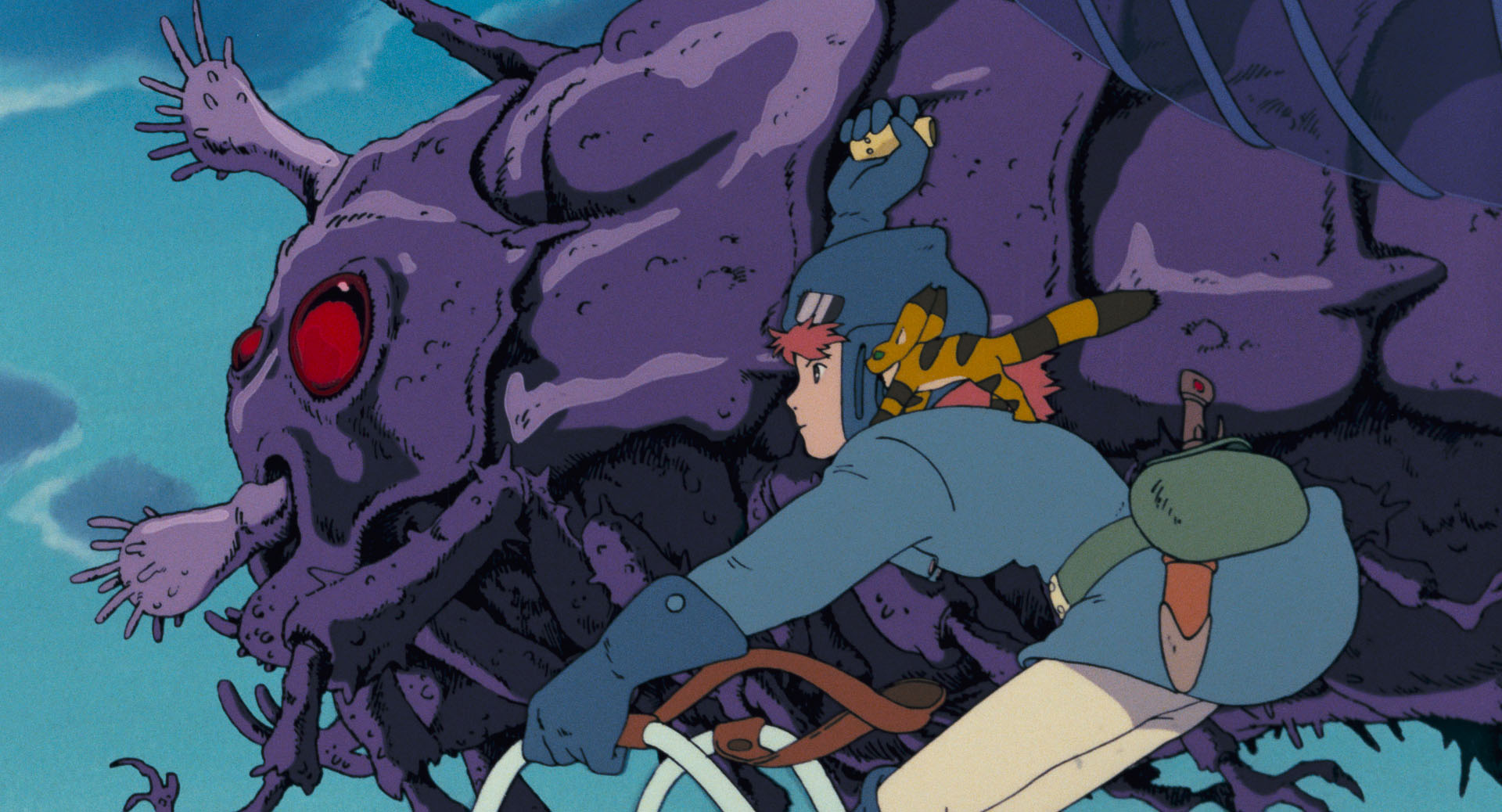
This is an adventure film with airships, a light glider, armoured soldiers, giant insects and the remains of apocalyptic technology. It is also a patient story about observation. Nausicaä is brave in combat, but her defining skill is the ability to notice what frightened people miss. She treats the Toxic Jungle as a living system rather than a monster and asks why its spores are poisonous instead of accepting that destruction is the only answer.
The result is more intense than the gentlest Ghibli family films. Villages are threatened, people die, weapons are fired and the enormous Ohmu can be frightening when enraged. Yet the film is not grim for its own sake. Its central conviction is hopeful: fear can be interrupted by knowledge, empathy and a refusal to make every conflict into a war.
Storyline: what happens in Nausicaä?
A thousand years after the Seven Days of Fire devastated industrial civilisation, surviving communities live among expanding toxic forests and giant insects. The small Valley of the Wind remains habitable because sea breezes hold back the poisonous spores. Nausicaä, daughter of the valley’s ailing king, explores the forest in a mask and collects samples. She can move near creatures such as the huge, many-eyed Ohmu without immediately provoking them because she pays attention to their behaviour.
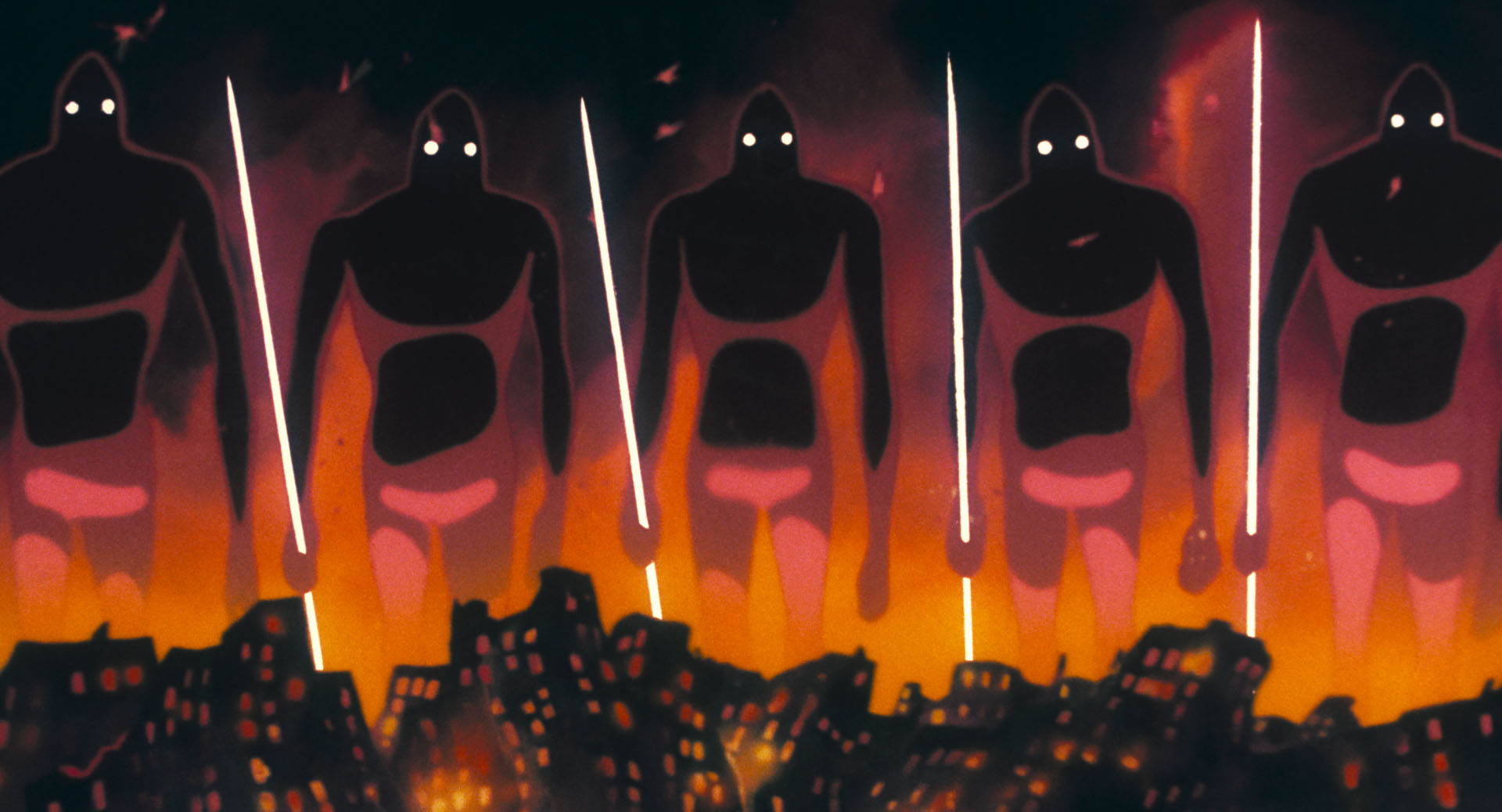
The valley’s fragile peace ends when a Tolmekian aircraft crashes nearby. The wreck carries an embryo linked to one of the Giant Warriors, the biological weapons associated with the old world’s destruction. Princess Kushana and her soldiers occupy the valley, intending to revive the weapon and burn the Toxic Jungle. Nausicaä is taken with Tolmekian forces, while conflict with the kingdom of Pejite draws more aircraft and civilians into danger.
As alliances break down, Nausicaä and the Pejite pilot Asbel fall beneath the forest and discover clean air and water below its poisoned upper layers. The revelation changes the apparent problem. The jungle is not simply contaminating a healthy planet. It is filtering pollutants left by human civilisation. Its danger to people is real, but so is its work of purification. Destroying it without understanding it could remove the world’s route toward healing.
Pejite plans to use a wounded young Ohmu to lure an enraged herd toward the occupied valley. Nausicaä tries to stop both the stampede and the human factions preparing to meet it with weapons. The revived Giant Warrior proves unstable and cannot solve the crisis. Nausicaä’s final choice is not a military victory. She returns the young Ohmu and places her own life between the herd and the valley. The Ohmu respond to that sacrifice, calming their rage and revealing that communication was possible when domination failed.
The ending fulfils an old valley prophecy, but it does not declare every conflict finished. The world remains damaged, kingdoms remain armed and the forest will not become harmless overnight. What changes is the evidence available to the survivors. Nausicaä has shown that the ecosystem has a purpose and that coexistence is not naive when it is built on careful knowledge.
Main characters
Nausicaä
Nausicaä is princess, pilot, naturalist, mediator and capable fighter. The film never makes her compassion passive. She enters dangerous places, challenges military plans and can become furious when people she loves are harmed. Her growth lies in holding that anger without letting it define every response.
Lord Yupa
Yupa is an experienced swordsman and traveller who serves as mentor without taking the story away from Nausicaä. He recognises her unusual bond with the forest and understands that the political situation cannot be solved by strength alone.
Princess Kushana
Kushana leads the Tolmekian occupation and believes overwhelming force can protect humanity. She is responsible for violence, but she is more than a simple villain. Her certainty grows from a world where weakness can be fatal. That makes her a sharp contrast with Nausicaä, whose courage depends on understanding rather than control.
Asbel
Asbel is a Pejite pilot driven by grief and loyalty. His time with Nausicaä lets him see the forest’s hidden process, forcing him to reconsider a plan that treats innocent lives as acceptable weapons.
The Ohmu and Teto
The Ohmu are intelligent guardians of the forest, peaceful when left alone and catastrophic when tortured or enraged. Teto, Nausicaä’s fox-squirrel companion, provides a smaller demonstration of the same principle: fear can turn into trust when a person refuses to answer pain with pain.
Themes and interpretation
Ecology is a system, not a backdrop
The Toxic Jungle looks hostile because people experience it from the surface. Beneath it, purified water and clean sand expose a longer ecological process. Miyazaki’s point is not that nature is always gentle. Spores kill and insects can destroy settlements. The point is that a frightening system may still have an essential function that cannot be understood through panic.
Violence produces the enemy it expects
Human factions repeatedly provoke the creatures, then cite the creatures’ rage as proof that extermination was necessary. The Ohmu stampede makes that cycle visible. Nausicaä breaks it by addressing the injury that caused the rage rather than trying to overpower its consequences.
Technology needs moral context
Aircraft and Nausicaä’s glider can connect people, explore landscapes and save lives. The Giant Warrior turns technical power into a shortcut that promises security while repeating the logic of the old catastrophe. The film is not simply anti-technology. It distinguishes tools used with attention from weapons used to escape responsibility.
Leadership means listening under pressure
Nausicaä is compelling because empathy does not make her indecisive. She gathers evidence, communicates across enemy lines and acts quickly when others are trapped inside rigid plans. Her authority comes from accepting responsibility for people and creatures who cannot repay her.
Age and content guidance
The film includes war, gunfire, aircraft crashes, explosions, sword fighting, the death of a parent, injured animals, a wounded young Ohmu used as bait and large swarms of angry insects. Blood is limited but visible, and several scenes carry an apocalyptic sense of danger. Nausicaä is shot and appears to die before the hopeful resolution.
Children fascinated by creatures, ecology and adventurous heroines may find it absorbing. Children who are sensitive to insects, parental death, military violence or mass-destruction imagery may find it overwhelming. It is generally a stronger fit for older children and teenagers than for a very young first-time Ghibli viewer. Check the current classification in your country, because ratings and edited historical releases differ by territory.
Production, release and its place in Studio Ghibli history
Hayao Miyazaki wrote and directed the film from his own manga. Isao Takahata produced it, Joe Hisaishi composed the music and Topcraft handled production. The official Studio Ghibli works page lists the Japanese release as 11 March 1984, the running time as approximately 116 minutes and Toei as distributor.
The film predates the formal founding of Studio Ghibli in 1985, so describing it precisely matters. It is not technically a film made by the later Studio Ghibli company. It is commonly included in Ghibli catalogues because its creative team, success and production relationships directly helped create the studio, and because its ideas flow into later works such as Castle in the Sky and Princess Mononoke.
It also began the long film collaboration between Miyazaki and Hisaishi. The score moves from expansive flight music to mechanical threat and eerie choral textures, helping the world feel ancient and futuristic at once.
Where to watch legally
Streaming rights differ by country and can change. Use the site’s current Studio Ghibli streaming guide, then confirm the title inside the service available in your region. In North America, GKIDS maintains the official film page and licensed home-release information. Licensed Blu-ray or digital rental and purchase options are dependable alternatives where offered. Avoid the heavily altered historical release titled Warriors of the Wind; choose a current licensed edition of the full film.
Official image gallery
Related films
Watch Princess Mononoke for a more violent and morally divided environmental conflict, Castle in the Sky for another aerial adventure about ancient technology, or My Neighbor Totoro for Miyazaki’s gentler view of children meeting a living landscape.
Frequently asked questions
Is Nausicaä a Studio Ghibli movie?
It was released before Studio Ghibli was formally founded and was produced by Topcraft. It is still commonly included in the Ghibli catalogue because Miyazaki, Takahata and other key collaborators carried its success and working relationships into the new studio.
Is Nausicaä based on a manga?
Yes. Miyazaki created the manga before directing the film. The film adapts only part of the much longer story, so the manga develops the world, politics and characters in substantially greater depth.
What is the Toxic Jungle doing?
The forest is filtering contamination left by the old civilisation. Its upper layers are dangerous to humans, while the world beneath reveals clean sand and water. This does not make the forest harmless, but it changes it from an enemy into part of the planet’s recovery.
Are the Ohmu villains?
No. They are intelligent forest creatures whose destructive stampedes are triggered by severe harm and distress. The story asks viewers to understand the cause of their rage rather than treating their size as proof of evil.
Is Nausicaä suitable as a first Ghibli film?
It is an excellent first choice for older viewers who like science fantasy, action and environmental themes. Younger or sensitive children may do better starting with Totoro, Kiki or Ponyo.
Does the film have a happy ending?
The immediate crisis resolves hopefully and the valley survives, but the damaged world is not magically repaired. The ending offers a path toward understanding rather than a complete cure.
Official film stills are credited to Studio Ghibli and used under its common-sense image-use notice.