Quick answer: Princess Mononoke is about the cost of living when every side has a reason to fight: nature is sacred, industry feeds people, hatred corrupts everyone, and balance requires responsibility rather than purity.
This guide answers the search intent directly, then gives a spoiler-aware reading for viewers who want more than a recap. It uses official Studio Ghibli imagery from ghibli.jp and links into related guides so the site keeps building a useful fan-guide structure.
At a glance
- Best for: new or returning viewers who want a clear explanation.
- Core topic: Princess Mononoke
- Suggested next step: follow the film and character tags after reading.
What Princess Mononoke is really about
Princess Mononoke is often summarised as humans versus nature, but the film is sharper than that. It is about competing needs becoming war. The forest is alive and wounded. Iron Town is destructive and also a refuge for people society discarded. The tragedy is that both realities are true.
That detail matters because Ghibli stories rarely separate plot from behaviour. A name, meal, journey, silence, act of work, or moment of restraint often tells the viewer what a character values before the dialogue says it aloud. Reading the film this way keeps the explanation grounded in what is actually on screen rather than forcing every image into a neat fan theory.
Ashitaka’s role
Ashitaka is not there to pick a team and win. His curse forces him to look at hatred directly, including the hatred inside his own body. His repeated goal, “to see with eyes unclouded,” is not neutrality in the lazy sense. It is a disciplined refusal to let rage simplify people into targets.
That detail matters because Ghibli stories rarely separate plot from behaviour. A name, meal, journey, silence, act of work, or moment of restraint often tells the viewer what a character values before the dialogue says it aloud. Reading the film this way keeps the explanation grounded in what is actually on screen rather than forcing every image into a neat fan theory.
San and Lady Eboshi
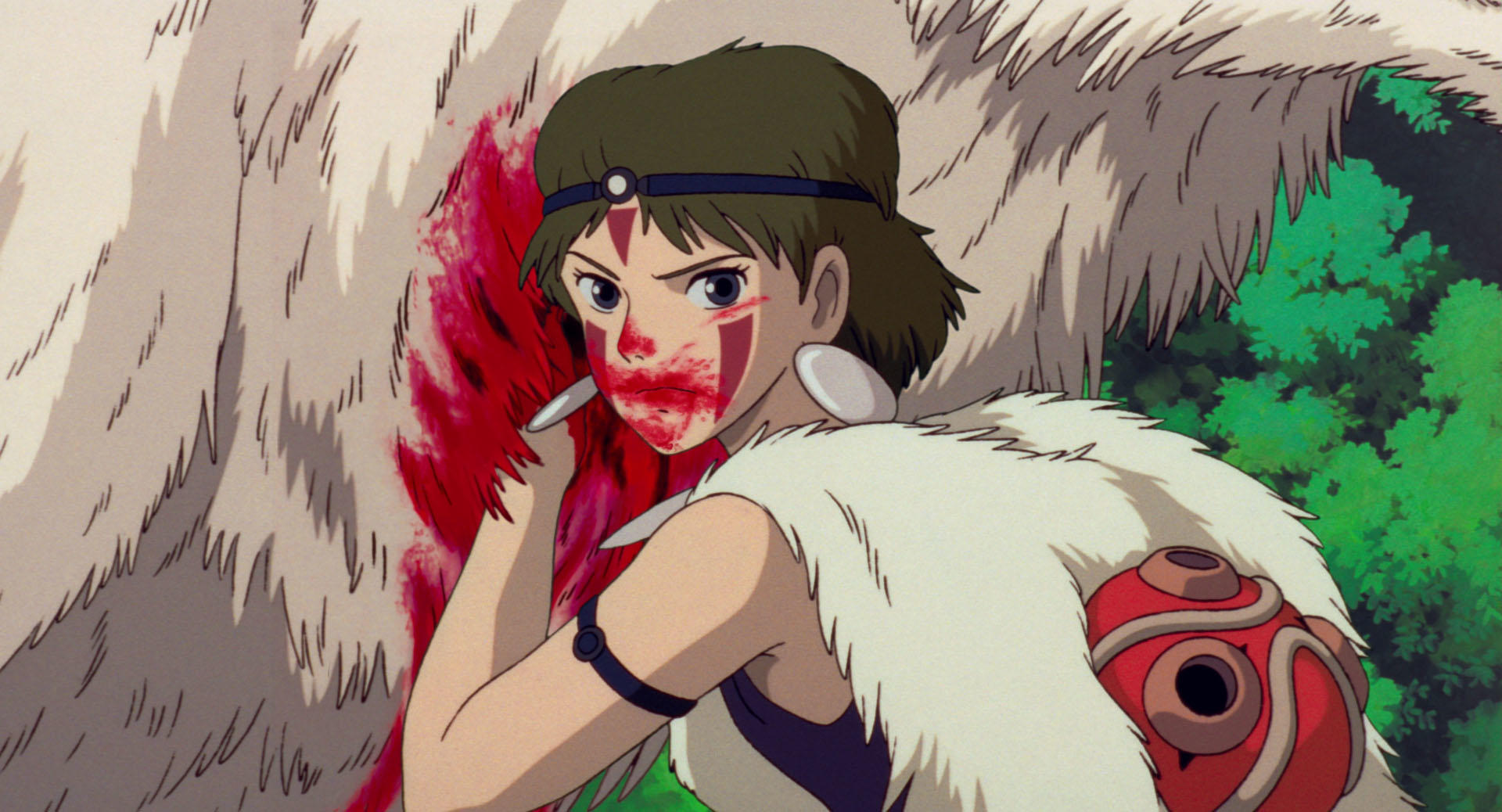
San and Lady Eboshi mirror each other more than either would admit. San defends the forest with absolute fury because she belongs to it. Eboshi defends Iron Town because she has built a human community that depends on her. The film respects both women enough to show their courage and their blindness.
That detail matters because Ghibli stories rarely separate plot from behaviour. A name, meal, journey, silence, act of work, or moment of restraint often tells the viewer what a character values before the dialogue says it aloud. Reading the film this way keeps the explanation grounded in what is actually on screen rather than forcing every image into a neat fan theory.
The ending’s lesson
The ending does not restore a perfect world. It offers a damaged world in which people must choose what to rebuild. That is why Princess Mononoke still feels modern: it rejects both anti-human fantasy and industrial triumphalism. Balance is not a slogan; it is a difficult practice after harm has already been done.
That detail matters because Ghibli stories rarely separate plot from behaviour. A name, meal, journey, silence, act of work, or moment of restraint often tells the viewer what a character values before the dialogue says it aloud. Reading the film this way keeps the explanation grounded in what is actually on screen rather than forcing every image into a neat fan theory.
How this connects to the wider Ghibli world
For a broader path through the catalogue, use our best Studio Ghibli movies to watch first guide, the movies-in-order watch guide, and the connected Ghibli movies explainer. These links help readers move from one question to the next instead of landing on an isolated article.
Frequently asked questions
Is this article spoiler-free?
It is spoiler-aware rather than fully spoiler-free. Character and ending explainers need some plot detail, but the opening answer is designed to help readers quickly decide whether to continue.
Is there one official interpretation?
Not always. Studio Ghibli films often leave room for emotion, memory, and myth. This guide separates clear story evidence from reasonable interpretation.
What should I watch next?
If the film appealed to you, follow the linked tags for related characters and themes, then use the watch-order guide to choose a nearby title with a similar mood or contrast.
Rewatch notes
On a rewatch, look for small repeated actions: who gives food, who withholds a name, who listens before acting, who treats nature as alive, and who changes their mind. Ghibli’s best scenes often carry their meaning in those quiet choices, which is why the films stay rewarding after the first viewing.
Image note: Featured imagery for this article uses official Studio Ghibli stills sourced from ghibli.jp. Studio Ghibli’s official image pages include the common-sense usage notice: ※画像は常識の範囲でご自由にお使いください。
Why balance is not the same as peace
One of the most useful ways to read Princess Mononoke is to separate balance from peace. The film is not imagining a world where humans, animals, gods, workers, and forests suddenly stop wanting different things. Iron Town needs fuel, shelter, tools, and protection. The forest needs space, respect, and continuity. San needs somewhere to belong. Ashitaka needs a way to keep looking clearly even when every side gives him a reason to despair.
Balance in the film is therefore not a neat compromise where everyone gets exactly what they want. It is a harder idea: power has to be limited, hatred has to be interrupted, and survival has to include more than the strongest group winning. That is why the ending feels hopeful without pretending the damage disappears. The forest can regrow, Iron Town can be rebuilt, and San and Ashitaka can remain connected, but none of those outcomes erase what happened.
What Ashitaka actually changes
Ashitaka does not solve the conflict by defeating a villain. His role is quieter and more demanding. He keeps refusing the emotional shortcuts offered by the people around him. He will not reduce Lady Eboshi to a monster, even when her actions are destructive. He will not reduce San to rage, even when she wants to define herself through the forest’s hatred of humans. He will not treat the gods as decorative symbols either, because their pain is real and dangerous.
That makes his famous instruction to “see with eyes unclouded by hate” more than a moral slogan. It is a survival method. The film suggests that hatred narrows perception until every choice looks like revenge. Ashitaka’s gift is not purity. It is the ability to keep seeing complexity while still acting when action is needed.
FAQ: reading the meaning of Princess Mononoke
Is Princess Mononoke anti-human?
No. It is critical of greed, extraction, and arrogance, but it also shows human vulnerability through Iron Town’s workers, lepers, and outcasts. The film’s argument is not that humans should vanish. It is that human survival cannot be built on endless domination.
Why does the ending not reunite San and Ashitaka completely?
The ending respects the truth of their different worlds. Their bond matters, but the film does not force San to abandon the forest or Ashitaka to pretend the human world is irrelevant. The separation keeps the story honest.
What is the main lesson?
The main lesson is that repair begins when people stop treating hatred as clarity. The film asks for responsibility, restraint, and the courage to rebuild without denying the cost of what was broken.
Image source note: official stills used for this guide come from Studio Ghibli’s Princess Mononoke image collection.