Quick answer: the best Studio Ghibli villains and antagonists are rarely simple “bad guys.” Lady Eboshi, Yubaba, No-Face, Muska, the Witch of the Waste, and Colonel Muska stand out because they reveal what each film is really worried about: greed, fear, war, loneliness, environmental damage, and the cost of power. This ranking focuses on how memorable they are, how much pressure they put on the hero, and how interesting they become on a rewatch.
One reason Studio Ghibli movies last is that many of their conflicts do not collapse into hero versus monster. A character can be frightening and still human. A spirit can be dangerous because it is hurt. A ruler can be selfish without being one-note. That makes Ghibli antagonists useful to rank, but tricky to judge. The most interesting ones are not always the most evil. They are the characters who make the film’s themes sharper.
1. Lady Eboshi, Princess Mononoke
Lady Eboshi is the best kind of Ghibli antagonist because she is both wrong and understandable. She destroys the forest, wounds the gods, and escalates the conflict at the heart of Princess Mononoke. At the same time, she protects people who have been rejected by the wider world, including former brothel workers and lepers. Iron Town is not just a villain base. It is a home, a workplace, and a fragile refuge.
That contradiction makes her more compelling than a straightforward villain. Eboshi represents human progress without restraint, but she is not motivated by cartoon cruelty. She wants security, independence, weapons, and economic power for her people. The tragedy is that her version of survival treats the forest as something to conquer. Ashitaka’s challenge is not simply to defeat her. It is to see with clear eyes when every side has a wound and every victory has a cost.
2. Yubaba, Spirited Away
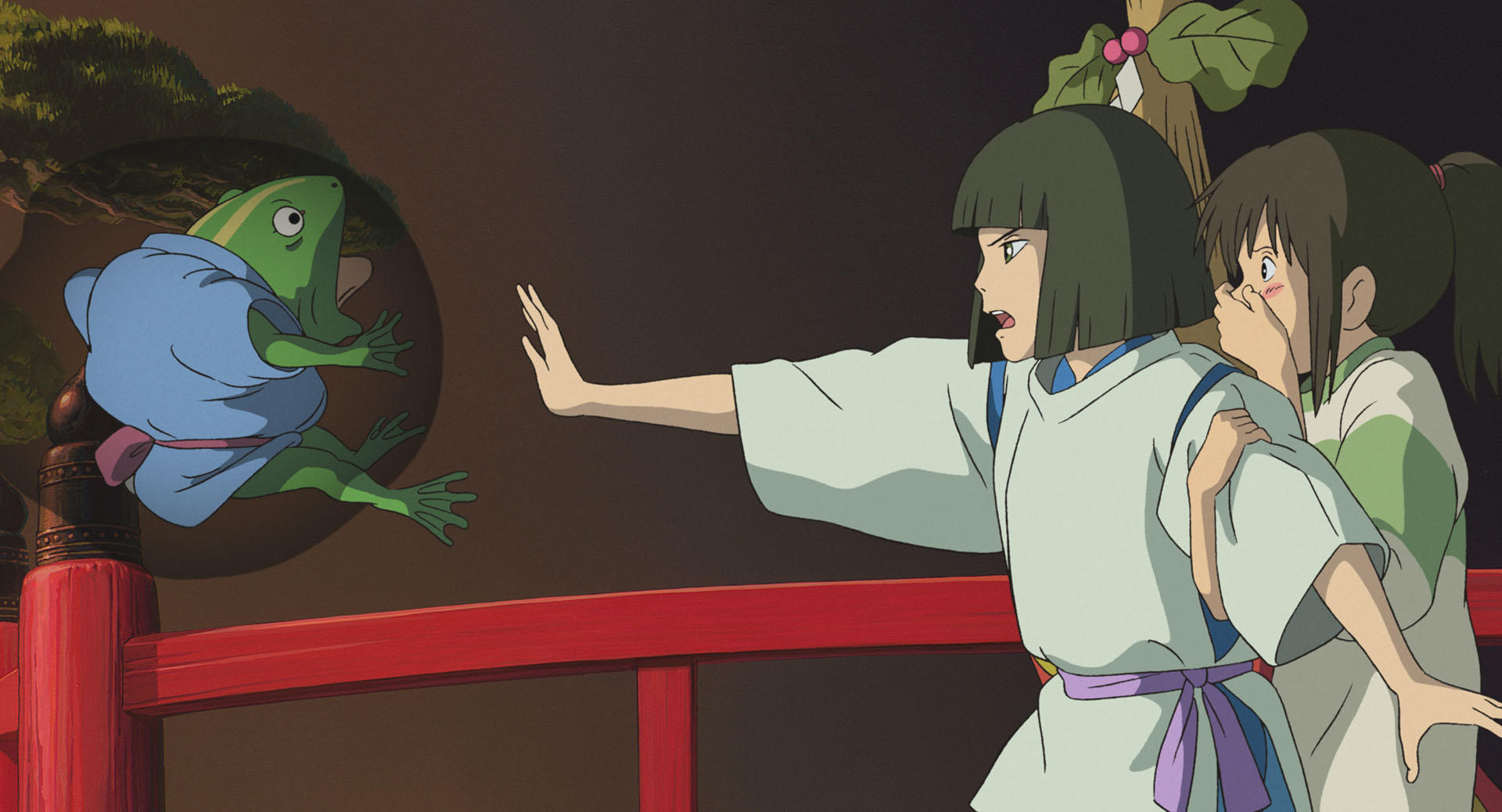
Yubaba is one of Ghibli’s most entertaining antagonists: loud, greedy, theatrical, and genuinely intimidating. She steals names, controls workers, hoards wealth, and runs the bathhouse like a magical business where every relationship has a contract attached. For Chihiro, Yubaba is scary because she turns childhood vulnerability into paperwork, labour, and rules that cannot be escaped by crying.
What makes Yubaba great is her mixture of menace and comedy. She is powerful, but also ridiculous. She adores her giant baby, fusses over details, panics when things go wrong, and seems trapped by the same system she profits from. She gives Spirited Away a clear face for greed and control, while still belonging perfectly to the film’s dream logic.
3. No-Face, Spirited Away
No-Face is not a villain in the traditional sense, but he is one of the most frightening forces in any Ghibli film. He absorbs the bathhouse’s appetite and mirrors it back in monstrous form. When workers respond to him with greed, he becomes greedier. When he is lonely, he becomes clingy. When he consumes others, he becomes louder, larger, and less like himself.
That is why No-Face is so memorable. He is less a person than a warning about emptiness, attention, and consumption. Chihiro does not defeat him with violence. She refuses to feed the behaviour, gives him medicine, and leads him away from the environment making him worse. It is one of Ghibli’s clearest examples of an antagonist who needs boundaries and kindness, not a final battle.
4. Muska, Castle in the Sky
Muska is closer to a classic adventure villain than many characters on this list, and that is part of his appeal. He is elegant, patient, manipulative, and obsessed with Laputa’s power. While Castle in the Sky has pirates, soldiers, robots, and chase scenes, Muska gives the story its cleanest threat: someone who sees a lost wonder of the world as a weapon.
He works because he is not morally complicated in the same way as Lady Eboshi. He is a power fantasy curdled into entitlement. His calm voice makes him more dangerous, and his final scenes turn the beauty of Laputa into something terrifying. For viewers who want Ghibli with a clearer villain shape, Muska is one of the studio’s strongest examples.
5. The Witch of the Waste, Howl’s Moving Castle
The Witch of the Waste begins as a frightening curse-caster who changes Sophie’s entire life. Her early presence is petty, vain, and dangerous, which makes her a strong fairy-tale antagonist. But Howl’s Moving Castle refuses to leave her there. As the film continues, her power and glamour collapse, and she becomes needy, comic, and strangely vulnerable.
That shift can surprise first-time viewers, but it fits the film’s interest in vanity, age, love, and war. The Witch is not redeemed in a neat heroic way. She remains selfish and difficult. Yet the story gradually removes the performance that made her seem untouchable. As an antagonist, she is memorable because she stops being the final boss and becomes another damaged person inside Sophie’s messy found family.
6. Kushana, Nausicaä of the Valley of the Wind
Kushana is severe, militarised, and responsible for violence, but she is not empty evil. Like many Ghibli antagonists, she is shaped by fear and survival. The world of Nausicaä is poisoned, politically unstable, and full of people trying to control what they do not understand. Kushana’s answer is force. Nausicaä’s answer is empathy, science, and trust in life systems larger than human ambition.
That contrast makes Kushana important even when she is not the most emotionally warm character. She helps the film ask whether fear can ever build a safe future. Her presence also points toward the more complicated antagonists Ghibli would later develop in Princess Mononoke.
For the wider conflict around Kushana, the Toxic Jungle and Nausicaä’s response, read the full Nausicaä of the Valley of the Wind guide.
7. Fujimoto, Ponyo
Fujimoto is not evil, but he is absolutely an obstacle. He is anxious, controlling, theatrical, and convinced that Ponyo’s contact with the human world is dangerous. For younger viewers, he may read as the scary sea wizard trying to stop the fun. For adults, he looks more like an exhausted parent terrified of losing control.
That makes him a softer antagonist, but a useful one. Ponyo is full of chaos, waves, magic, and childlike certainty. Fujimoto gives the film friction by worrying about consequences. He is wrong to cage Ponyo’s desire, but he is not wrong that the world is becoming unstable. In a gentler movie, that is enough conflict.
What makes a great Studio Ghibli antagonist?
The strongest Ghibli antagonists usually do three things. First, they pressure the hero in a way that reveals character. Chihiro becomes braver because Yubaba’s world demands work and resilience. Ashitaka becomes more morally serious because Eboshi and San both force him to reject easy answers. Second, they embody a theme rather than just a threat. Greed, war, loneliness, pollution, pride, and fear become visible through people and spirits.
Third, they leave room for complexity. Even Muska, the clearest villain here, matters because he shows what happens when wonder becomes ownership. The more nuanced figures go further. Lady Eboshi helps people while damaging the natural world. No-Face becomes monstrous because the bathhouse teaches him what to want. The Witch of the Waste begins as a curse and ends as a frail, comic reminder that power and beauty do not last forever.
Related guides
If you want to continue through the darker side of the catalogue, read our darkest Studio Ghibli movies ranked guide and the saddest Studio Ghibli movies ranked. For a broader starting route, use the Studio Ghibli movies in order guide.
FAQ
Who is the best Studio Ghibli villain?
Lady Eboshi is the best overall antagonist because she is powerful, memorable, morally complicated, and central to what Princess Mononoke is about.
Is No-Face a villain?
No-Face is better described as an antagonist or mirror character. He becomes dangerous, but the film treats him as lonely and impressionable rather than purely evil.
Does Studio Ghibli have traditional villains?
Sometimes. Muska from Castle in the Sky is the clearest classic villain. Many other Ghibli conflicts are more nuanced, with antagonists who are partly sympathetic or shaped by fear.
Image note: stills used on this page are official Studio Ghibli images from ghibli.jp, where the studio asks that images be used within common-sense bounds.