Pom Poko quick facts
- Japanese title: Heisei Tanuki Gassen Ponpoko
- Japanese release: 16 July 1994
- Original story, screenplay and director: Isao Takahata
- Concept/planning: Hayao Miyazaki
- Producer: Toshio Suzuki
- Theme-song performer: Shang Shang Typhoon
- Running time: about 119 minutes
- Setting: the Tama Hills on the western edge of Tokyo during rapid suburban development
- North American rating: PG on the current GKIDS edition
- Best for: older children, teenagers and adults who enjoy folklore, ensemble comedy and environmental stories with a bittersweet edge
Spoiler-free answer: Pom Poko follows a community of magical tanuki whose woodland is being cleared for a huge suburban development. The tanuki revive their neglected shape-shifting skills and try sabotage, public scares and an extraordinary parade of spirits to stop the construction. It is funny, strange and visually exuberant, but it is not a simple talking-animal victory story. Isao Takahata uses the tanuki’s struggle to ask what survival means when a living landscape is treated as empty space.
Spoiler-free overview
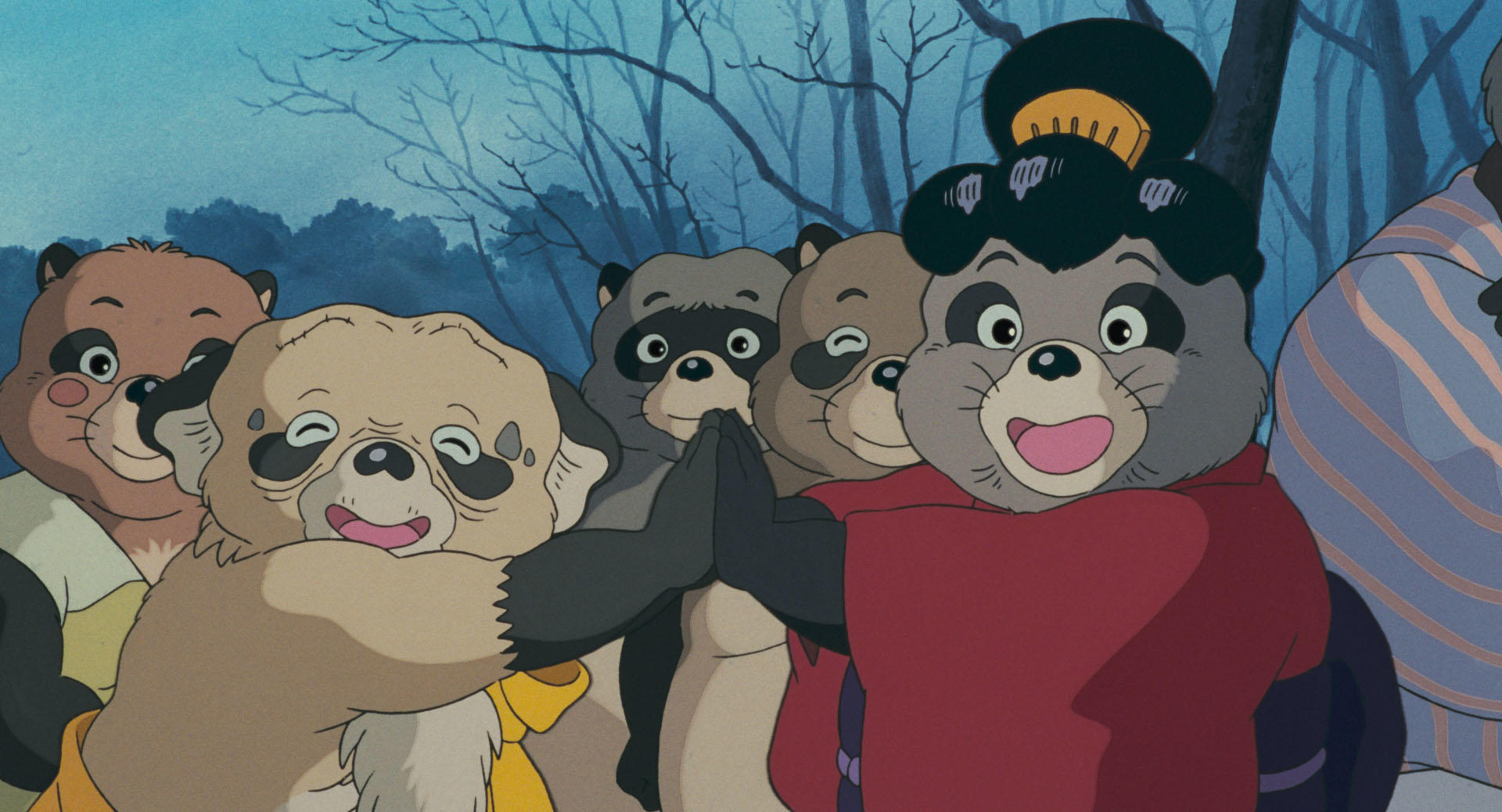
The animals in Pom Poko are Japanese raccoon dogs, or tanuki, not North American raccoons. In Japanese folklore, tanuki are comic tricksters associated with transformation, appetite, music and exaggerated anatomy. Takahata draws on that tradition rather than smoothing it into a generic woodland fantasy. The characters may appear as ordinary animals, simplified cartoon figures or fully transformed humans and monsters, depending on the scene and the point of view.
The threat is the real-life expansion of Tokyo into the Tama Hills. Roads, housing and shopping districts replace fields and woods. Food becomes scarce, territories shrink and neighbouring tanuki groups begin fighting each other. Once they understand that human development is the common danger, they form an uneasy alliance. Their resistance is organised, but never tidy. Some favour careful tricks and publicity. Others want direct attacks. Some become exhausted or choose adaptation.
That mixture of comedy and political sadness makes the film distinctive. A training exercise can become slapstick. A supernatural spectacle can be both beautiful and strategically useless. The tanuki are brave, selfish, generous, foolish and inventive. Their imperfections matter because the story is not about pure nature defeating evil humanity. It is about a community trying many imperfect responses to a system too large to frighten away.
If you want another Ghibli conflict over land, start with our Nausicaä guide and the developing Princess Mononoke guide. Pom Poko is less heroic and more openly comic than either, but its ecological conclusion may be the most recognisably modern.
Story and ending explained
This section contains full spoilers. The film begins as the Tama Hills are being transformed into the New Tama suburban development. Reduced habitat pushes local tanuki clans into fighting over food and territory. The older tanuki persuade them to stop battling one another and recognise the human construction project as the cause of their crisis.
The community gathers under leaders including the elderly Seizaemon and the formidable Oroku. They decide to revive the art of transformation, which many younger tanuki have neglected. Shokichi and other pupils train their bodies and concentration, while messengers are sent to seek help from famous transformation masters elsewhere in Japan. The training is demanding because transformation consumes energy, and not every tanuki has the same talent.
The first campaign relies on sabotage and haunting. The tanuki damage equipment, frighten workers and disguise themselves as people or uncanny figures. Some operations are playful, while others become dangerous. Gonta, convinced that the humans will not stop voluntarily, leads a more militant faction. The resistance causes accidents and deaths, but construction continues because the development has money, machinery and replacement workers behind it.
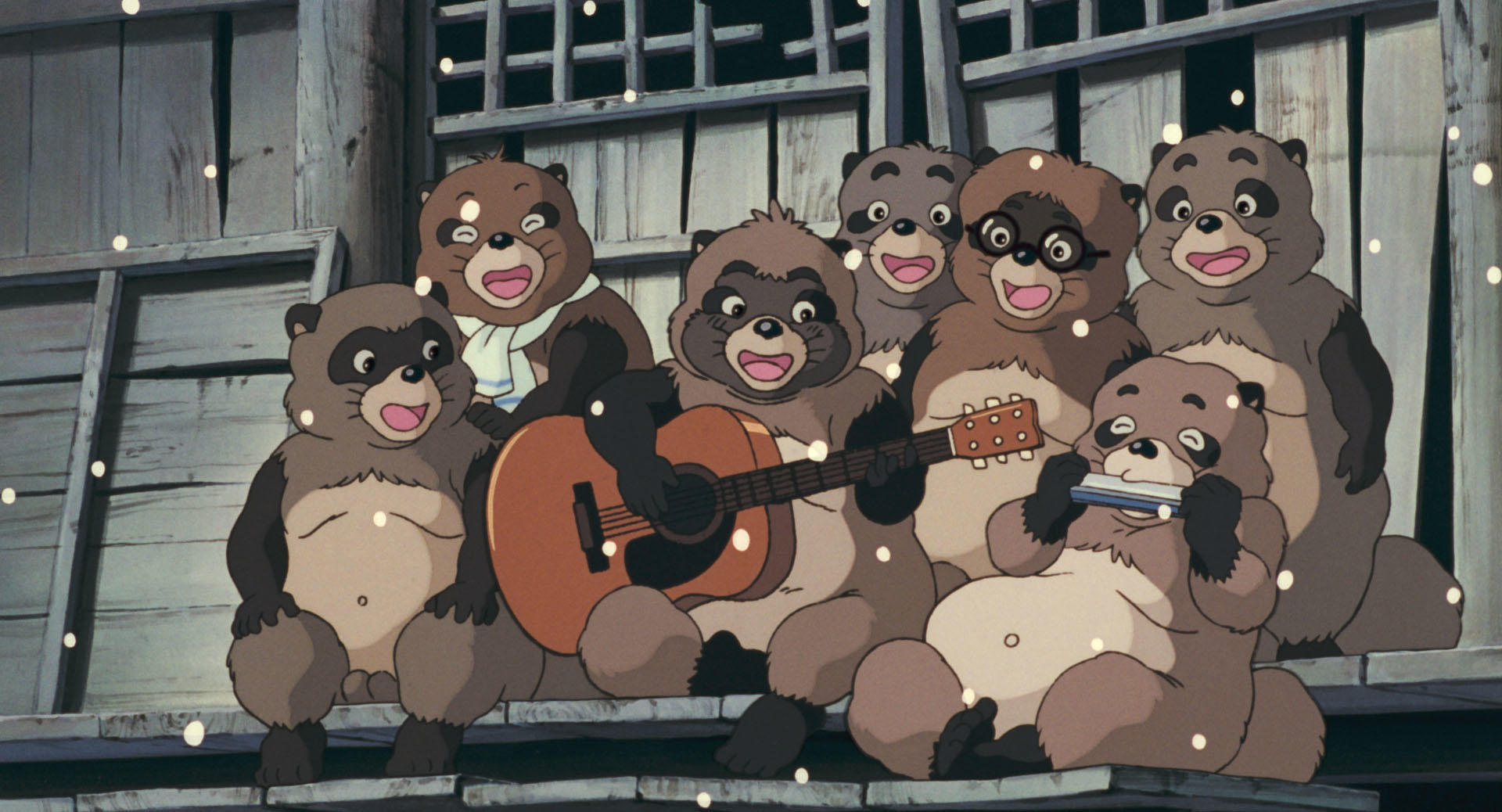
Even as the forest disappears, tanuki life remains crowded with meals, songs, romance, jokes and quarrels. That tonal contrast is deliberate. The film makes viewers enjoy the community before showing how development breaks it apart. Shokichi and Okiyo form a relationship and later raise a family, giving the environmental conflict a domestic scale. Saving habitat means preserving the possibility of ordinary future lives, not just protecting scenery.
Three celebrated elders eventually arrive from Shikoku. Their support helps the tanuki plan the Night Parade of One Hundred Demons, a vast supernatural procession designed to prove that the area belongs to forces the developers cannot control. The parade fills the new town with floating ships, monsters, dragons, ghosts and transforming crowds. It is one of the film’s great visual set pieces and a display of collective imagination.
Yet spectacle is quickly absorbed by commerce. The owner of a nearby theme park claims responsibility for the parade as a publicity event. Rather than accepting a supernatural warning, the public treats it as entertainment. The tanuki have produced something astonishing, but they cannot control how human institutions explain and sell it.
With the main plan defeated, the community splinters. Gonta and his followers choose open battle, transforming themselves into warriors for a final attack. They are killed. Other tanuki follow the elders into a fantastical vessel and apparent journey toward paradise, a sequence that can be read as spiritual escape or death rather than practical rescue. A group attempts a television appeal by revealing the truth, but sympathy arrives too late to restore the destroyed hills.
In one last communal act, the surviving tanuki transform the developed landscape into a vision of the countryside as it was. Homes, paths and fields disappear beneath remembered green space. The illusion briefly lets humans and tanuki see what has been lost. It cannot reverse construction, but it turns memory into testimony.
The ending follows the unequal ways the survivors adapt. Tanuki capable of sustained human transformation enter offices and commuter life, hiding their identity to live inside the new city. Those without the skill survive in small patches of urban green, competing for food and facing traffic. Shokichi, exhausted by human routine, glimpses a group of tanuki celebrating on a golf course and joins them. He then addresses the audience directly, asking people to notice the animals still trying to live among them.
This is not a secret happy ending. The community survives, but the habitat and way of life do not. Adaptation carries a cost, and not everyone has equal access to it. The final celebration is precious precisely because it is temporary.
Main characters and groups
Shokichi
Shokichi is the closest thing the ensemble has to a central viewpoint. He trains, joins the campaign, loves Okiyo and eventually lives disguised as a human salaryman. His ending shows adaptation as both resilience and loss. He survives, but the effort of performing human life separates him from the community rhythms that made survival meaningful.
Okiyo
Okiyo is Shokichi’s partner and an active member of the resistance. Their family gives the story continuity across the campaign. She helps prevent the film’s politics from becoming abstract: habitat loss changes where children can be raised, how food is found and whether communal customs can continue.
Gonta
Gonta represents militant resistance. His anger is understandable because he sees the destruction clearly and doubts that tricks will stop it. Yet the film does not present escalation as a clean solution. His final charge is courageous, desperate and fatal. Takahata allows viewers to feel the force of his refusal without pretending it can defeat the machinery of development.
Seizaemon and Oroku
Seizaemon provides elderly leadership and tries to hold the clans together. Oroku is a strong senior voice who supports discipline and the recovery of transformation skills. Together they connect the younger tanuki to folklore, memory and collective organisation.
The Shikoku elders
The visiting masters bring extraordinary power and cultural authority. Their participation makes the spirit parade possible, but their solution cannot restore the land. Their later departure also exposes the temptation of escaping into legend when material options have run out.
Themes and interpretation
Habitat loss is a social crisis
The film does not show nature as an untouched postcard. The hills are homes, food systems, meeting places and inherited culture. When bulldozers remove them, the tanuki lose more than trees. They lose the physical conditions that make community possible. Our broader Ghibli nature guide places this argument beside the ecological conflicts in Nausicaä, Ponyo and Princess Mononoke.
Adaptation is unequal
Transformation becomes a sharp metaphor for social flexibility. Skilled tanuki can pass as human and enter the economy. Others cannot. Telling a displaced community simply to adapt ignores differences in ability, energy and opportunity. Even successful passing demands constant work and concealment.
Resistance can be absorbed as entertainment
The ghost parade should expose a reality humans have refused to see. Instead, a business converts it into promotion. The episode feels especially modern because attention is not the same as power. A spectacular protest may be admired, photographed and sold without changing the system it opposes.
Folklore survives by changing form
The tanuki’s transformations bring older supernatural traditions into suburbs, televisions and commuter stations. The film neither freezes folklore in the past nor assumes modern life automatically destroys it. Tradition survives through performance and reinvention, though each reinvention can lose something.
Comedy protects grief without cancelling it
Eating, drumming, dancing and bodily jokes do not weaken the environmental message. They show what is worth defending. The film’s grief lands because the threatened characters have pleasure, appetite and absurdity. Their culture is alive, not a solemn museum exhibit.
Age suitability and content guidance
The current North American GKIDS edition is rated PG, but Pom Poko is better suited to older children who can handle death, environmental loss and abrupt tonal changes. Construction accidents and the tanuki’s resistance lead to human and animal deaths. Gonta’s final battle is intense, and later sequences imply that some characters die or depart for an afterlife. The ending is hopeful about survival but openly sad about irreversible habitat destruction.
Japanese folklore often depicts tanuki with highly exaggerated scrotums, and the film includes repeated non-sexual visual jokes and transformations based on that anatomy. The imagery is not presented erotically, but families unfamiliar with the tradition may want to know about it in advance. There is also mild drinking, smoking, peril, frightening supernatural imagery and crowded monster designs.
Younger viewers may enjoy the animals and slapstick while missing the political structure, but the 119-minute running time and shifts from comedy to death can be demanding. A good family discussion can separate explanation from approval: the tanuki’s desperation makes their sabotage understandable, but the film still shows the human and animal cost of violence. Check the rating and content advice attached to the edition in your country.
Production and release context
Studio Ghibli’s official works page credits Isao Takahata with the original story, screenplay and direction, Hayao Miyazaki with planning, and Toshio Suzuki as producer. It lists a 119-minute running time and a Japanese theatrical release on 16 July 1994 through Toho. The same page credits Shang Shang Typhoon with the theme song.
Takahata had already made Grave of the Fireflies and Only Yesterday for Studio Ghibli. Those films look very different, but all three are concerned with how historical and economic systems shape ordinary lives. Pom Poko adds folklore and ensemble comedy to that interest. For a route through his work, see our Studio Ghibli directors guide.
The changing visual form of the tanuki is part of the storytelling. At times they resemble natural animals. At other times they become simplified cartoon characters who can argue, plan and perform. During transformations they take on human or supernatural shapes. The shifts allow documentary observation, comedy and fantasy to coexist without forcing the film into one visual register.
Where to watch Pom Poko legally
Availability changes by country and date. As checked in July 2026, the official GKIDS Pom Poko page lists North American on-demand purchase or rental through Apple TV and Prime Video, with subtitled and dubbed options indicated, plus a Blu-ray and DVD edition. For other regions, use our legal Studio Ghibli viewing guide and confirm the exact title, audio and subscription status inside your local service.
Related films
Watch Nausicaä of the Valley of the Wind for ecological fear answered with empathy; Princess Mononoke for a larger and more violent conflict between forest and industry; or Only Yesterday for Takahata’s quieter attention to rural life and social change. My Neighbor Totoro offers a gentler relationship with the countryside, while The Tale of the Princess Kaguya shows Takahata’s visual experimentation in another register. Browse the complete Movies directory for the release-order route.
Frequently asked questions
What are the animals in Pom Poko?
They are tanuki, Japanese raccoon dogs. English descriptions sometimes call them raccoons for simplicity, but tanuki are a distinct canid species with a rich role in Japanese folklore.
What does the Japanese title mean?
Heisei Tanuki Gassen Ponpoko is commonly rendered as something like “Heisei-era tanuki war Pom Poko.” “Pom poko” evokes a rhythmic drumming sound associated with tanuki folklore and the film’s playful musical identity.
Is Pom Poko based on a book?
Studio Ghibli’s official page credits Isao Takahata with the original story as well as screenplay and direction. The film draws heavily on established tanuki folklore rather than adapting one named novel.
Is Pom Poko suitable for children?
It is rated PG on the current GKIDS North American edition, but it includes deaths, peril, environmental grief, supernatural scares and repeated non-sexual folklore imagery involving exaggerated tanuki anatomy. Many families will find it a better fit for older children than preschool viewers.
Why do the tanuki look different between scenes?
The film uses naturalistic animal forms, simplified cartoon forms and transformed human or supernatural forms for different storytelling purposes. The changes reflect viewpoint, emotion and the tanuki’s magical abilities rather than a continuity mistake.
Do the tanuki save their forest?
No. They win moments of attention and preserve parts of their culture, but the development continues. Some transform and enter human society, while others survive in fragmented urban green space. The bittersweet outcome is central to the film’s argument.
What does the ending mean?
Shokichi’s return to a temporary tanuki celebration shows that adaptation has not erased his identity or need for community. His direct appeal asks viewers to notice the nonhuman lives displaced by ordinary urban growth.
Image source: official Pom Poko stills from the Studio Ghibli works gallery, whose exact page includes the studio’s common-sense image-use notice.
Official film stills are credited to Studio Ghibli and used under its common-sense image-use notice.