Quick answer: the main Ponyo characters are Ponyo, Sōsuke, Lisa, Fujimoto and Granmamare. The film works because each character represents a different kind of love: a child’s open trust, a parent’s practical courage, a worried father’s need for control, and a sea goddess’s wider understanding of balance.
Ponyo can look like one of Studio Ghibli’s simplest films at first. It is bright, fast, funny and full of childlike momentum. But the characters are doing more than moving a cute fish-girl adventure along. They shape the film’s view of family, fear, freedom and what it means to accept someone as they are.
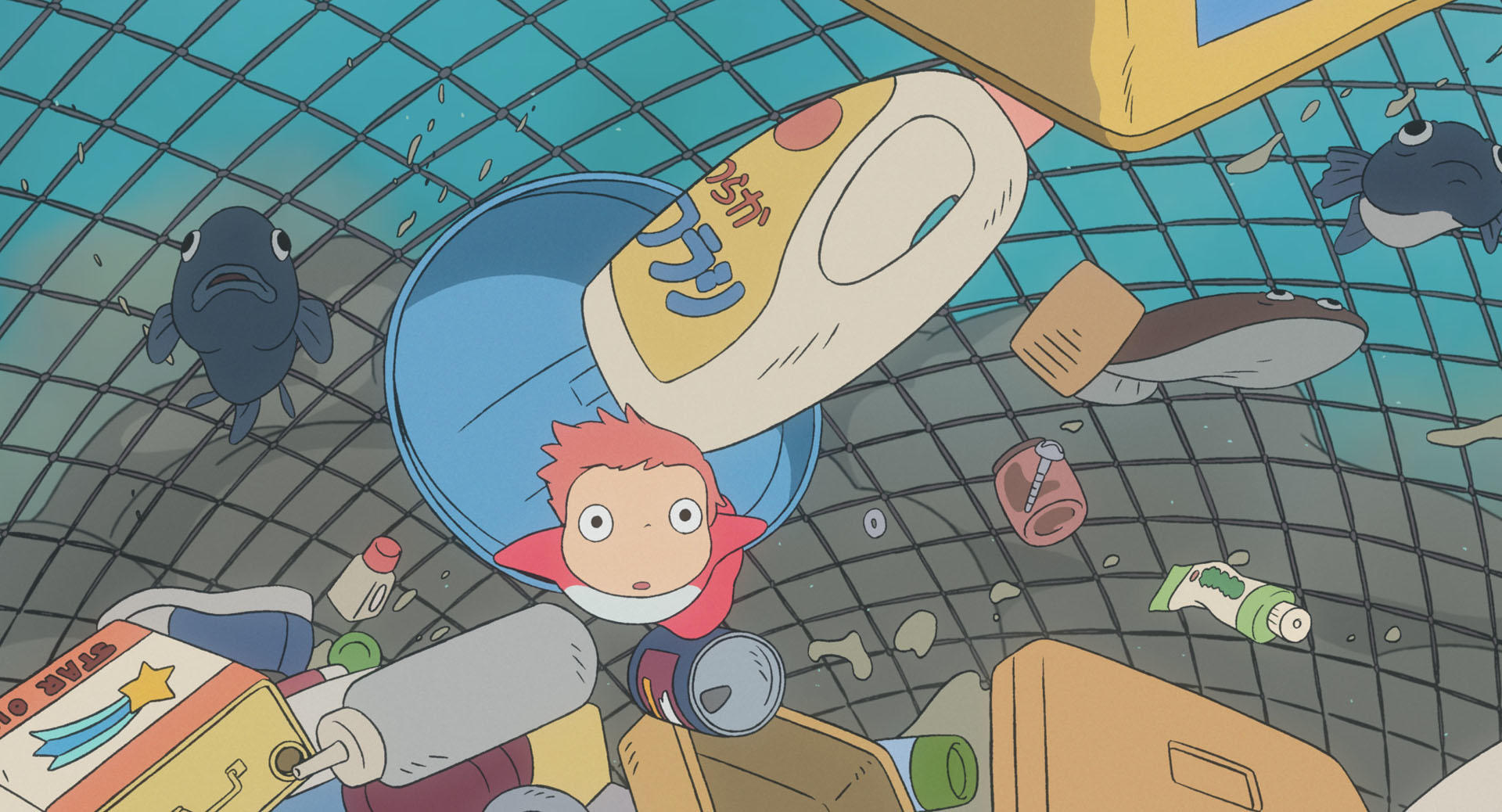
Ponyo: joy, appetite and the wish to become human
Ponyo is pure forward motion. She wants, laughs, eats, escapes and chooses before the adults have finished explaining the rules. That energy is why young viewers often connect with her instantly. She is not calculating a grand destiny. She simply feels that Sōsuke’s world is warm, interesting and worth joining.
Her change from fish to girl also gives the story its emotional stakes. Ponyo’s magic is not tidy or safe. When she breaks away from the sea, nature itself tilts out of balance. That could make her seem reckless, but Ghibli frames her as a child discovering desire, identity and independence. The point is not that wanting freedom is wrong. The point is that love has consequences, and freedom needs care around it.
Sōsuke: trust as a form of courage
Sōsuke is one of Ghibli’s gentlest young heroes. He does not defeat a villain or solve the story through cleverness. His strength is steadiness. From the moment he finds Ponyo, he treats her as someone real. He protects her, names her, talks to her and keeps choosing kindness even when the world around him becomes strange.
That matters because the film’s final test depends on sincerity. Sōsuke’s promise to accept Ponyo whether she is fish, half-fish or human can sound simple, but it is the emotional centre of the movie. He is not old enough to understand every cosmic consequence. He is old enough to mean what he says. In Ponyo, that kind of honest acceptance is powerful.
Lisa: the everyday hero of Ponyo
Lisa gives the film its human backbone. She is funny, impatient, loving and brave in a very practical way. While the sea rises and magic spills into the town, she still has to drive, cook, comfort Sōsuke and think about the elderly residents at the care home. Her heroism is not ceremonial. It is the kind that comes from responsibility.
She is also one of the reasons Ponyo feels grounded instead of weightless. The storm scenes would be pure fantasy without Lisa’s worried glances, quick decisions and occasional flashes of frustration. She makes the family feel lived-in. Her relationship with Sōsuke has warmth and boundaries, which is why his kindness to Ponyo feels learned rather than random.
Fujimoto: fear, control and a father who cannot let go
Fujimoto is not a simple villain. He looks theatrical and suspicious, but his motives are tied to fear. He knows the sea’s power, understands the danger of imbalance and believes the human world is polluted and careless. From his perspective, Ponyo is not just running away. She is putting herself and the world at risk.
That makes him one of Ghibli’s familiar complicated adults: partly right, partly wrong and emotionally trapped by his own certainty. Fujimoto loves Ponyo, but he tries to protect her through control. The film gently pushes him toward the harder parental lesson: a child’s future cannot be managed by fear alone.
Granmamare: the sea’s calm, mythic perspective
Granmamare changes the scale of the story. When she appears, Ponyo feels less like a runaway-child adventure and more like a myth. She is vast, graceful and calm, but not cold. Her power is matched by trust. Unlike Fujimoto, she does not respond to uncertainty by tightening her grip.
Her role is important because she allows the story to resolve through acceptance rather than punishment. Ponyo’s choice matters. Sōsuke’s promise matters. Fujimoto’s fear is acknowledged, but it is not allowed to rule the ending. Granmamare represents a wider balance, one that can make room for change when love is genuine.
The smaller characters make the world feel loved
The residents at Lisa’s care home, Sōsuke’s father Kōichi, the townspeople and even Ponyo’s many sisters help make the film feel communal. Ponyo is not just about two children. It is about a seaside world where everyone is vulnerable to the same storm and everyone benefits when people look after each other.
Kōichi is mostly seen at a distance, signalling from his ship, but that distance matters. It explains some of Lisa’s stress and Sōsuke’s longing. The care-home scenes add a different emotional register: older people who are often treated as fragile become witnesses to wonder. Ponyo’s sisters, meanwhile, make magic feel playful and overwhelming, like nature itself has become a laughing crowd.
Why the Ponyo characters work so well together
The cast works because each character pulls the story in a different direction. Ponyo wants freedom. Sōsuke offers trust. Lisa protects the practical human world. Fujimoto warns that magic has costs. Granmamare sees the larger pattern. Put together, they turn a simple premise into a story about what love requires from children, parents and communities.
That is also why Ponyo is such a useful first Ghibli film for families. Younger viewers can enjoy the fish-girl chaos, the noodles, the waves and the bright transformations. Older viewers can see a story about parenting, ecological anxiety and letting children grow without pretending the world is risk-free.
Related Studio Ghibli guides
- Start with the main Ponyo beginner guide if you want a spoiler-light overview.
- Read the Ponyo ending explained guide for the final test and the sea-magic rules.
- For a broader family watchlist, see best Studio Ghibli movies for kids.
FAQ
Who are the main characters in Ponyo?
The main characters are Ponyo, Sōsuke, Lisa, Fujimoto and Granmamare. Kōichi, the care-home residents and Ponyo’s sisters also help shape the story’s family and community feeling.
Is Fujimoto the villain in Ponyo?
Fujimoto is better read as a frightened parent than a villain. He creates conflict because he tries to control Ponyo, but his fear comes from real concern about the sea, magic and the human world.
Why does Sōsuke matter so much to the ending?
Sōsuke matters because his promise proves that Ponyo is accepted as herself. The ending depends on trust and sincerity, not on a battle or a clever trick.
Image source: official Studio Ghibli stills from ghibli.jp, used under the studio’s common-sense usage notice.