Quick answer: the main characters in Porco Rosso are Porco, formerly Marco Pagot, a First World War flying ace who now looks like a pig; Fio Piccolo, the brilliant young engineer who rebuilds his seaplane; Gina, a hotel owner and singer who has lost several aviators she loved; Donald Curtis, Porco’s boastful American rival; and the Mamma Aiuto air pirates. Together they make the film a story about survivor’s guilt, chosen isolation, women’s work, performative masculinity and the possibility of returning to ordinary human life.
This character guide contains major spoilers, including the film’s final hints about Porco’s face. For the full plot, themes and age advice, begin with our Porco Rosso movie guide. Parents can also use our separate Porco Rosso suitability guide.
Porco Rosso characters at a glance
- Porco Rosso / Marco Pagot: an Italian veteran and seaplane bounty hunter who has withdrawn from human society behind a pig’s face.
- Fio Piccolo: a talented 17-year-old aircraft engineer who redesigns Porco’s damaged plane and refuses to be dismissed because of her age or gender.
- Gina: the poised owner and singer of the Hotel Adriano, an independent woman who knows the emotional cost of the pilots’ romantic adventures.
- Donald Curtis: an ambitious American pilot hired by the pirates to defeat Porco, with dreams of Hollywood fame and political power.
- Mr Piccolo: Fio’s grandfather and the owner of the Milan workshop that repairs Porco’s aircraft.
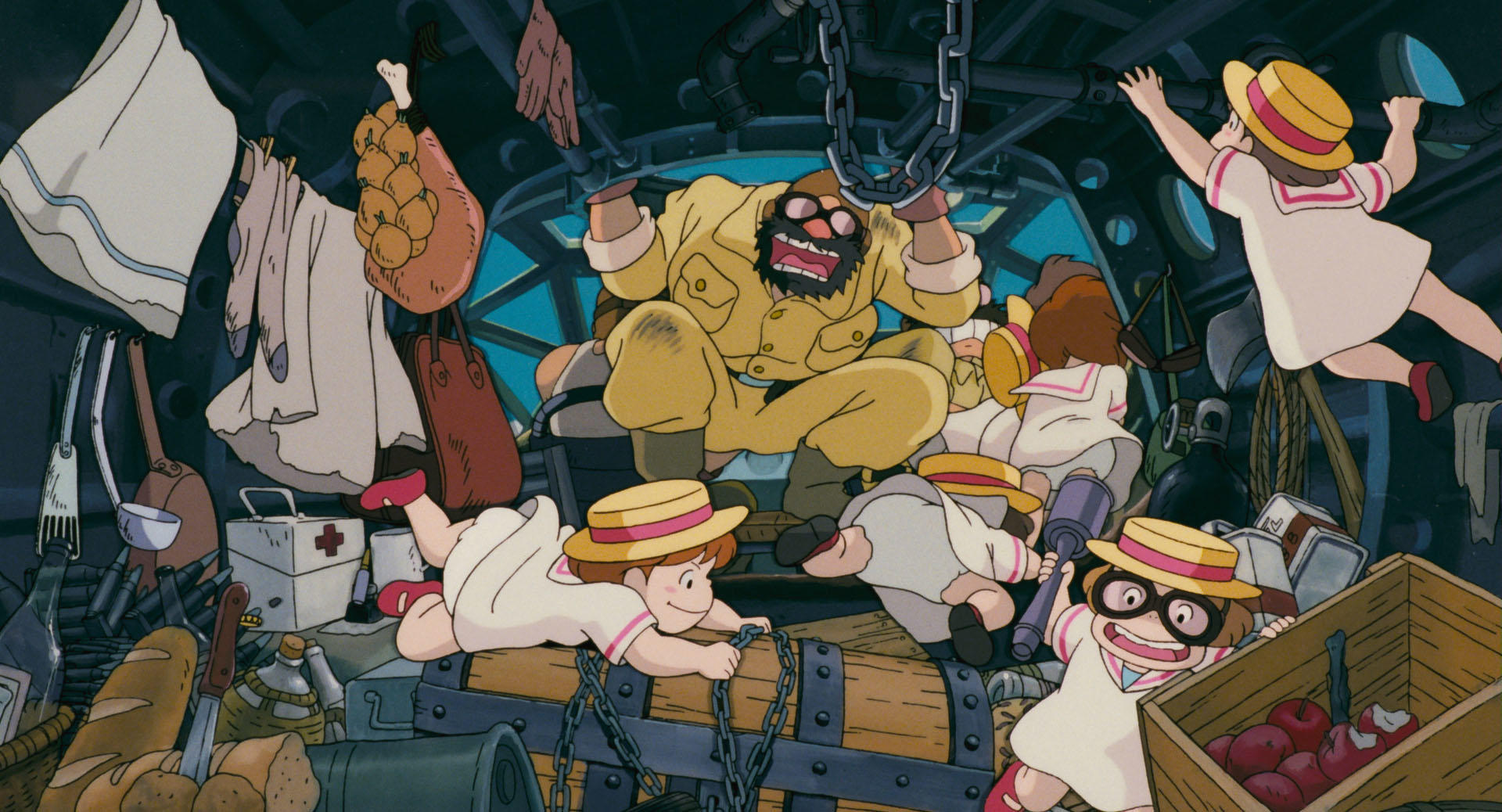
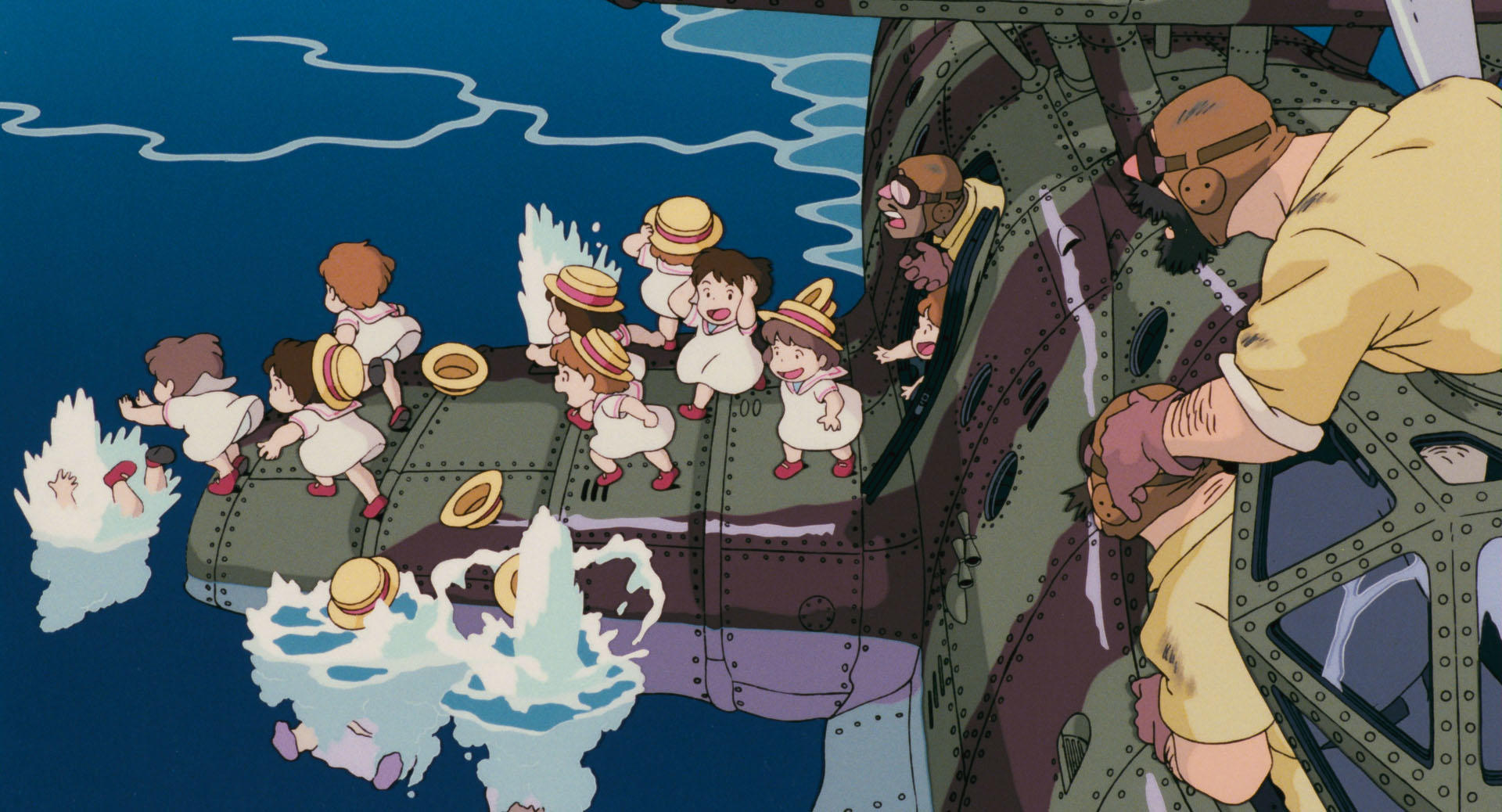
- The Mamma Aiuto Gang: noisy sky pirates who provide comic danger but follow their own surprisingly recognisable code.
- Ferrarin: Porco’s former wartime comrade, now serving in the Italian air force while quietly warning his old friend about the authorities.
Porco Rosso, or Marco Pagot: the pilot behind the pig
Porco introduces himself through competence. He lives alone on a beach, listens to the radio, takes contracts against air pirates and flies a red seaplane with extraordinary control. His pig-like appearance is treated as established fact, but the film never supplies a tidy rulebook for the transformation. Porco calls it a curse, while other characters respond as though the face expresses something he has chosen to carry.
Before becoming Porco, he was Marco Pagot, an Italian fighter pilot. His memory of the First World War reveals the emotional centre of the character: he survived a battle in which his friend Berlini and many other pilots died. In the strange vision that follows, aircraft and their dead crews rise into a pale stream across the sky while Marco remains below. His isolation is therefore not just glamorous independence. It is a form of survivor’s guilt and self-punishment.
Porco’s famous anti-fascist attitude also separates him from the state forming around him. He would rather remain a pig than join fascists, but the film does not turn that defiance into spotless heroism. He can be dismissive, sexist and emotionally evasive. The important question is whether he can oppose an ugly political world without giving up on his own humanity.
Fio Piccolo: engineer, negotiator and equal partner
Fio is the young designer assigned to rebuild Porco’s plane in Milan. Porco initially assumes that a 17-year-old woman cannot handle the job. Fio answers with knowledge, drawings and practical confidence rather than a speech asking for permission. Her redesigned seaplane is not decorative assistance; it is the machine on which Porco’s survival depends.
The Piccolo workshop is staffed largely by women because many men have left to find work elsewhere. That detail expands Fio’s role. She is exceptional, but she also belongs to a community of women doing skilled industrial labour while public adventure stories focus on male pilots. When the secret police threaten Porco, the same workforce helps get the aircraft out.
Fio becomes more than an engineer when she confronts the air pirates and proposes the wager that sets up Porco’s duel with Curtis. Her courage can be reckless, yet it changes the moral atmosphere around Porco. She sees the human face he hides and treats him as someone capable of returning to other people.
Gina: memory, patience and a life beyond waiting
Gina runs the Hotel Adriano, a neutral meeting place where pilots and pirates lower their voices and listen when she sings. She has buried three aviator husbands, including Berlini, and understands better than anyone that the pilots’ beautiful machines leave grief behind. Her elegance is not passive decoration. It is authority built from experience.
She loves Marco, but she does not chase him indefinitely. Instead, she makes a private wager that if Porco walks into her garden during the day, she will tell him how she feels. The garden represents a different life from his hidden beach and endless contracts: visible, domestic and connected, but still chosen by an independent woman.
Gina and Fio are not rivals competing for the same prize. Fio admires her, and Gina helps protect both younger people. Their bond keeps the film from reducing its women to contrasting romantic types. Gina recognises what Fio awakens in Porco, while Fio understands that Gina knows the man Marco used to be.
Donald Curtis: rival, performer and distorted mirror
Curtis is an American pilot hired by the pirate coalition after Porco repeatedly humiliates them. He is genuinely skilled, but he narrates his own life as a series of future triumphs. He expects to become a Hollywood star, marry a glamorous woman and eventually occupy the White House. Even his romantic proposals arrive as part of that performance.
He works as Porco’s comic opposite. Porco hides from attention; Curtis craves it. Porco treats himself as morally damaged; Curtis assumes charisma will make every desire reasonable. Yet both men turn danger into identity and use flying to avoid emotional honesty. Their final duel collapses from aerial spectacle into an exhausted fistfight, exposing the childish pride beneath the legend.
Curtis is not a simple villain. He follows the duel’s terms, recognises Fio’s courage and reacts with astonishment when he sees Porco’s human face. His vanity remains funny, but he helps make the ending possible by becoming a witness to change.
The Mamma Aiuto Gang and the air pirates
The Mamma Aiuto Gang kidnaps schoolgirls and attacks passenger aircraft, so its members are dangerous criminals. The film nevertheless presents them with comic incompetence and limits. They are overwhelmed by the children they capture, avoid needless cruelty and ultimately respect Fio’s nerve. Their name, meaning “Mama, help me,” suits grown men whose swagger repeatedly gives way to panic.
Alongside the other pirate gangs, they create a rowdy alternative society in the Adriatic. They compete, form a union against Porco and gather to watch the duel. Their theatrical code cannot erase their crimes, but it distinguishes them from the colder threat of fascist surveillance and state violence moving in around the story.
Mr Piccolo and the women of the workshop
Mr Piccolo is a practical businessman who welcomes Porco’s repair job and trusts Fio with serious responsibility. He can exploit a commercial opportunity, but his workshop also functions as an extended family. When Porco questions Fio, Piccolo backs her ability rather than replacing her to soothe the customer.
The relatives and local women who build the aircraft make one of the film’s clearest arguments about skill. Design, carpentry, fabric work, engine fitting and finishing are collective achievements. Porco may be the famous pilot, but his red plane exists because many less celebrated people know how to make it fly.
Ferrarin, Berlini and Porco’s lost generation
Ferrarin has stayed inside military aviation after the war. He warns Porco that the authorities plan to seize him and offers a route back into official service, which Porco rejects. Their friendship shows that Porco has not completely cut every tie to his former life.
Berlini, Gina’s first husband and Marco’s comrade, appears through memory. His death connects Gina’s grief to Porco’s guilt. The other dead pilots in Marco’s vision turn that personal loss into a generational one: these men loved flight, but war absorbed their talent and youth. Porco’s curse makes that history visible every time someone looks at him.
How the relationships change Porco
Fio, Gina and Curtis challenge different parts of Porco’s isolation. Fio requires trust and makes him responsible for someone besides himself. Gina offers love without surrendering her dignity or independence. Curtis forces Porco into a public contest where the mask of effortless superiority finally breaks down.
None of them simply removes the curse. The film suggests that Porco’s appearance changes when he briefly stops judging himself as unworthy of human connection. Fio sees Marco’s face after he tells the wartime story, and Curtis appears to see it after the fight. The final narration deliberately withholds a definitive answer, preserving change as a choice Porco must continue making.
Frequently asked questions
Why is Porco Rosso a pig?
The film never gives one mechanical cause. His pig face is best read as a magical expression of survivor’s guilt, self-disgust and withdrawal after the First World War. Brief returns of his human face suggest the curse is connected to how he sees himself.
Are Porco and Gina together at the end?
The ending does not state it directly. Fio says whether Gina’s wager succeeded is a secret, while the final images invite viewers to look for signs that Porco returned to the Hotel Adriano. The implication is hopeful without becoming a confirmed romance epilogue.
Does Fio fall in love with Porco?
Fio clearly admires and cares for him, and she kisses him before leaving. Their bond is more important as trust between engineer and pilot, and as the connection that helps Porco recognise his remaining humanity, than as a conventional completed romance.
Is Donald Curtis based on a real person?
Curtis is a fictional American adventurer shaped by movie-star swagger, aviation mythology and political ambition. His name also nods to aircraft designer Glenn Curtiss, but the character is not a direct biography.
For more guides, browse the complete Studio Ghibli movie directory or revisit our guide to the best Studio Ghibli flying scenes.
Image credit: Official stills from the Porco Rosso page on ghibli.jp, used under Studio Ghibli’s common-sense image-use notice. This article is an independent fan guide and is not affiliated with Studio Ghibli.