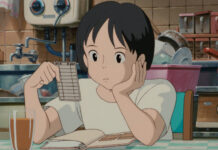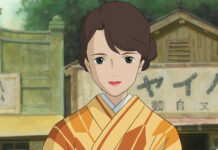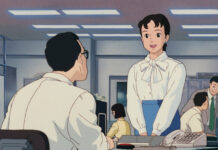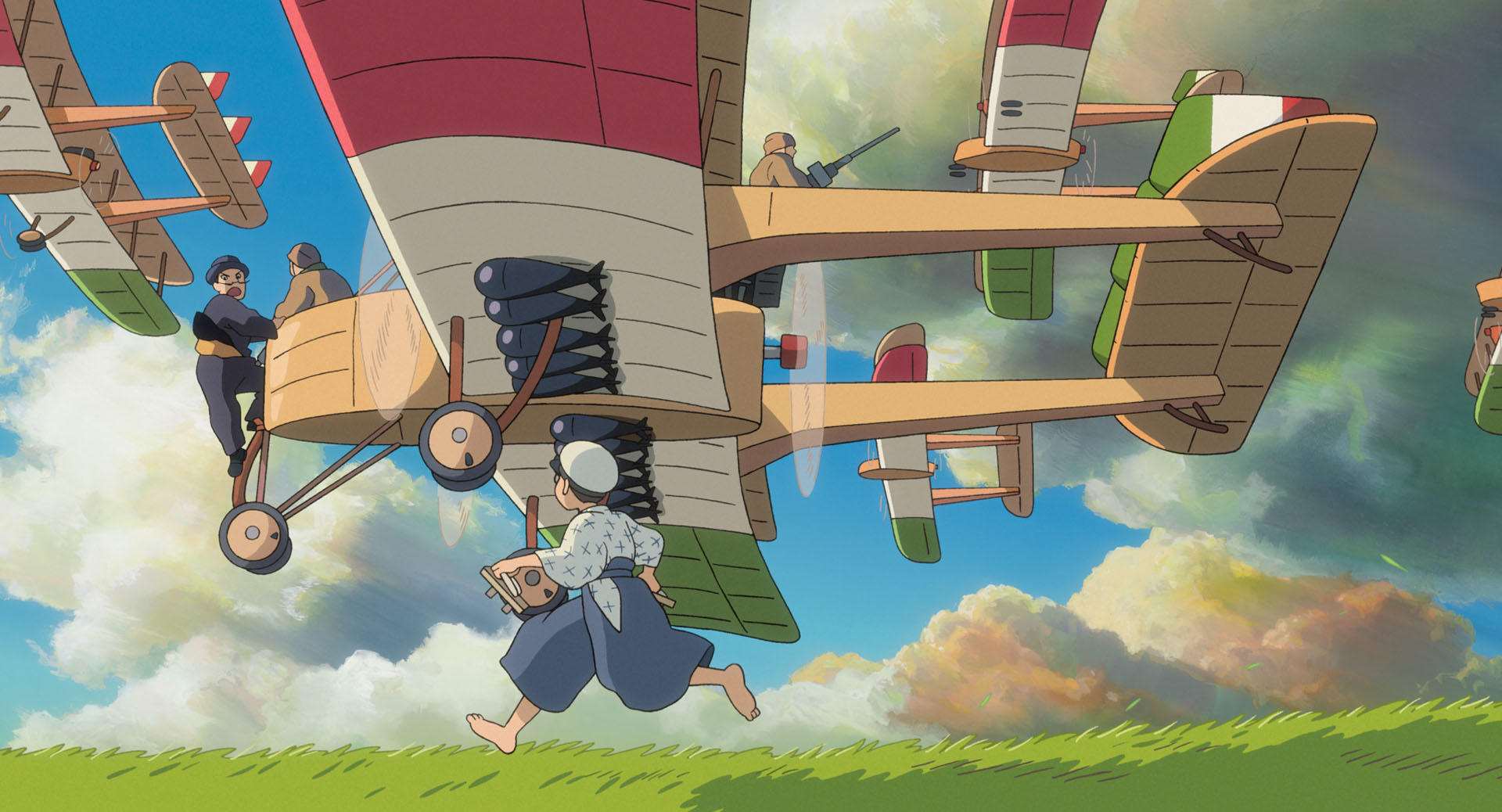
Quick answer: the main characters in The Wind Rises are Jiro Horikoshi, a gifted aircraft designer whose beautiful machines become instruments of war; Nahoko Satomi, the artist and tuberculosis patient he loves; Giovanni Battista Caproni, the Italian aviation pioneer who appears in Jiro’s dreams; Honjo, Jiro’s practical friend and fellow engineer; and Kurokawa, his demanding supervisor. Together they turn the film into a story about ambition, love, responsibility and the limited choices people make inside a turbulent historical period.
This guide explains the ensemble and its relationships, with significant story spoilers. For the complete plot, age guidance and historical context, begin with our The Wind Rises movie guide. If you are looking specifically for the final dream sequence, read our separate ending explanation.
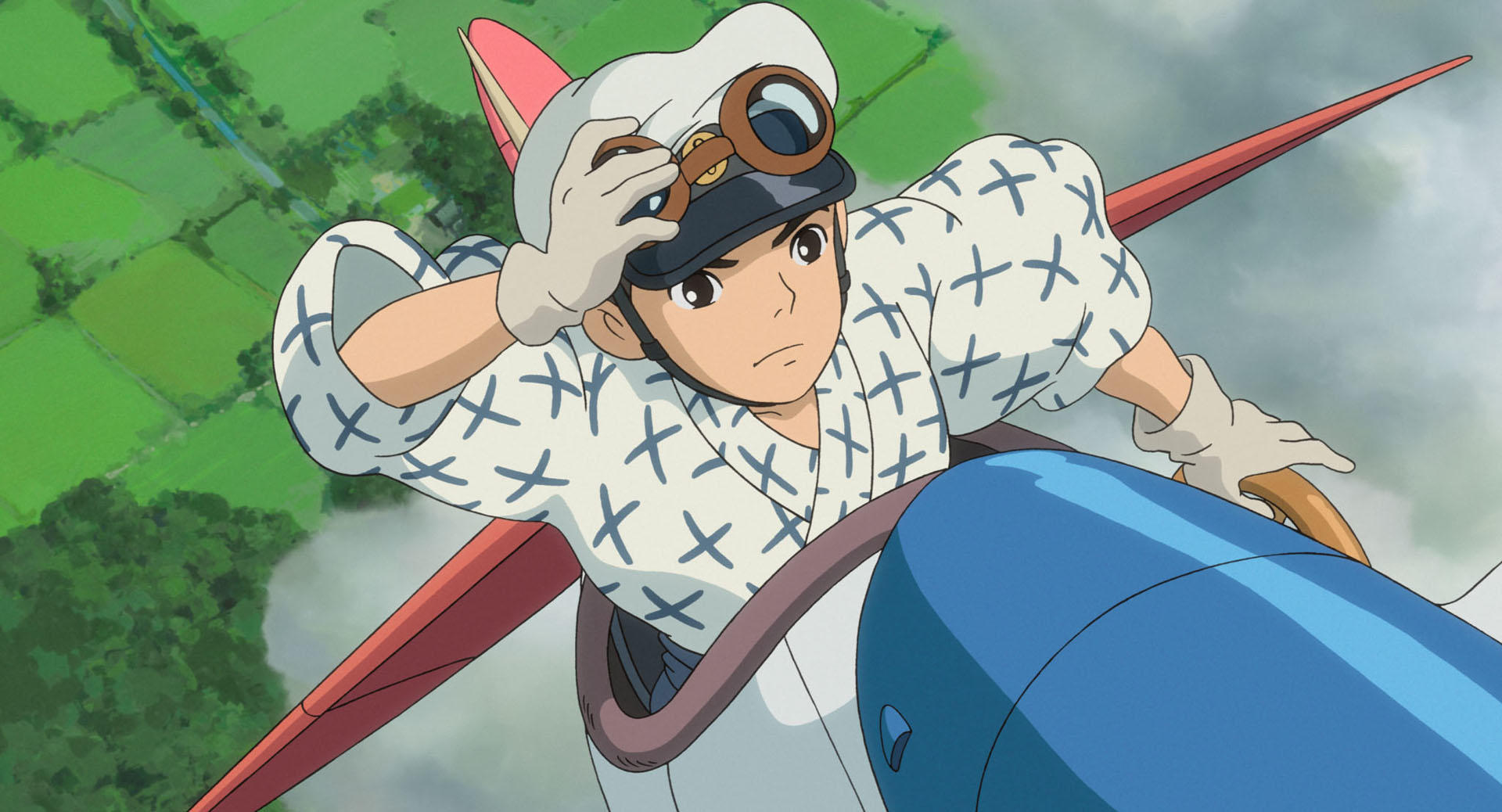
The main characters at a glance
- Jiro Horikoshi: an aeronautical engineer who cannot become a pilot because of his poor eyesight, so he designs aircraft instead.
- Nahoko Satomi: a talented painter whom Jiro first meets during the Great Kanto Earthquake and later meets again at a mountain hotel.
- Giovanni Battista Caproni: a real Italian aircraft designer transformed into Jiro’s imaginative mentor inside recurring dreams.
- Honjo: Jiro’s university friend and engineering colleague, whose direct observations often puncture romantic ideas about aviation.
- Kurokawa: Jiro’s short-tempered but protective supervisor at the aircraft company.
- Mrs Kurokawa: Kurokawa’s perceptive wife, who supports Nahoko and helps the couple marry.
- Castorp: a mysterious German visitor at the mountain hotel who speaks openly about the danger gathering around Japan and Europe.
- Hattori: a senior company figure who recognises Jiro’s ability and gives him room to develop it.
Jiro Horikoshi: the dreamer at the centre
Jiro is quiet, courteous and intensely absorbed by design. As a child, he dreams of flying but understands that his eyesight will prevent him from becoming a pilot. Caproni’s dream-world advice gives him another route: an engineer can still create the machines that make flight possible.
The film’s Jiro is a fictionalised character inspired by the real designer Jiro Horikoshi. He is not presented as a conventional action hero or a simple historical biography. His talent is genuine, but so is his tendency to retreat into work. He notices tiny technical details, carries equations in his head and can imagine airflow as something almost musical. That concentration also narrows his view of what his aircraft will be used for.
Jiro’s central contradiction is that he wants to make something beautiful inside an industry serving military power. The film does not give him an easy speech that solves this conflict. It lets admiration, denial, professional pressure and grief coexist. Our dedicated Jiro Horikoshi character guide examines that moral tension in greater depth.
Nahoko Satomi: artist, patient and active romantic lead
Nahoko first meets Jiro on a train as the 1923 earthquake strikes. He helps her and her injured maid reach safety, then leaves without giving his name. Years later, they recognise each other at a mountain resort. Their reunion gives the film its tender middle section, far from the noise of factories and test flights.
Nahoko is seriously ill with tuberculosis. She paints, observes Jiro closely and chooses how she wants to spend the time available to her. It would be too simple to describe her only as inspiration for a male genius. She pursues treatment, leaves the sanatorium, asks for honesty and decides that she wants to live beside Jiro even when their domestic future will be brief.
Her choices are painful because love and illness cannot be separated. She supports Jiro’s work, but the film also shows the cost of a world in which work continues while her health fails. Her final departure is not a punishment or a lack of devotion. It is a private decision made when she knows she is dying and does not want Jiro’s last memory of her to be only decline.
Caproni: mentor, conscience and fellow creator
Giovanni Battista Caproni was a real Italian aviation pioneer. In the film, he enters Jiro’s dreams as a charismatic guide who treats aircraft as magnificent creations. He gives the young Jiro permission to become a designer and later asks him whether he used his creative years well.
Caproni is not merely a cheerful fantasy friend. He embodies the romance of invention and its compromise. He knows that aircraft are expensive, that powerful institutions fund them and that beautiful designs can be turned toward war. His famous idea that an engineer has only a limited number of creative years adds urgency, but it also tempts Jiro to measure life by completed machines.
In the final dream landscape, Caproni becomes less a teacher with answers than a witness. He sees the ruined aircraft and understands what Jiro has lost. Their friendship across imagination allows the film to ask moral questions without pretending that either designer stands outside history.
Honjo: Jiro’s friend and practical counterpart
Honjo studies and works beside Jiro. He shares the same profession but has a sharper, more openly critical manner. During their trip to Germany, he sees both technical achievement and the gap between Japan’s ambitions and its industrial reality. He is fascinated by engineering without needing to make it mystical.
That makes Honjo an important counterweight. Jiro often experiences aircraft through dreams, curves and elegant solutions; Honjo notices manufacturing, resources, state priorities and the strange contrast between advanced machines and widespread poverty. He is not outside the military system either, but he says aloud some of what Jiro leaves unspoken.
Their friendship is understated. There are no grand declarations, yet they share years of study, failed tests, professional pressure and technical discovery. Honjo understands Jiro’s talent while remaining more grounded about the environment that uses it.
Kurokawa and Mrs Kurokawa: discipline and unexpected care
Kurokawa initially looks like comic opposition: he is small, loud, exacting and permanently impatient. As Jiro’s supervisor, he demands results and pushes him through the company hierarchy. His anger, however, is not the whole character. When the authorities search for Jiro, Kurokawa hides him in his home despite the personal risk.
Mrs Kurokawa sees emotional realities that the engineers miss. She welcomes Nahoko, understands the urgency created by her illness and helps arrange the couple’s modest wedding. When Kurokawa worries about convention, his wife focuses on what Jiro and Nahoko have chosen.
Together, the Kurokawas become a temporary family. Their home gives the romance a protected space, even though it cannot keep history, illness or work outside forever.
Castorp: warning voice at the mountain hotel
Castorp is the German visitor who meets Jiro and Nahoko at the resort. He plays the piano, enjoys conversation and makes unusually blunt comments about political danger. He warns that Germany and Japan are moving toward catastrophe, then disappears when the authorities take an interest in him.
His exact background remains deliberately vague. That uncertainty makes him feel like a messenger from the wider world intruding upon the summer romance. While Jiro enjoys a rare pause, Castorp reminds him that private happiness exists alongside repression, nationalism and approaching war.
Hattori and the company engineers
Hattori is one of the senior figures who identifies Jiro’s promise. He sends him abroad, trusts him with major design responsibility and manages the practical demands around his work. He is less emotionally prominent than Kurokawa, but he represents the institution that turns individual imagination into a national industrial project.
The other engineers matter collectively. Design is not actually a solitary act, however vividly Jiro dreams. Calculations, materials, prototypes, mechanics and test pilots all sit behind the finished aircraft. The film celebrates craft while repeatedly showing that craft is organised and funded by systems larger than one creator.
How Jiro and Nahoko’s relationship changes the story
Jiro’s relationship with Nahoko gives him a life that cannot be reduced to engineering success. Their courtship is playful and gentle, but their marriage forces a painful comparison between two kinds of limited time. Jiro believes a designer’s creative period is brief. Nahoko knows her life itself may be brief.
They choose love without pretending it will cure her. That makes their relationship sincere but not uncomplicated. Jiro continues working late while Nahoko waits and weakens nearby. She wants him to create, yet the film allows viewers to feel the imbalance. Love gives meaning to Jiro’s life, but it does not automatically teach him how to divide his attention.
Why the ensemble matters
Each major character reveals a different part of Jiro’s world. Caproni represents creative aspiration. Honjo brings material and political reality closer. Kurokawa represents discipline and institutional pressure, then reveals personal loyalty. Castorp voices the warning that history is moving toward disaster. Nahoko shows the beauty and cost of being fully alive in the present.
That structure is why The Wind Rises is more than a film about one famous aircraft designer. Its characters do not line up as heroes and villains. They are workers, lovers, mentors and observers living with imperfect knowledge and constrained choices. The film asks viewers to admire creation without ignoring consequence.
Frequently asked questions
Is Jiro Horikoshi a real person?
Yes. The real Jiro Horikoshi was a Japanese aeronautical engineer associated with aircraft including the Mitsubishi A6M Zero. The film fictionalises his private life and combines historical inspiration with material drawn from literature and Hayao Miyazaki’s own storytelling.
Is Nahoko Satomi real?
Nahoko is a fictional character rather than a straightforward portrayal of Horikoshi’s real wife. Her name, illness and mountain-sanatorium story connect the film to Tatsuo Hori’s novel The Wind Has Risen, while the movie reshapes those elements around Jiro.
Is Caproni real or imaginary?
Giovanni Battista Caproni was a real Italian aircraft designer. His meetings with Jiro in the film occur in dreams, where he functions as mentor, creative ideal and moral mirror.
What happens to Nahoko?
Nahoko leaves the Kurokawas’ home and returns toward the sanatorium as her tuberculosis worsens. The film strongly indicates that she dies. She later appears in Jiro’s final dream vision and urges him to live.
Browse the complete Studio Ghibli movie directory for more canonical film guides and related articles.
Image credit: Official stills from The Wind Rises page on ghibli.jp, used under Studio Ghibli’s common-sense image-use notice. This article is an independent fan guide and is not affiliated with Studio Ghibli.