Quick answer: the main characters in The Tale of the Princess Kaguya are Kaguya, the mysterious girl found inside a bamboo shoot; the Bamboo Cutter and his wife, who raise her; Sutemaru, her childhood friend from the countryside; Lady Sagami, who teaches her the manners expected of a noblewoman; five aristocratic suitors who pursue impossible treasures; and the Mikado, or Emperor. Each character pulls Kaguya toward a different idea of happiness, duty, status or freedom.
This guide contains major story spoilers. For a complete overview, begin with our The Tale of the Princess Kaguya movie guide. If you have finished the film and want to unpack its final procession, read our dedicated ending explanation.
The main characters at a glance
- Princess Kaguya: a supernatural child from the Moon who grows rapidly and discovers both the joy and pain of life on Earth.
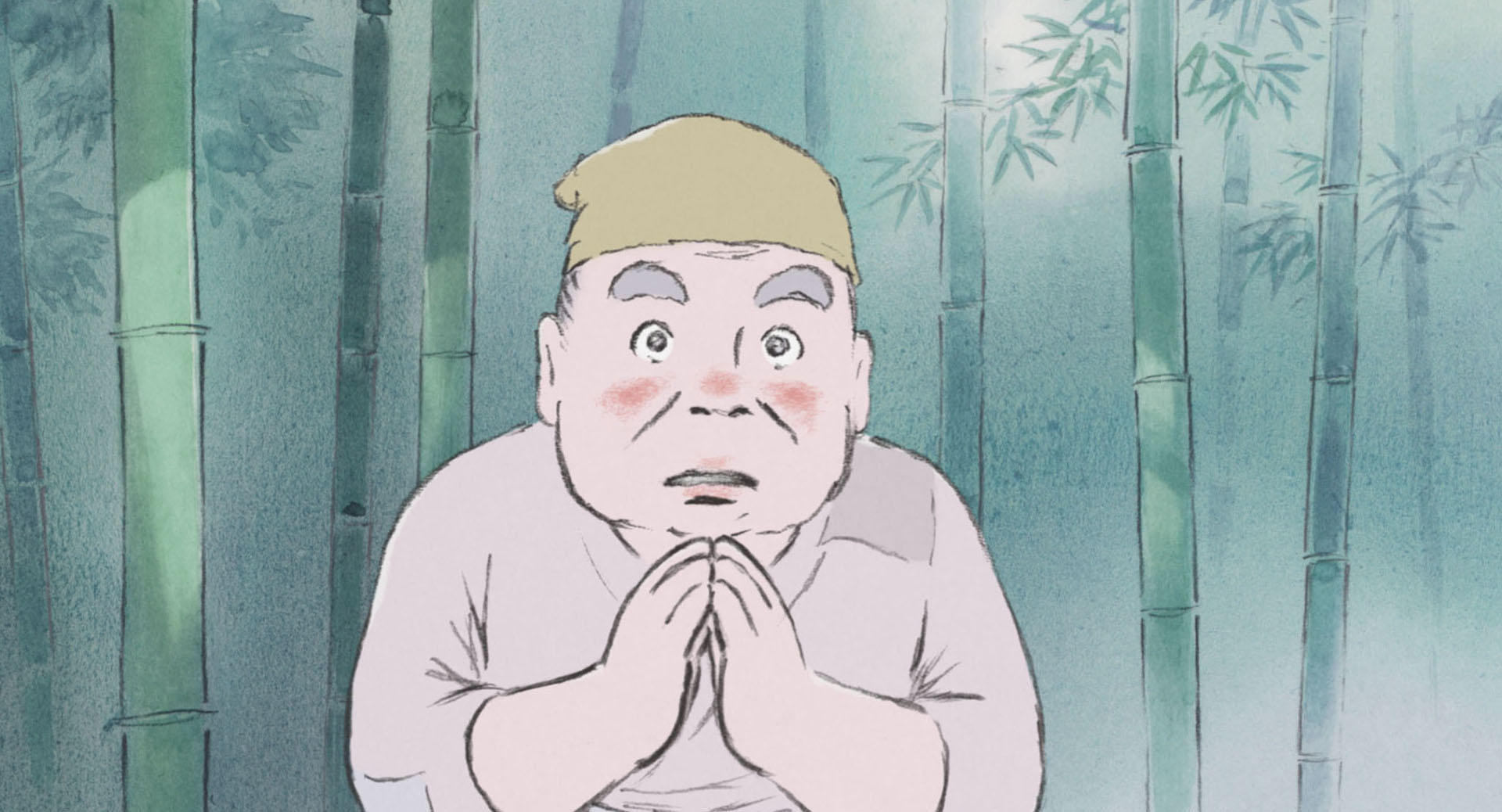
- The Bamboo Cutter: Kaguya’s adoptive father, who mistakes wealth and noble status for the destiny that will make her happy.
- The Bamboo Cutter’s wife: Kaguya’s adoptive mother, a warmer and more observant parent who preserves some of their old country life.
- Sutemaru: Kaguya’s childhood friend, representing companionship, movement and the ordinary freedom she loses.
- Lady Sagami: the etiquette teacher charged with transforming an energetic country girl into a courtly princess.
- The five suitors: noblemen who praise an imaginary perfect woman, then reveal themselves through impossible quests.
- The Mikado: the Emperor, whose assumption that rank grants access to Kaguya becomes another form of confinement.
Princess Kaguya: Little Bamboo and the Moon princess
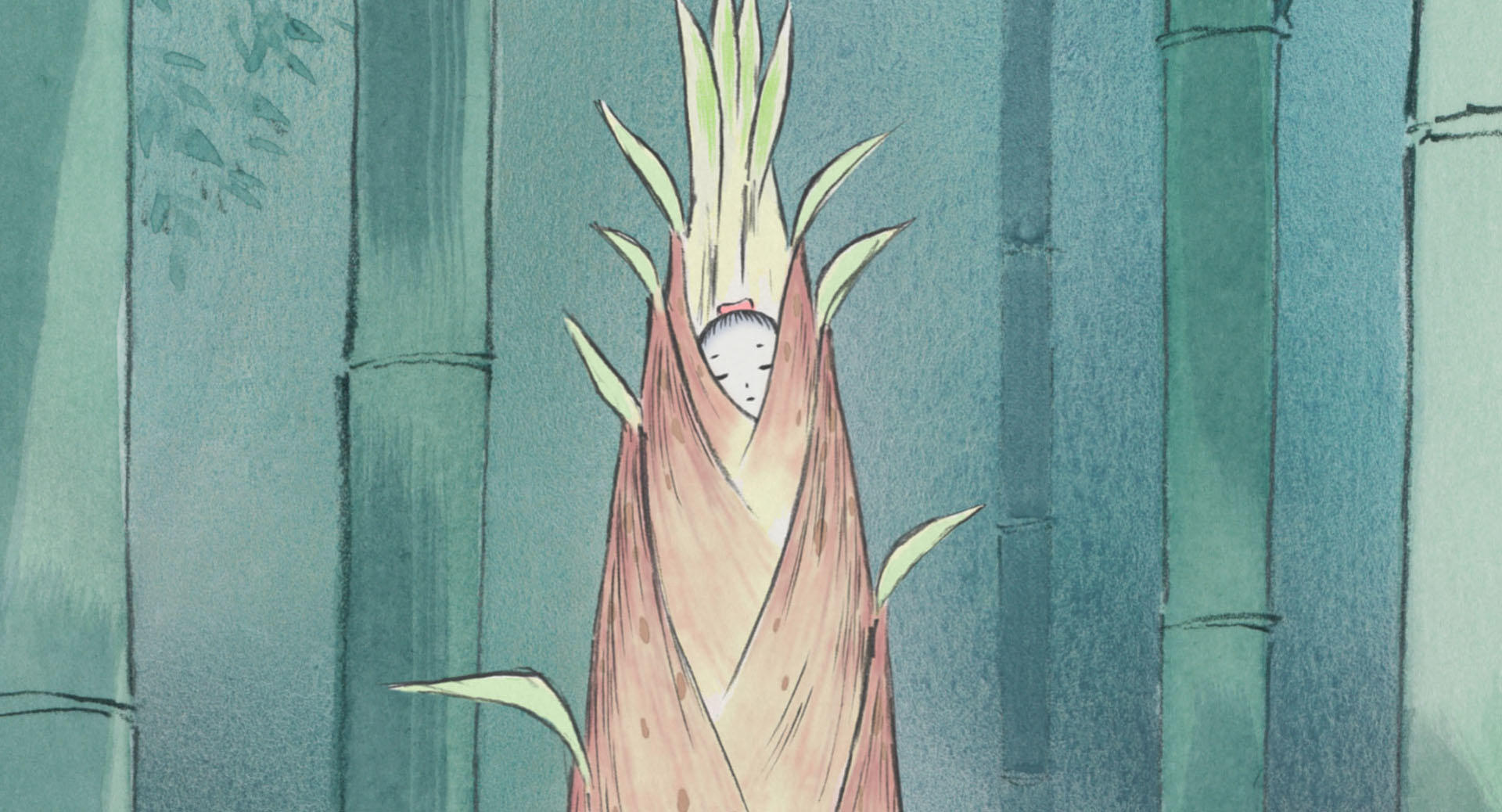
Kaguya first appears as a tiny luminous figure inside a bamboo stalk. Once brought home, she becomes a human baby and grows with supernatural speed. The country children call her Little Bamboo because she shoots upward like the plant itself. Her early life is physical and immediate: she runs through grass, copies frogs, eats wild fruit and joins the other children in song.
Her identity is divided long before she understands why. Little Bamboo belongs to the hills and her friends, while “Princess Kaguya” is the formal identity created for her in the capital. The name is beautiful, but it arrives with lessons, painted teeth, plucked eyebrows, heavy robes and restrictions on who may see her. She is praised most when she is least free to act like herself.
Kaguya is not simply an innocent victim. She can be proud, impulsive and cruel when pain overwhelms her. She laughs at the suitors’ performances, demands impossible proof and recoils from the life her father has built. Those reactions are understandable, but the film allows them to have consequences. Her deepest tragedy is that she recognises the value of earthly life only as it is being taken away.
The Bamboo Cutter: loving father and architect of the cage
The old Bamboo Cutter discovers Kaguya and interprets the event as a divine instruction. When bamboo later produces gold and fine robes, he becomes convinced that heaven wants the girl raised as a princess. His decision comes from love, ambition and insecurity at once. He wants to honour her miraculous origin, and he also wants society to recognise the importance of the child entrusted to him.
That makes him more painful than a simple villain. He is delighted by Kaguya’s beauty and works tirelessly to establish her household, yet he rarely asks what she wants. Every sign of distress is filtered through his belief that noble status must eventually make her grateful. His mistake is turning a gift into a project.
By the end, the Bamboo Cutter understands that wealth cannot protect his daughter. His grief is sincere. The character shows how parental devotion can become control when a parent treats their own idea of success as a child’s destiny.
Kaguya’s adoptive mother: affection, memory and quiet resistance
The Bamboo Cutter’s wife responds to the miraculous child more directly. She holds her, feeds her and becomes her mother before constructing a theory about what heaven intends. In the capital she participates in the new household, but she remains closer to Kaguya’s emotional reality than her husband does.
Her small kitchen garden recreates a piece of the countryside inside the mansion. That space matters because it gives Kaguya somewhere to work with soil, remember ordinary food and briefly escape the performance of nobility. The mother cannot overrule the Bamboo Cutter’s grand plan, yet she keeps an alternative version of home alive.
Her limitation is also important. She sees more clearly, but she does not stop the transformation imposed on Kaguya. Her love offers comfort rather than rescue, reflecting how family members can understand harm while still feeling unable to challenge the person directing it.
Sutemaru: childhood friend and symbol of a possible life
Sutemaru is the older country boy who welcomes Little Bamboo into the children’s group. He treats her as capable rather than precious, teaching her how to find food and move through the landscape. Their connection is playful, practical and rooted in shared experience rather than status.
When Kaguya returns to the countryside after fleeing her naming celebration, Sutemaru and the others have gone. Their families must keep moving to survive. This prevents the rural world from becoming a perfect fantasy: it contains hunger, work and insecurity. Even so, it offered Kaguya participation in life rather than display behind a screen.
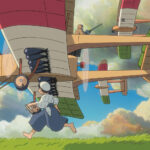
The later flight sequence with Sutemaru expresses the freedom she longs for. For a moment they leave obligation behind and move across the sky together. But Sutemaru has a wife and child, and Kaguya cannot simply recover the childhood she lost. He represents a genuine emotional bond and an imagined escape, not a tidy romantic solution.
Lady Sagami: etiquette, performance and social survival
Lady Sagami is hired to teach Kaguya how a noblewoman should sit, write, dress, smile and hide her feelings. Their scenes are comic because Kaguya’s energy defeats every rigid exercise. Yet Sagami is not inventing the rules. She is teaching the behaviour that allows women to survive and gain approval within an aristocratic system.
That distinction keeps her from being merely a cruel governess. Sagami is alarmed by Kaguya’s resistance because the princess’s future appears to depend on mastering the performance. She believes discipline is practical protection. Kaguya experiences the same lessons as erasure.
Their conflict exposes a central question in the film: if social success requires someone to suppress their body, voice and desires, is successful adaptation really a victory?
The five suitors and what their quests reveal
Kaguya’s beauty attracts five powerful men who compare her to legendary treasures. They speak as if devotion has already made them worthy, despite barely knowing her. Kaguya turns their metaphors into tests: each man must bring the treasure he claimed she resembled.
The quests expose different forms of entitlement. One suitor presents a false sacred object and tries to make an impressive story substitute for truth. Another constructs an elaborate counterfeit. Others rely on money, servants or reckless action. Their praise was never really about Kaguya as a person; it was about possessing a rare object and winning a public contest.
Not every outcome is comic. One quest ends in death, leaving Kaguya horrified by the cost of her challenge. The episode complicates her resistance without excusing the suitors. She has been forced into a game created by men who assume marriage is inevitable, but her attempt to defeat that game also touches lives beyond the mansion.
The Mikado: power disguised as romantic certainty
The Mikado hears about Kaguya after the suitors fail. Unlike them, he initially assumes that his position removes the need for a quest. He arranges access to her, embraces her without consent and is shocked when she disappears from his grasp. The scene makes the problem unmistakable: status does not turn desire into permission.
Afterward, the Emperor maintains a distant connection and appears more restrained. Still, his role reinforces Kaguya’s trap. The highest possible match in earthly society offers no freedom if she has not chosen it. For the Bamboo Cutter, imperial attention proves the success of his plan; for Kaguya, it confirms that the plan has made her visible to more powerful claimants.
The Moon people and the Celestial procession
The beings from the Moon are serene, beautiful and almost impossible to resist. They do not arrive with obvious anger. Their calm is more unsettling because it leaves little room for earthly grief, argument or attachment. The robe they bring will erase Kaguya’s memories and release her from suffering.
That release is not presented as simple salvation. Earth hurts because people age, desire, fail and lose one another, but those same limits make love and sensation meaningful. The procession’s cheerful music clashes with the family’s despair, showing how a painless celestial perspective can become inhuman when it dismisses everything mortals value.
How the characters define freedom differently
Nearly every major character believes they understand the good life. The Bamboo Cutter trusts rank and security. Lady Sagami trusts correct behaviour. The suitors treat acquisition as success. The Mikado assumes power can satisfy desire. The Moon people promise freedom from pain itself.
Kaguya learns that none of those answers is enough. Her happiest memories involve relationships, movement, weather, food, music and imperfect work. Sutemaru comes closest to sharing that vision, although his difficult adult life prevents him from functioning as an uncomplicated escape. Her mother preserves part of it in the garden, but cannot fully defend it.
The tragedy is not that Earth fails to provide permanent happiness. It is that Kaguya is denied the time and agency to choose an imperfect life for herself. The ensemble turns an ancient folktale into a character study about the difference between being valued and being free.
Frequently asked questions
Is Sutemaru in the original Tale of the Bamboo Cutter?
Sutemaru is a major expansion created for Isao Takahata’s film rather than a central figure in the classical tale. He gives Kaguya a personal connection to childhood freedom and an earthly life outside aristocratic marriage.
Do Kaguya and Sutemaru end up together?
No. Their flight expresses longing and a possible life, but Sutemaru has his own family and Kaguya must return to face the Moon’s summons. The sequence is emotionally real without becoming a conventional romantic ending.
Why does Kaguya reject the five suitors?
They seek an idealised princess without knowing her. By demanding the legendary objects from their compliments, she tests whether their declarations contain truth. Their lies, shortcuts and recklessness reveal that possession and prestige matter more to them than Kaguya’s wishes.
Is the Bamboo Cutter a bad father?
He genuinely loves Kaguya, but his certainty harms her. He confuses wealth, rank and marriage prospects with happiness, then ignores repeated evidence that the capital is making her miserable. The film portrays a loving parent whose ambition becomes controlling.
If you are deciding whether to watch the film, our beginner guide to Princess Kaguya explains its pace, style and emotional intensity. You can also browse the complete Studio Ghibli movie directory.
Image credit: Official stills from the The Tale of the Princess Kaguya page on ghibli.jp, used under Studio Ghibli’s common-sense image-use notice. This article is an independent fan guide and is not affiliated with Studio Ghibli.