The best Studio Ghibli endings are not always the happiest ones. They are the final scenes that make the whole film feel larger after the credits roll. This ranked guide looks at the endings that stay with viewers because they resolve a character, deepen a theme, or leave just enough mystery behind.
This is a spoiler-aware ranking. If you have not seen the films yet, start with the short verdicts and come back after watching. For a broader route through the studio, use our Studio Ghibli movies in order guide first.
Quick ranking: the most memorable Studio Ghibli endings
- Spirited Away, a quiet return from the spirit world that trusts Chihiro’s growth.
- The Tale of the Princess Kaguya, a devastating farewell that turns myth into grief.
- Princess Mononoke, a hard-won ending where peace is possible but not simple.
- The Wind Rises, a bittersweet close about love, ambition, and the cost of making things.
- Castle in the Sky, a soaring finale that chooses life over power.
- Kiki’s Delivery Service, a gentle ending about confidence returning after burnout.
- My Neighbor Totoro, a small, warm ending that understands childhood fear.
- Only Yesterday, a mature final choice that feels quiet but huge.
- Howl’s Moving Castle, a romantic fantasy ending built on acceptance and courage.
- Ponyo, a childlike fairytale ending that values trust more than logic.
1. Spirited Away
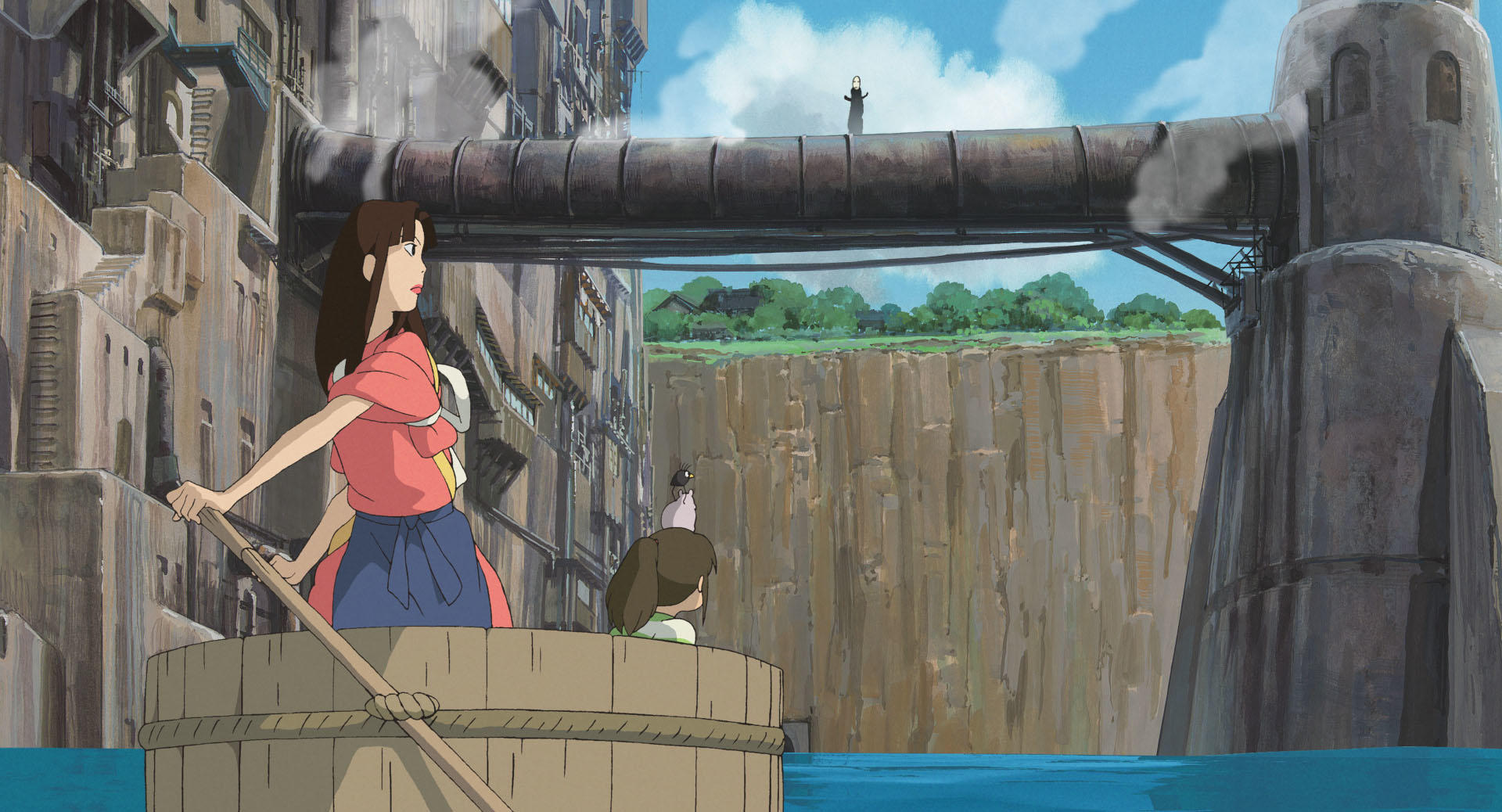
Spirited Away has the best Studio Ghibli ending because it does not over-explain Chihiro’s transformation. She does not defeat the spirit world by becoming loud or powerful. She survives it by paying attention, remembering names, keeping promises, and staying kind when adults around her lose themselves.
The final test is simple on the surface: identify whether her parents are among a group of pigs. Chihiro knows they are not there. That confidence matters because the film began with a frightened child who was pulled into a world she did not understand. By the end, she trusts what she has learned.
The car ride home is deliberately restrained. There is no giant speech about bravery. There is only Chihiro looking back, then moving forward. That restraint is why the ending works. It lets the audience feel the weight of the whole journey without turning it into a lesson poster.
2. The Tale of the Princess Kaguya
The Tale of the Princess Kaguya may have the most emotionally devastating ending in the Studio Ghibli catalogue. The moon procession is beautiful, but its beauty makes the farewell more painful. Kaguya is not simply rescued or punished. She is taken from a life that was messy, human, and full of feeling.
The ending lands because it understands regret. Kaguya’s earthly life was shaped by other people’s wishes for her, especially ideas about status, beauty, and marriage. When she finally recognises what she wanted, time has already narrowed. The final movement back to the moon feels like a memory being erased while the heart still knows it mattered.
It is not an easy ending to rewatch, but it is one of Ghibli’s strongest because the emotion is inseparable from the animation style. The soft lines and open spaces make the loss feel ancient and immediate at the same time.
3. Princess Mononoke
Princess Mononoke refuses a tidy ending, which is exactly right for the story. The Forest Spirit is gone, Irontown is damaged, San and Ashitaka cannot simply walk into a neat romance, and the world has not been fixed. Still, the film does not end in despair.
What makes the ending powerful is its moral honesty. Ghibli does not pretend that nature and industry can be reconciled by one heroic gesture. People have to rebuild. They have to remember what hatred almost destroyed. Lady Eboshi is not flattened into a villain, and San is not asked to stop being herself so the audience can feel comfortable.
The final promise between San and Ashitaka is one of the studio’s most mature resolutions: care does not always mean possession. Sometimes love means accepting distance while continuing to work toward a less poisoned world.
4. The Wind Rises
The Wind Rises ends with a complicated kind of beauty. Jiro’s dream of flight produces elegant machines, but those machines are absorbed by history and war. The film’s ending asks viewers to sit with that contradiction rather than solve it too easily.
The final dream sequence, with Caproni and the memory of Naoko, feels like a judgement and a mercy at once. Jiro is told to live. That line is simple, but it carries the weight of everything he has loved and everything his work has cost. For viewers interested in Ghibli’s more adult films, this ending is one of the clearest reasons The Wind Rises belongs near the top.
5. Castle in the Sky
Castle in the Sky earns its ending by turning spectacle into a choice. Laputa could have been treated only as a treasure or weapon, but the final act reframes it as a warning. Pazu and Sheeta reject the fantasy of control, even though that fantasy has driven much of the chase.
The image of the giant tree rising into the sky is unforgettable because it changes the meaning of the castle. The weapons fall away, but life remains. Compared with darker Ghibli endings, this one is openly adventurous, yet it still carries a serious idea: technology without care becomes empty power.
6. Kiki’s Delivery Service
The ending of Kiki’s Delivery Service works because it treats burnout with unusual gentleness. Kiki does not regain her confidence because someone gives her a perfect explanation. She acts when someone needs help, and her sense of purpose returns through movement.
For younger viewers, the rescue is exciting. For adults, it is quietly moving because the film understands how frightening it can be to lose trust in your own ability. The ending says confidence is not a permanent personality trait. It can disappear, return, and change shape.
7. My Neighbor Totoro
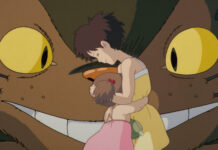
My Neighbor Totoro has a small ending by design. The girls do not solve every adult problem. Their mother is still recovering, and the family is still living with uncertainty. What changes is the emotional weather around that uncertainty.
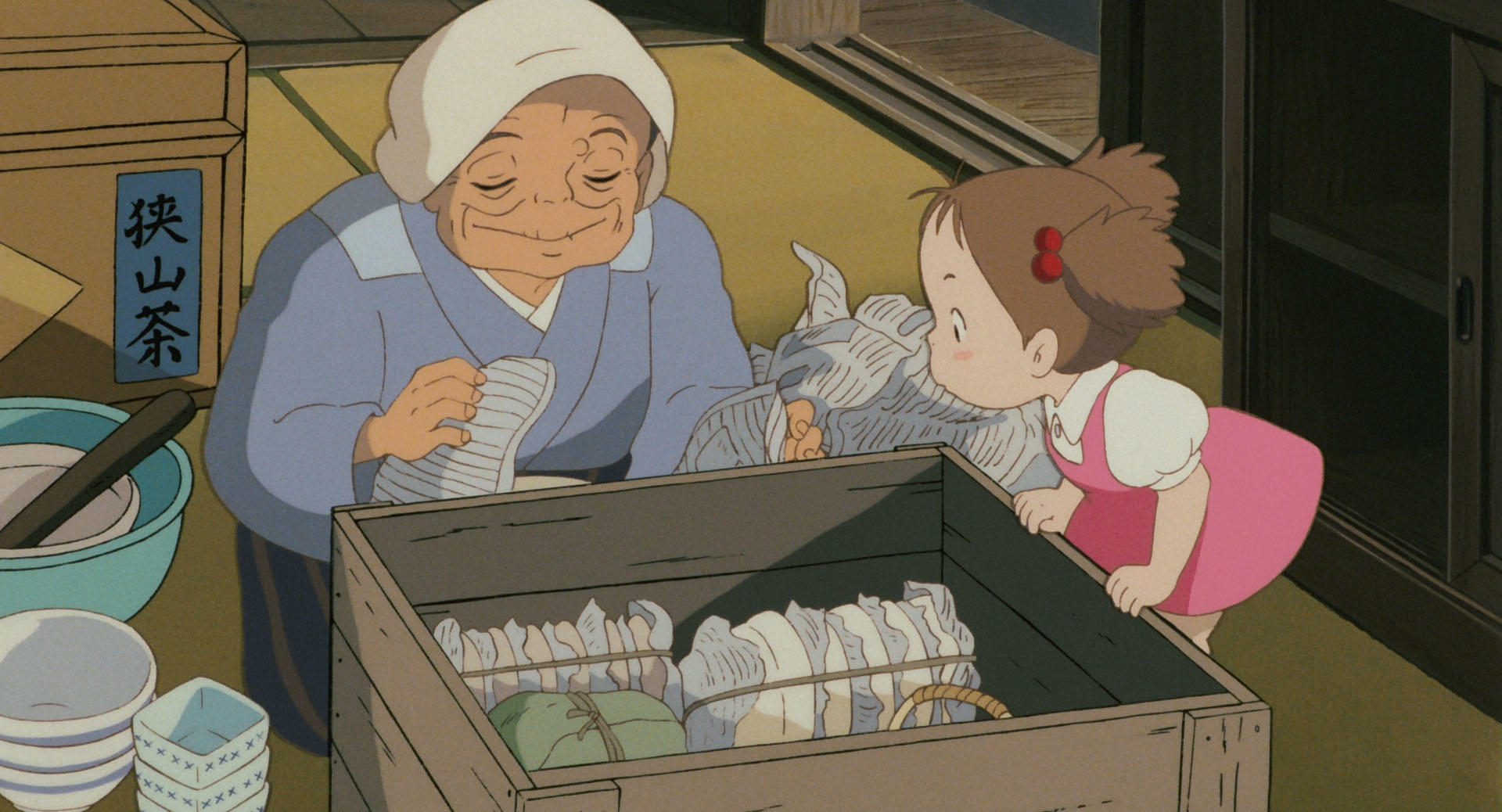
The Catbus sequence gives Mei and Satsuki a magical way to cross the distance between fear and reassurance. The final corn delivery is such a tiny gesture that it becomes perfect. It is a child’s way of saying, “I was scared, I love you, and I wanted to help.”
8. Only Yesterday
Only Yesterday has one of Ghibli’s most underrated endings. It is not built around fantasy, danger, or a grand revelation. It is about an adult choosing the life that feels honest after listening to her younger self.
The train sequence is beautiful because memory becomes company rather than baggage. Taeko’s childhood self and classmates are not there to trap her in nostalgia. They help her recognise what she already knows. It is a quiet ending, but it may be one of the studio’s most emotionally grown-up.
9. Howl’s Moving Castle
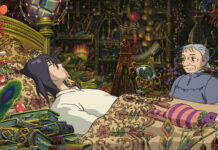
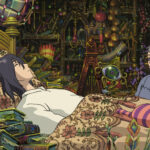
Howl’s Moving Castle has a messier ending than some Ghibli films, but its emotional shape is clear. Sophie, Howl, Calcifer, and the moving castle all change through trust. The final act is less about explaining every magical rule and more about letting wounded people stop hiding.
Its ending works best if you read the film as a story about self-image, fear, and choosing tenderness while the world is at war. The romance is sweet, but the deeper satisfaction comes from seeing characters become less trapped by the roles they were performing.
10. Ponyo
Ponyo ends like a children’s fairytale, so it is easy to underrate. The emotional logic is simple: Sosuke accepts Ponyo as she is, Ponyo chooses human life, and the sea’s chaos settles through trust. It is not a film that wants a legalistic explanation of magic.
That simplicity is the point. For family viewers, the ending makes Ponyo one of the easiest Ghibli films to recommend after other gentle movies like Ponyo. It closes with wonder rather than worry.
What makes a great Studio Ghibli ending?
The strongest Ghibli endings usually do three things. First, they respect the viewer enough not to explain every emotion. Second, they let characters change without pretending life becomes perfect. Third, they leave behind an image that feels bigger than plot: Chihiro looking back, Kaguya returning to the moon, the Forest Spirit’s landscape, Laputa’s tree, or Kiki in the sky again.
That is why the studio’s endings keep being discussed. They are not just final scenes. They are emotional afterimages.
FAQ
Which Studio Ghibli movie has the happiest ending?
My Neighbor Totoro, Kiki’s Delivery Service, and Ponyo are among the happiest and most reassuring endings, especially for family viewing.
Which Studio Ghibli ending is the saddest?
The Tale of the Princess Kaguya is the saddest for many viewers. Grave of the Fireflies is even heavier overall, but it belongs in a different emotional category from most comfort-watch Ghibli rankings.
Should beginners start with the films that have the best endings?
Not always. Beginners usually do better with Spirited Away, My Neighbor Totoro, Kiki’s Delivery Service, or Howl’s Moving Castle. After that, the heavier endings in Princess Mononoke, The Wind Rises, and Princess Kaguya hit harder.
Image source: official Studio Ghibli still from ghibli.jp. Studio Ghibli notes that images on its works pages may be used within common-sense bounds.