Quick answer: the best Studio Ghibli movies about work, purpose, and finding your place are Kiki’s Delivery Service, Spirited Away, The Wind Rises, Only Yesterday, Whisper of the Heart, From Up on Poppy Hill, and Princess Mononoke. They are useful watches when you want Ghibli stories about confidence, responsibility, vocation, burnout, and the uneasy gap between what you dream of doing and what real life asks from you.
This is not a simple career-movies list. Studio Ghibli is rarely that literal. The studio’s strongest work stories are about service, craft, duty, care, and identity. Characters deliver bread, clean bathhouses, design aircraft, write stories, protect forests, run households, and slowly learn that purpose is often built through repeated actions rather than discovered in one perfect moment.
Best Ghibli work-and-purpose movies at a glance
| Movie | Best for | Work or purpose theme |
|---|---|---|
| Kiki’s Delivery Service | Students, freelancers, creatives | Independence, burnout, rebuilding confidence |
| Spirited Away | First-time viewers and families | Learning responsibility through work |
| The Wind Rises | Adults | Ambition, craft, compromise, consequences |
| Only Yesterday | Adults in transition | Rethinking city work, memory, and life direction |
| Whisper of the Heart | Teens and makers | Practice, standards, and creative discipline |
| Princess Mononoke | Older viewers | Duty, survival, and conflicting responsibilities |
1. Kiki’s Delivery Service
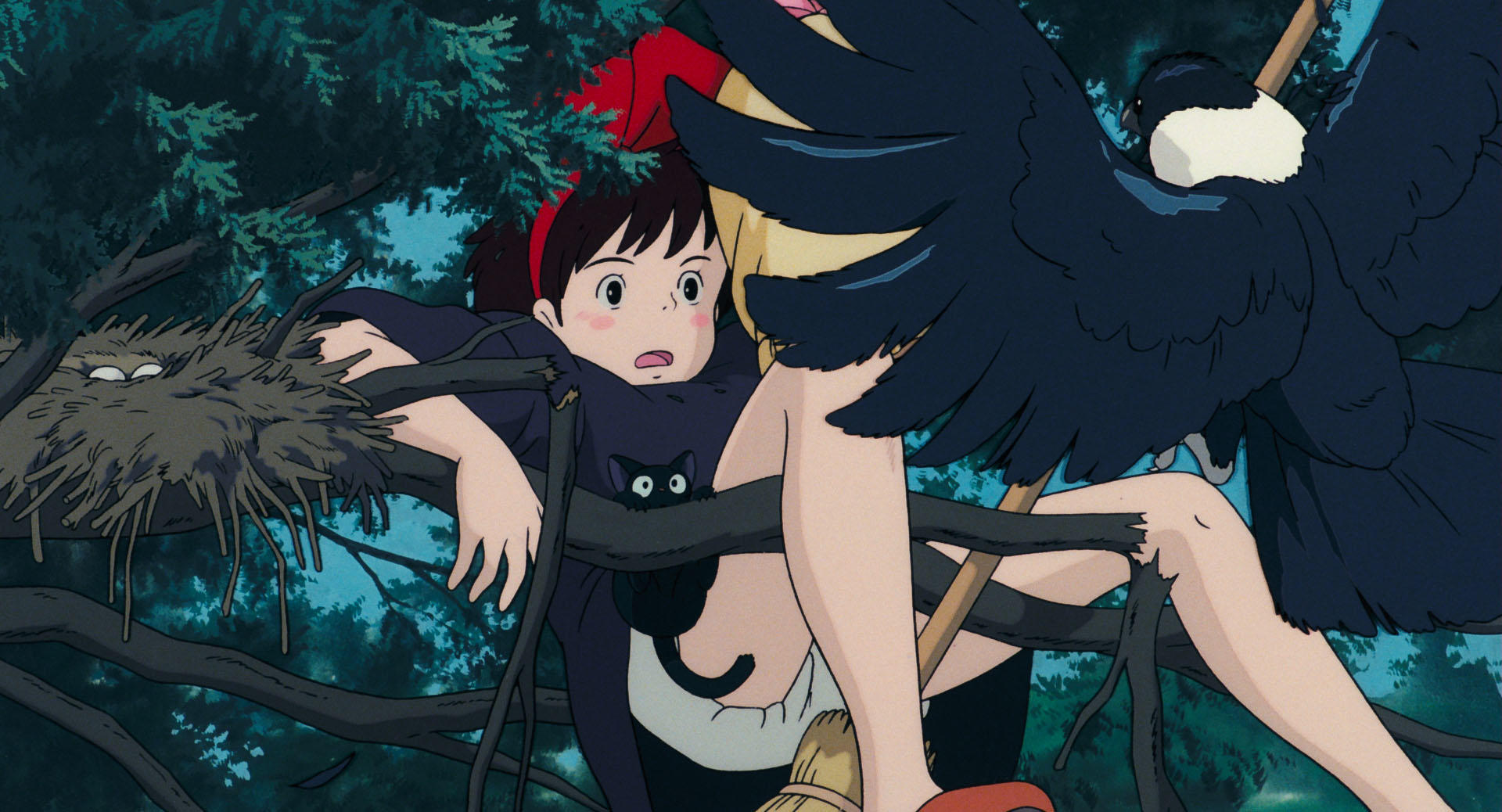
Kiki’s Delivery Service is probably Ghibli’s most useful film about starting work before you feel ready. Kiki leaves home with talent, optimism, and a clear rule: she must spend a year living independently as a witch. Very quickly, the fantasy becomes practical. She needs somewhere to sleep, people who trust her, a way to earn money, and enough confidence to keep showing up when the job is awkward or tiring.

The famous loss-of-magic section is what makes the film more than a cheerful independence story. Kiki’s problem feels like burnout, creative block, homesickness, and professional insecurity all at once. She can still care. She can still help. But the easy feeling of being gifted disappears. For anyone who has turned a skill into work, that is painfully recognisable.
The lesson is not push harder. The lesson is that purpose needs rest, friendship, and a life outside performance. For a deeper read, the site also has a guide to Kiki’s creative burnout and losing magic.
2. Spirited Away
Spirited Away turns work into a survival test. Chihiro does not arrive at the bathhouse looking for a job. She is frightened, displaced, and desperate to save her parents. Yet the way she survives is by accepting a name, taking a role, cleaning, listening, remembering, and doing small difficult things well.
That is why the bathhouse is such a brilliant setting. It is magical, but it is also a workplace full of hierarchy, rules, exhaustion, greed, gossip, and quiet kindness. Chihiro grows because she has to become useful without losing herself. If you are building a first-watch route, pair this with the Studio Ghibli movies in order guide.
3. The Wind Rises
The Wind Rises is Ghibli’s most complicated film about vocation. Jiro loves aircraft design with a sincerity that is hard not to admire. He studies, sketches, works, fails, improves, and gives his life to craft. The discomfort is that his beautiful work exists inside history, industry, and war. The film refuses to make ambition morally simple.
That makes it a strong adult watch for anyone thinking about career purpose. Loving the work is not the same as controlling what the world does with it. The movie asks whether beauty can be separated from consequence, and whether a dream remains pure when it is built inside systems you cannot fully escape.
4. Only Yesterday
Only Yesterday is about work in the quieter, more adult sense: the life you built, the routines you accepted, and the self you keep postponing. Taeko’s trip away from Tokyo gives her space to compare her present with the child she used to be. The question is not whether her office life is evil. It is whether it is enough.
This is one of the best Ghibli films for viewers who feel stuck without being in obvious crisis. It understands that changing direction can be gentle and still enormous. Sometimes purpose arrives as a different rhythm, a different place, or a different relationship to ordinary work.
5. Whisper of the Heart
Whisper of the Heart belongs on this list because it treats creativity as work, not just inspiration. Shizuku wants to write, but the film makes her face the unromantic part of that desire: producing something imperfect, letting other people see it, and realising how much practice still lies ahead.
For teenagers, artists, writers, musicians, and anyone starting a craft, this may be the most encouraging Ghibli film. It does not say that talent is enough. It says that caring enough to improve is the beginning of a serious relationship with your work.
6. From Up on Poppy Hill
From Up on Poppy Hill shows purpose through community. Umi’s household responsibilities, the student effort to save the clubhouse, and the film’s attention to postwar memory all point toward the same idea: meaningful work is often care made visible. Cooking, organising, repairing, preserving, and remembering are not background tasks. They are how a shared life survives.
7. Princess Mononoke
Princess Mononoke is not a workplace film, but it is one of Ghibli’s strongest stories about responsibility. Ashitaka, San, Lady Eboshi, the people of Irontown, and the forest gods all act from needs that make sense from inside their own worlds. Purpose here is not cosy. It is conflict, survival, protection, and the painful work of seeing more than one side.
That is why it belongs with Ghibli’s mature purpose stories. It challenges the comforting idea that finding your place means finding a place without contradiction.
Which should you watch first?
Start with Kiki’s Delivery Service if you want the most direct and comforting story about work confidence. Choose Spirited Away if you want a fantasy adventure where responsibility changes the main character. Choose The Wind Rises or Only Yesterday if you want an adult film about ambition, compromise, and life direction.
FAQ
What Studio Ghibli movie is best for burnout?
Kiki’s Delivery Service is the best Ghibli film for burnout because it shows confidence disappearing and returning slowly, through rest, support, and renewed purpose rather than pressure.
What Ghibli movie is best for career anxiety?
Whisper of the Heart is ideal for creative or school-related anxiety, while Only Yesterday is better for adult career doubt and life-direction questions.
Are these good first Studio Ghibli movies?
Yes. Kiki’s Delivery Service and Spirited Away are especially good starting points. The Wind Rises, Only Yesterday, and Princess Mononoke are better after viewers already know they enjoy Ghibli’s slower or more serious side.
Image source note: Images used in this article are official Studio Ghibli stills from ghibli.jp, where Studio Ghibli publishes stills with a common-sense usage notice.