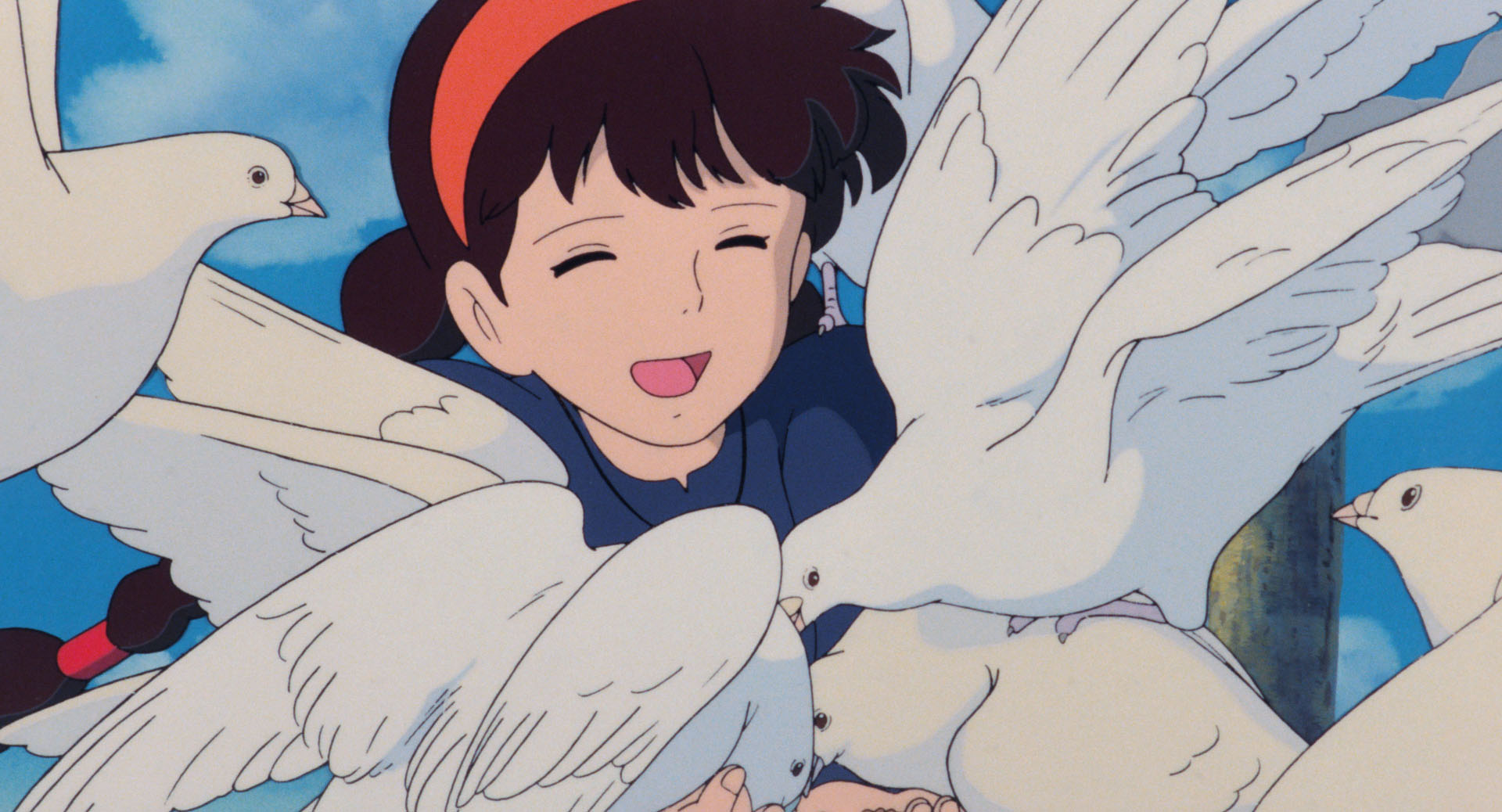
Quick answer: Castle in the Sky is one of the best Studio Ghibli movies to watch early if you want a proper adventure: sky pirates, ancient technology, a lost floating city, brave children, and a clear good-versus-greed story. It is more action-driven than Spirited Away or Kiki’s Delivery Service, but it still has the warmth, wonder, and handmade detail that make Ghibli feel special.
What is Castle in the Sky about?
Castle in the Sky follows Sheeta, a mysterious girl carrying a glowing crystal, and Pazu, a young miner who dreams of proving that a legendary floating island called Laputa really exists. After Sheeta falls from an airship and drifts down into Pazu’s mining town, the two children are pulled into a chase involving government agents, military forces, and a family of sky pirates. Everyone wants the crystal because it may reveal the route to Laputa, a lost civilisation hidden above the clouds.
The setup is simple enough for new viewers, but the movie grows richer as it goes. It starts as a chase, becomes a friendship story, then opens into a bigger question about power. Laputa is beautiful, but it is also dangerous when treated as a weapon or prize. That tension gives the film its weight: the adventure is exciting because the world feels magical, but the ending matters because the characters have to decide what kind of magic should survive.
Why it is a strong beginner Studio Ghibli movie
This is a good first or second Ghibli film because it gives newcomers several Studio Ghibli signatures in one accessible package. There are flying machines, detailed towns, strange ruins, expressive food scenes, quiet friendship moments, and a memorable sense of scale. If someone thinks Ghibli only means gentle forests or dreamlike spirits, Castle in the Sky shows another side: fast, funny, pulpy, and cinematic.
It is also one of the easiest Ghibli stories to follow. You do not need to understand Japanese folklore, symbolism, or studio history to enjoy it. Pazu wants to help Sheeta and see the sky island. Sheeta wants to understand her past without letting greedy adults misuse it. The pirates want treasure, then gradually become more complicated and lovable. The villain wants control. That clarity makes the film especially useful for families, first-time anime viewers, and anyone who wants an adventure before trying more ambiguous films like Princess Mononoke.
Main characters to know
Sheeta
Sheeta is quiet, brave, and more powerful than she first appears. She is not written as a superhero. Her strength comes from kindness, patience, and the choice to reject a legacy when that legacy becomes harmful. She gives the story its emotional centre because she understands that inheritance is not the same thing as ownership.
Pazu
Pazu is energetic, loyal, and idealistic. His dream of finding Laputa is tied to his father, who once saw the island and was not believed. That makes Pazu more than a standard adventure hero. He wants proof, but he also wants to honour someone he loved. His bond with Sheeta works because he helps without trying to possess the mystery himself.
Dola and the sky pirates
Dola’s pirate clan adds much of the film’s comedy and momentum. At first they look like straightforward trouble, but the movie gradually turns them into one of its warmest groups. They are greedy, loud, and chaotic, yet they also recognise courage when they see it. Ghibli often does this well: characters who seem ridiculous or threatening at first become human once the story gives them time.
Muska
Muska is the clearest villain in the film, and that is part of why the movie works as an entry point. He sees Laputa as a tool for domination. Where Sheeta sees responsibility, Muska sees entitlement. His role keeps the story from becoming just a treasure hunt.
Themes that make the movie last
The biggest theme is the difference between wonder and control. Nearly everyone is amazed by Laputa, but not everyone responds to that amazement in the same way. Pazu wants to see it. Sheeta wants to understand it. Dola wants treasure. Muska wants power. The film’s moral line is not anti-technology exactly; it is against technology cut loose from humility, care, and human limits.
Another important theme is chosen courage. Sheeta and Pazu are children in a world full of armed adults, but the movie does not make them powerful by turning them cold. They stay compassionate. They run, hide, improvise, and keep choosing each other. That makes the adventure feel warmer than many action films, even when the stakes get huge.
The film also has a strong environmental undercurrent. Laputa’s gardens and ancient robots suggest that the most valuable part of a civilisation may not be its weapons or engines, but the life it protects. This connects naturally with later Ghibli films about forests, spirits, and coexistence, including Studio Ghibli environmental themes.
Is Castle in the Sky good for kids?
For many families, yes, but it is more intense than the gentlest Ghibli choices. There are chases, guns, explosions, military threats, peril in the sky, and a villain who can feel genuinely menacing. Most of the violence is adventure-style rather than graphic, and the tone remains hopeful, but sensitive younger children may find parts of it stressful.
As a rough guide, it is usually a better fit for older children who already enjoy adventure films than for very young viewers who mainly want calm comfort. If you want the softest family entry point first, start with a gentle kids’ Ghibli guide or Ponyo, then come back to Castle in the Sky when action and danger sound fun rather than overwhelming.
Where it fits in a Studio Ghibli watch order
Castle in the Sky works well after one gentler film. A good beginner path is: My Neighbor Totoro or Kiki’s Delivery Service first, Castle in the Sky second or third, then Spirited Away, Howl’s Moving Castle, and Princess Mononoke as the viewer gets comfortable with different tones. If you prefer release order, it also has historical value as Studio Ghibli’s first official feature, making it a natural foundation for the studio’s later adventure language.
It pairs especially well with Nausicaä of the Valley of the Wind, Princess Mononoke, and Howl’s Moving Castle if you want a mini-run about flight, war, technology, and responsibility. It also pairs nicely with Kiki’s Delivery Service for a lighter flying-themed double bill.
Who should watch it first?
- Adventure fans: Start here if you want action, airships, ruins, escapes, and a clear quest.
- Families with older kids: It has enough danger to feel exciting, but enough warmth to stay inviting.
- Fantasy viewers: Laputa gives you ancient mystery, sky-world scale, and one of Ghibli’s most memorable lost places.
- Animation fans: The flying sequences, machines, clouds, and physical comedy are a great showcase of Ghibli craft.
FAQ
Do I need to watch any other Ghibli movie before Castle in the Sky?
No. It is a standalone story and works perfectly on its own.
Is Castle in the Sky connected to other Studio Ghibli films?
Not directly in story terms. It shares themes with other Ghibli films, especially flight, environmental care, anti-war feeling, and suspicion of power without responsibility.
Is it darker than Spirited Away?
It is more action-heavy, but usually less eerie. Spirited Away can feel stranger and more dreamlike, while Castle in the Sky feels like a classic adventure with moments of danger.
Should I watch the subtitled or dubbed version?
Either can work. If you are introducing children or casual first-time viewers, the dub may be easier. If you like hearing the original performances and tone, choose subtitles.
Final verdict
Castle in the Sky is a high-energy gateway into Studio Ghibli: accessible, funny, emotional, and packed with images that explain why the studio’s worlds feel so alive. Watch it when you want adventure rather than pure comfort, and when you are ready for a Ghibli film that balances sky-high wonder with a clear warning about greed.
Image source: official Studio Ghibli still from ghibli.jp, used within the studio’s common-sense image guidance.