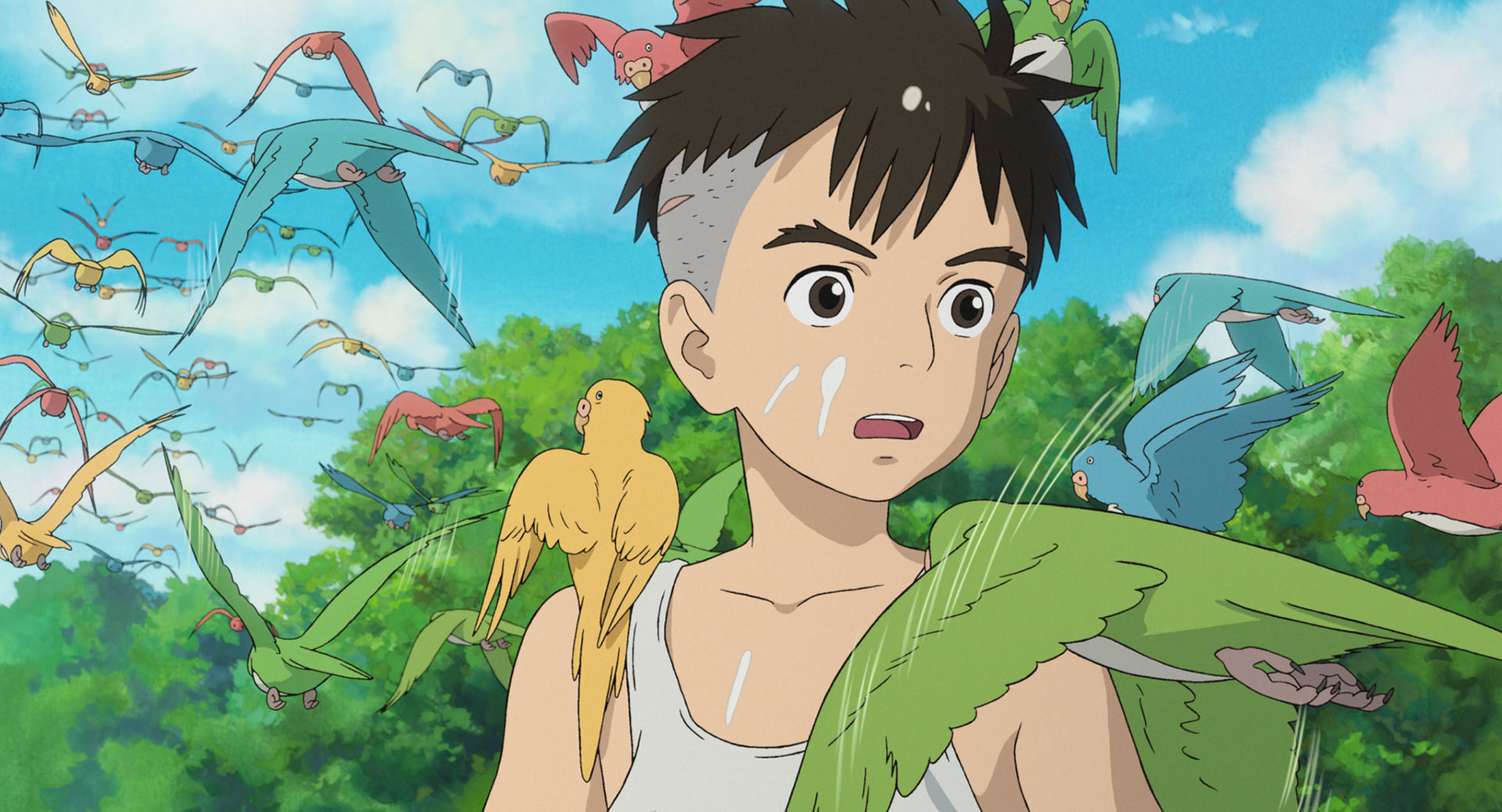
Quick answer: Mahito Maki is the grieving boy at the centre of The Boy and the Heron. His journey is not about becoming fearless or “solving” grief. It is about admitting pain, refusing a perfect fantasy world, and choosing to keep living in a messy real one with honesty, memory and responsibility.
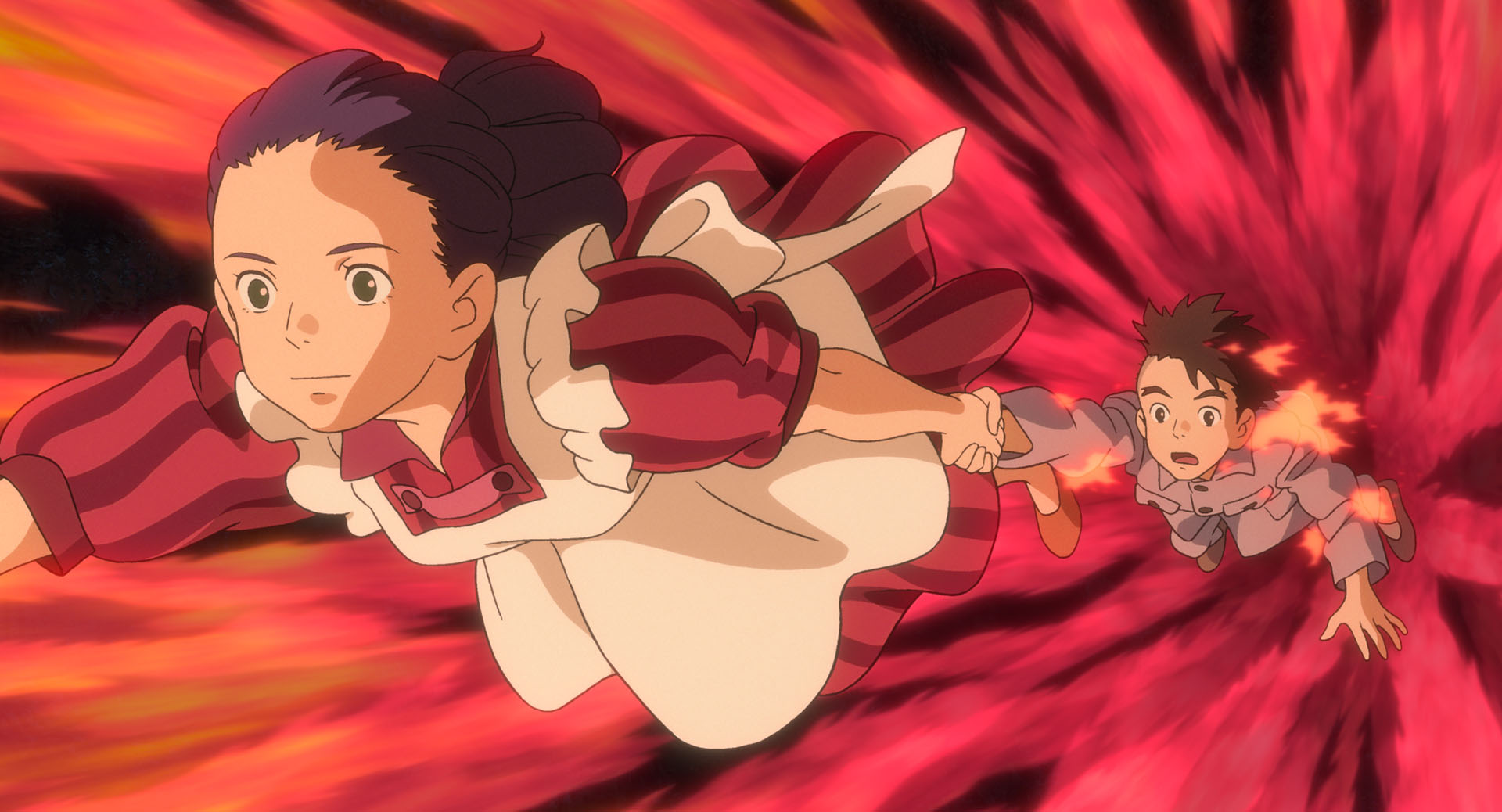
Who is Mahito in The Boy and the Heron?
Mahito is a young boy living through the death of his mother, a wartime move to the countryside and the arrival of a new family arrangement he is not ready to accept. He is quiet, observant and guarded. Much of the film’s emotional force comes from what he does not say. He is not a cheerful adventure hero pulled into magic for fun. He enters the strange tower world because ordinary life has become almost unbearable.
That makes him one of Studio Ghibli’s more interior protagonists. Chihiro is visibly frightened and then visibly brave. Kiki talks through loneliness and burnout. Mahito often locks feeling inside himself. His face, posture and sudden decisions reveal more than speeches do. The story asks us to watch a child who has learned to survive by withholding trust.
Why Mahito hurts himself
One of Mahito’s most important early actions is also one of the most uncomfortable: he injures himself with a stone after a fight at school. The moment should not be read as a simple trick to avoid class. It shows how grief, anger and displacement have turned inward. Mahito cannot control the war, his mother’s death, his father’s remarriage or the move, so he controls the one thing immediately available: his own body.
The film later returns to this wound as a moral marker. Mahito eventually admits that the injury was self-inflicted. That confession matters because it breaks the polished surface he has been maintaining. He does not become perfect. He becomes more truthful. In a film full of shifting worlds and symbolic birds, that small admission is one of the clearest signs of growth.
Mahito and grief
Mahito’s grief is complicated by guilt and confusion. His mother dies in a hospital fire, and his memory of trying to reach her is traumatic. When he later encounters versions of motherhood, protection and loss inside the tower, the film is not handing him an easy replacement. It is forcing him to face how much he wants the impossible: to undo the event that split his life in two.
This is why Mahito belongs beside the site’s broader guide to Studio Ghibli movies about grief and healing. Ghibli often treats grief as something people live alongside rather than something they defeat. Mahito’s healing is not a clean before-and-after transformation. It is a movement from numb resistance toward a more honest acceptance of what cannot be restored.
What the Grey Heron brings out of him
The Grey Heron is rude, slippery and deliberately hard to trust. That is exactly why he works as Mahito’s guide. A comforting guide might have let Mahito stay passive. The Heron provokes him, lies to him, bargains with him and keeps forcing choices. Their relationship begins almost like a feud, but it gradually becomes a strange partnership.
For Mahito, the Heron externalises suspicion. The boy already believes the world is unsafe and adults are not telling him the full truth. The Heron confirms that instinct, then complicates it. Mahito learns that distrust can protect you, but it cannot be your whole way of living. At some point he has to decide what kind of person he will be in a world where nothing is cleanly reliable.
Mahito and Natsuko
Mahito’s relationship with Natsuko, his mother’s younger sister and his father’s new wife, is one of the film’s most delicate emotional threads. From an adult distance, Natsuko is trying to care for him. From Mahito’s view, her presence feels like a painful replacement and a betrayal of the mother he lost. The film is careful not to reduce either side to cruelty.
When Mahito eventually calls out for Natsuko and recognises her importance, the moment lands because it has been resisted for so long. Acceptance here does not mean forgetting his mother. It means allowing a living bond to exist without treating it as an insult to the dead. That is a mature idea for a fantasy film, and one reason The Boy and the Heron guide reads as both adventure and grief story.
Why Mahito rejects the perfect world
The tower world offers Mahito a grand symbolic temptation: the possibility of ordering reality from above, stacking blocks into a more balanced universe. For a child whose life has become chaotic, that fantasy has obvious power. If the world can be rebuilt, maybe loss can be made meaningful. Maybe pain can be organised into something that looks pure.
Mahito refuses because he recognises that he is not pure and that no inherited fantasy can make life honest for him. His scar, his anger and his grief are part of him. Choosing the real world means accepting imperfection rather than ruling over a beautiful lie. That choice is quieter than defeating a villain, but it is the core of his courage.
Is Mahito a typical Ghibli hero?
Mahito shares traits with other Ghibli leads, especially the movement from fear toward responsibility, but he is less immediately warm than many of them. He can be cold. He can be evasive. He can be hard to read. That is not a weakness in the writing. It is the point of the character. His emotional armour is believable because the film has given him real reasons to wear it.
For viewers using a Studio Ghibli watch order, Mahito may feel more challenging than Totoro’s children or Ponyo’s Sōsuke. He is written for a story about memory, mourning and the decision to continue. His bravery is not bright and uncomplicated. It is the bravery of returning to life after wanting to disappear into another version of it.
What Mahito represents
Mahito represents the child who has seen too much too early and is trying to decide whether the world is still worth trusting. His arc suggests that growing up is not about erasing grief, obeying adults or accepting easy comfort. It is about becoming truthful enough to carry pain without letting pain become your entire identity.
That is why his final choice matters. He does not come back because the real world is safe. He comes back because it is real, because people there still need him, and because love cannot be preserved by hiding inside a dream. In a film filled with birds, spirits, ancestors and collapsing worlds, Mahito’s most important act is simply choosing to live honestly among the living.
FAQ about Mahito
Is Mahito based on Hayao Miyazaki?
Not directly in a one-to-one biographical way, but the film carries personal echoes of childhood, war, memory, mothers and creative inheritance. Mahito is best read as a fictional character shaped by those concerns rather than a literal portrait.
Why is Mahito so quiet?
His quietness reflects grief, distrust and emotional self-protection. The film lets silence do character work instead of making him explain every feeling out loud.
Should children watch The Boy and the Heron for Mahito’s story?
Some older children and teens may connect strongly with him, but the film is denser and darker than many beginner Ghibli picks. Families can compare options in the Studio Ghibli movie directory before choosing a first watch.
Image credit: Official stills from Studio Ghibli’s The Boy and the Heron works page, used under the studio’s common-sense image-use notice. This article is an independent fan guide and is not affiliated with Studio Ghibli.