Quick answer: the main characters in When Marnie Was There are Anna Sasaki, a withdrawn foster child sent to recover in the countryside; Marnie, the mysterious girl connected to the Marsh House; Setsu and Kiyomasa Oiwa, Anna’s warm hosts; Sayaka, a curious girl who investigates the house’s history; Hisako, an elderly artist who remembers Marnie; Yoriko, Anna’s anxious foster mother; and Kazuhiko and Emily, whose places in Marnie’s family story explain the film’s final revelation.
This guide contains major spoilers about Marnie’s identity and her relationship to Anna. For a complete plot and themes overview, begin with our When Marnie Was There movie guide. If you mainly want the final reveal unpacked, use our dedicated ending explanation.
The main characters at a glance
- Anna Sasaki: a creative, asthmatic 12-year-old who feels excluded from other people and uncertain of her place in her foster family.
- Marnie: the seemingly supernatural blonde girl at the Marsh House who becomes Anna’s intense new friend.
- Setsu and Kiyomasa Oiwa: Anna’s relaxed countryside hosts, who give her space without making affection feel conditional.
- Sayaka: the new resident of the Marsh House, whose diary discovery helps connect Anna’s experiences to real history.
- Hisako: an elderly painter and childhood friend of Marnie who supplies the missing adult perspective.
- Yoriko Sasaki: Anna’s foster mother, whose nervous love is misunderstood because both she and Anna struggle to speak honestly.
- Kazuhiko: Marnie’s childhood friend and later husband, associated with both the silo trauma and the security she seeks afterward.
- Emily: Marnie’s daughter and Anna’s mother, whose painful life completes the family connection.
Anna Sasaki: loneliness seen from the inside
Anna begins the film watching other children as if she stands outside an invisible circle. She sketches rather than joins in, reacts defensively when approached and privately describes herself as ordinary and unpleasant. Her asthma is real, but the trip to the countryside is also an attempt to relieve emotional pressure that she cannot explain.
Her anger is closely tied to foster care. Anna discovers that Yoriko receives a government allowance and interprets the secrecy around it as proof that care has been purchased. The conclusion is unfair, but emotionally believable: a child already frightened of being unwanted can turn an ordinary administrative fact into evidence that every relationship is conditional.
Anna is not transformed by becoming cheerful on command. Marnie gives her a relationship in which her longing, jealousy and fear can surface. Sayaka later gives her a more ordinary friendship grounded in shared investigation. By the end, Anna has not erased sadness; she has found a family history that lets her understand where some of it came from and accept present-day affection more openly.
Marnie: friend, memory and grandmother
Marnie first appears to be a girl living in another time inside the Marsh House. She rows with Anna, dances with her, confides in her and calls their friendship a secret. The film makes the connection feel immediate because Marnie offers Anna exactly what she lacks: complete attention from someone who seems equally lonely.
Yet Marnie is not simply an ideal companion. Her glamorous home conceals neglect. Her parents travel frequently, while the adults left in charge frighten and mistreat her. Parties fill the house with people without giving Marnie dependable care. That contradiction explains why she clings so intensely to moments of trust.
The ending reveals that Marnie was Anna’s maternal grandmother. The stories Marnie later told young Anna have become the material through which Anna encounters her. Whether viewers understand the meetings as a ghostly visitation, inherited memory, dream or a combination of all three, Marnie remains a real person whose experiences shaped the next generations.
Her apology at the Marsh House window matters because Anna feels abandoned when the silo memory shifts from Anna to Kazuhiko. Marnie is reliving her own past rather than deliberately replacing Anna, but the emotional wound is real. Asking forgiveness allows both characters to interrupt the pattern of love being mistaken for abandonment.
Setsu and Kiyomasa Oiwa: care without pressure
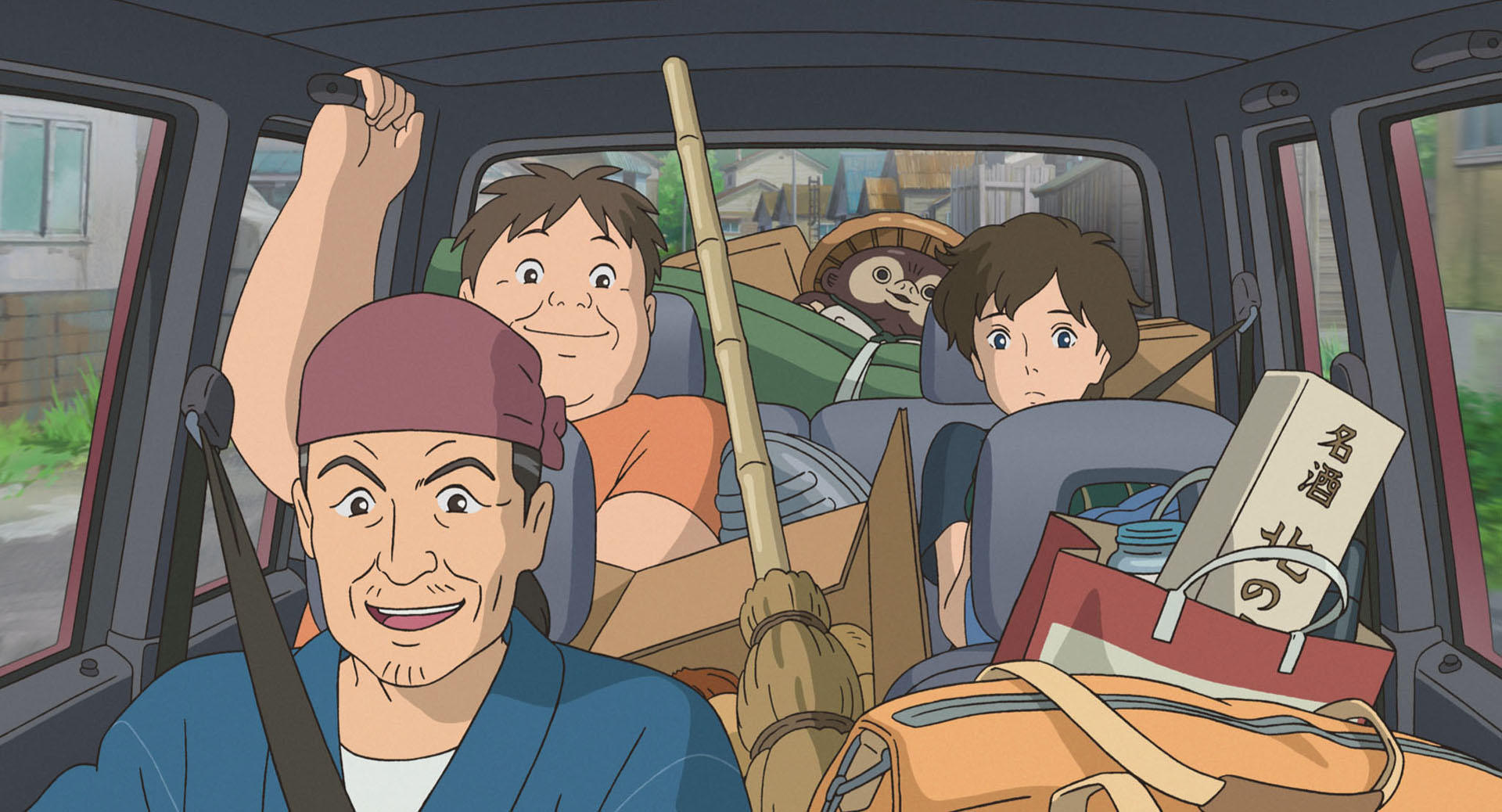
The Oiwas welcome Anna into their rural home while Yoriko remains in the city. They are affectionate but not intrusive. Setsu notices Anna’s moods without demanding immediate explanations, while Kiyomasa’s cheerfulness makes the household feel lived-in rather than clinical. Their home provides a useful contrast with the grand Marsh House.
They also permit independence that initially looks risky. Anna can walk, sketch and explore the marsh instead of being treated as a patient under constant observation. This freedom creates the conditions for her connection with Marnie and later Sayaka. The Oiwas trust that belonging can grow through ordinary meals and repeated welcome rather than interrogation.
Their role is easy to underestimate because they do not solve the mystery. What they provide is stability. In a film full of interrupted care, hidden histories and adults who were absent at crucial moments, the Oiwas show how restorative reliable everyday kindness can be.
Sayaka: the real-world friend and young detective
Sayaka appears after her family moves into the renovated Marsh House. At first Anna is unsettled because Sayaka occupies a place connected so closely to Marnie. Sayaka, however, is neither a replacement nor a rival. She is curious, direct and willing to follow evidence.
When she finds Marnie’s diary, the story gains an anchor outside Anna’s private experience. The diary confirms names, events and the silo, helping Anna see that the girl she met has a history beyond imagination. Sayaka’s practical investigation and Anna’s emotional memories become complementary ways of reaching the truth.
Sayaka also represents Anna’s ability to form a friendship in the present. Marnie opens the locked emotional door, but Sayaka can remain after the mystery is understood. Their bond is less enchanted and less consuming, which is exactly why it signals growth rather than loss.
Hisako: witness, artist and keeper of Marnie’s history
Hisako is the elderly artist Anna meets near the marsh. Her patient presence makes her feel safe before Anna knows how important she is. Like Anna, Hisako uses art as a way of observing the landscape, but she also carries direct memories of Marnie’s childhood.
Once Sayaka’s diary has established the past, Hisako explains what happened later. Marnie married Kazuhiko, lost him, struggled with illness and eventually tried to care for her daughter Emily. After Emily’s death, Marnie raised her granddaughter Anna for a short period before dying herself.
Hisako does more than deliver exposition. She turns a beautiful mystery into a human life containing neglect, love, bereavement and imperfect parenting. Her account prevents Marnie from remaining an ageless fantasy girl. It also gives Anna an adult witness who can confirm that her family’s pain was real without defining her future.
Yoriko Sasaki: an anxious mother whose love is real
Yoriko worries about Anna constantly and worries that her worrying makes things worse. Her nervous manner can feel suffocating to Anna, especially when teachers and doctors become involved. The allowance secret deepens the distance because Yoriko delays an honest conversation out of fear that Anna will misunderstand it.
That fear produces the very misunderstanding she hoped to avoid. Anna assumes the payment means Yoriko’s love is less authentic, while Yoriko’s distress comes from loving Anna and not knowing how to reach her. The problem is not an absence of care but communication distorted by insecurity on both sides.
At the end Anna openly identifies Yoriko as her mother. It is a small line with enormous weight. She is not denying the facts of foster care or replacing her biological family story. She is allowing legal, chosen and emotional family to exist together.
Kazuhiko, the silo and Marnie’s chance at safety
Kazuhiko is Marnie’s childhood friend and later husband. During the traumatic silo incident, the frightened Marnie expects him to come for her. When Anna enters that memory, past and present blur until Anna temporarily occupies the role associated with Kazuhiko.
This explains why Marnie appears to call Anna by his name and then leaves with him. It is not a romantic triangle. Anna has entered a remembered crisis whose original participants are reasserting themselves. Kazuhiko later represents a period of genuine companionship and stability in Marnie’s adult life.
His early death, however, continues the film’s pattern of security being found and then lost. Marnie’s later collapse is not evidence that his love failed; it shows the cumulative effect of childhood neglect and repeated bereavement.
Emily and the inherited pattern of abandonment
Emily is Marnie and Kazuhiko’s daughter, and Anna’s biological mother. After Kazuhiko dies and Marnie becomes unwell, Emily is sent to boarding school. She experiences that separation as abandonment and returns resentful, creating a painful distance between mother and daughter.
As a young adult, Emily leaves with her partner and has Anna. Both parents die in an accident, after which Marnie cares for Anna until her own death. Anna is then placed with the Sasakis. The compressed history explains why abandonment feels larger than any one event in the family.
The film does not use that history to excuse every hurt. Instead, it shows how frightened people can pass on wounds they never intended to give. Anna’s new understanding creates a chance to stop treating every separation as proof that she is unlovable.
How the characters fit the film’s central idea
Each important character offers Anna a different form of connection. Marnie gives emotional recognition, Sayaka gives present-day friendship, Hisako gives truthful history, the Oiwas give uncomplicated hospitality and Yoriko gives chosen parental commitment. None is sufficient alone.
That is why the final revelation is more than a twist. Anna does not discover one magical person who solves her loneliness. She learns to connect memory with evidence, biological history with foster family, and grief with the people still available to love her. The ensemble turns the Marsh House mystery into a story about belonging without requiring a simple definition of family.
Frequently asked questions
Who is Marnie to Anna?
Marnie is Anna’s maternal grandmother. Marnie’s daughter Emily was Anna’s biological mother. The film gradually reveals this through the diary, Hisako’s account and the photograph connected to the Marsh House.
Is Marnie a ghost or Anna’s imagination?
The film deliberately leaves the mechanism open. Marnie can be understood as a ghost, an inherited memory, a dreamlike reconstruction of stories Anna heard as a small child, or all of these at once. Her historical existence is not in doubt.
Why does Marnie call Anna Kazuhiko?
During the silo sequence, Anna has entered Marnie’s memory of a childhood trauma. The past reasserts itself, and Anna temporarily occupies the place associated with Kazuhiko, the boy who originally came for Marnie.
Who is Sayaka in When Marnie Was There?
Sayaka is the girl whose family moves into the Marsh House. She finds Marnie’s diary, helps Anna investigate it and becomes a real present-day friend after the supernatural mystery begins to recede.
For another guide centred on grief and recovery, see our Studio Ghibli films about grief and healing, or browse the complete Studio Ghibli movie directory.
Image credit: Official stills from the When Marnie Was There page on ghibli.jp, used under Studio Ghibli’s common-sense image-use notice. This article is an independent fan guide and is not affiliated with Studio Ghibli.