When Marnie Was There quick facts
- Japanese title: Omoide no Marnie
- Japanese release: 19 July 2014
- Director: Hiromasa Yonebayashi
- Screenplay: Keiko Niwa, Masashi Ando and Hiromasa Yonebayashi
- Based on: Joan G. Robinson’s 1967 novel When Marnie Was There
- Producer: Yoshiaki Nishimura
- Music: Takatsugu Muramatsu
- Running time: about 103 minutes
- Best for: older children, teenagers and adults who enjoy quiet mysteries, coastal atmosphere and emotionally serious stories about loneliness, adoption and belonging
Spoiler-free answer: When Marnie Was There follows Anna Sasaki, a guarded young artist sent to stay beside a Hokkaido marsh after an asthma attack. An apparently abandoned mansion draws her toward Marnie, a magnetic girl who seems to belong to another time. Their secret friendship gradually becomes a mystery about memory, family and the painful stories children inherit before they can understand them.
Spoiler-free overview
This is one of Studio Ghibli’s quietest features. There is no quest, war or crowded magical kingdom. Its suspense comes from tides, unlocked windows, half-remembered parties and Anna’s uncertainty about whether Marnie is a friend, a ghost or something her lonely mind has created. The marsh is beautiful, but the film never turns Anna’s distress into picturesque decoration. She is defensive, ashamed and sometimes unkind because she assumes rejection will arrive sooner or later.
The mystery works best when the ending is not spoiled in advance. What can be said safely is that the film takes Anna’s emotions seriously without treating her as broken. Her summer does not offer an instant cure. It gives her new relationships, evidence about her past and a way to reconsider the foster mother whose love she has doubted.
Viewers who like the small scale of The Secret World of Arrietty will recognise director Hiromasa Yonebayashi’s patience with houses, gardens and vulnerable young people. For another Ghibli film about memory changing an adult’s understanding of herself, read the Only Yesterday guide.
Storyline: what happens in When Marnie Was There?
The following section contains full story and ending spoilers.
Anna lives in Sapporo with her foster mother, Yoriko. During a school sketching session she watches other children from a distance, suffers an asthma attack and collapses. Her doctor suggests cleaner air and a change of environment, so Yoriko sends her to stay with relatives, Setsu and Kiyomasa Oiwa, in the countryside of eastern Hokkaido.
The Oiwas are warm, informal and patient. Anna nevertheless remains alert for humiliation. She discovers that Yoriko receives foster-care payments and interprets the secrecy around them as proof that affection is a transaction. She does not tell Yoriko how frightened this makes her. Instead, she withdraws and describes herself with a harshness that reveals how thoroughly shame has shaped her view of other people.
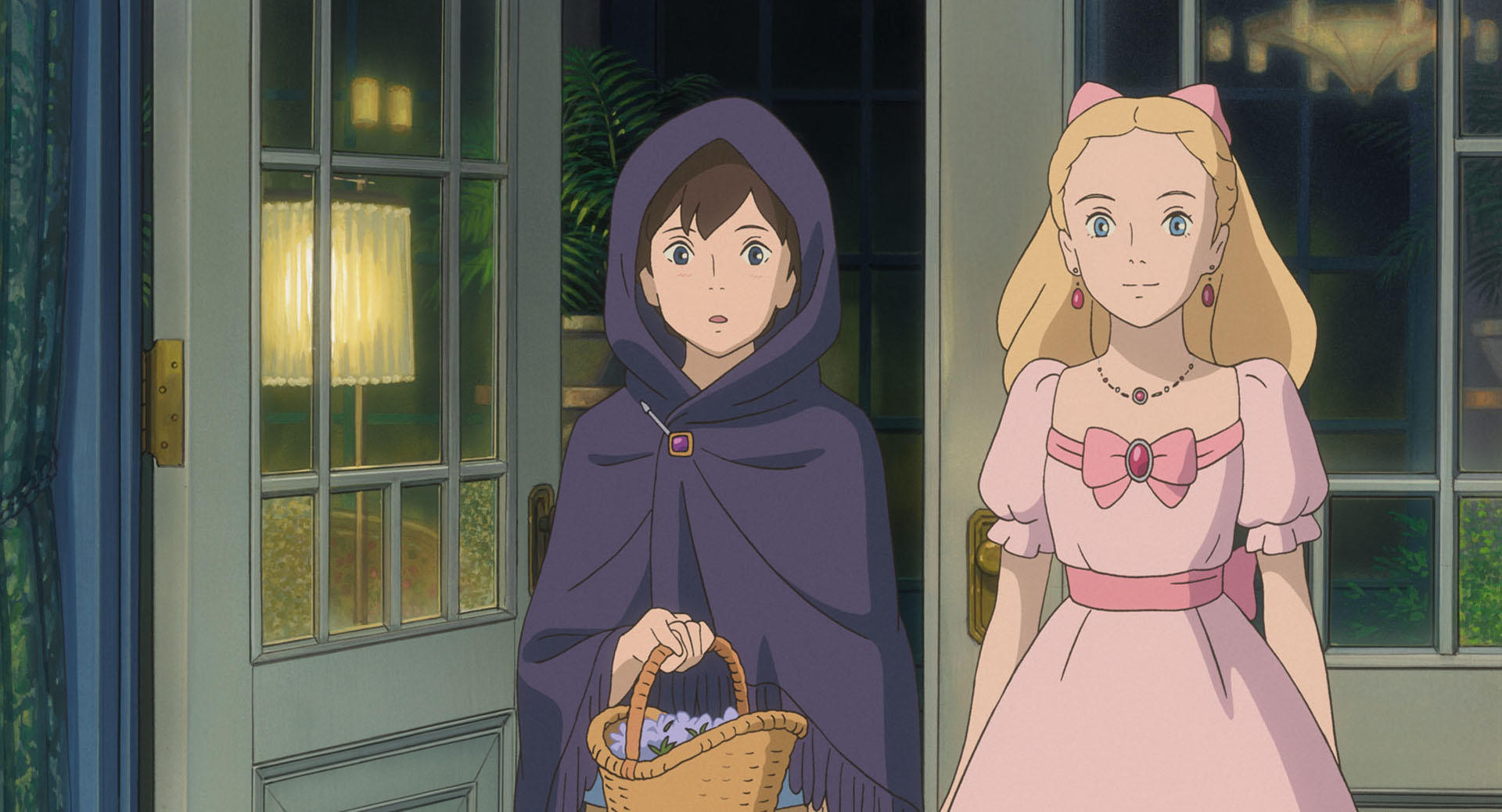
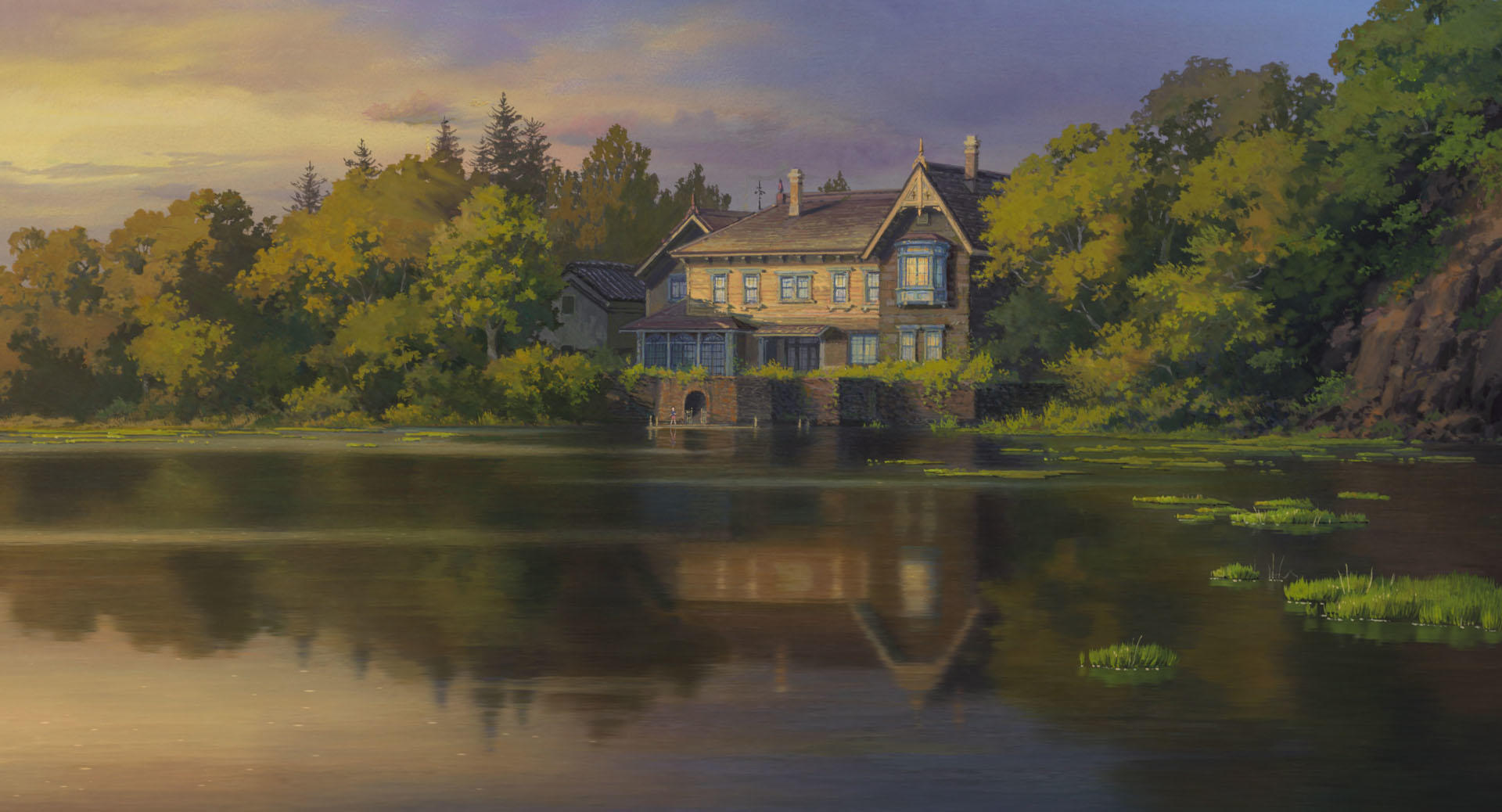
While exploring the marsh, Anna sees a grand house across the water. It appears empty in daylight, yet she dreams of a blonde girl behind an upstairs window. One evening the house is suddenly lit and alive. Anna meets Marnie, who asks her to keep their friendship secret. The meetings have the freedom of summer fantasy: rowing at night, running through grass and attending a lavish party where Anna is introduced as a flower girl.
Marnie seems confident, but glimpses of her childhood reveal neglect and fear. Her wealthy parents are often absent. Servants bully her, and she dreads an abandoned silo where they once locked her during a storm. Anna becomes protective because Marnie’s loneliness resembles her own even though their lives look very different.
Time around the marsh refuses to behave consistently. Anna may arrive at the house and find it abandoned, then later enter a living scene from Marnie’s past. People and clothing shift without explanation. The film lets these contradictions accumulate rather than providing supernatural rules.
A new family moves into the mansion, and their daughter Sayaka finds Marnie’s diary. She mistakes Anna for Marnie at first, then becomes a practical friend who helps investigate the old house. The diary confirms that Marnie once lived there and points toward the silo, but its later pages are missing.
Anna follows Marnie to the silo during a storm. Inside, Marnie seems to confuse Anna with Kazuhiko, the boy she loved. Anna wakes abandoned and terrified, feeling that Marnie has betrayed her. She is found feverish outside. When Marnie returns in a dreamlike encounter, she asks forgiveness. Anna forgives her before Marnie disappears.
Hisako, an older woman who has been sketching near the marsh, recognises Marnie’s story. She explains that Marnie married Kazuhiko and had a daughter named Emily. After Kazuhiko died, Marnie struggled with illness and Emily was placed in a boarding school. The separation damaged their relationship. Emily later married, gave birth to Anna and died with Anna’s father in an accident. Marnie cared for her granddaughter until her own death.
The reveal means Marnie is Anna’s grandmother. Anna had heard fragments of Marnie’s life as bedtime stories when she was very young. At the marsh, those memories became encounters that could be read as ghostly visits, dreams or an emotional reconstruction of family history. The film deliberately leaves the mechanics open while making the relationship’s meaning clear.
Anna returns to Yoriko with a changed understanding. A photograph of the Marsh House confirms the family connection, and Anna can finally call Yoriko her mother without the old distance. She also apologises to a local girl she insulted and says goodbye to Sayaka. The ending is hopeful because Anna has started accepting care and connection, not because every trace of loneliness has vanished.
Main characters
Anna Sasaki
Anna is observant, talented and emotionally armoured. She assumes she is outside the “invisible magic circle” that lets other people belong. Her sharp reactions are not proof that she does not want connection. They are attempts to control rejection by causing distance first. Drawing gives her a quieter language when conversation feels unsafe.
Marnie
Marnie appears glamorous and free, but her confidence hides childhood neglect. Her bond with Anna works because each girl recognises isolation in the other. Marnie is also a memory Anna has inherited, carrying love alongside failures that affected later generations.
Yoriko
Anna’s foster mother worries openly and sometimes makes that worry feel heavy. Keeping the foster payments secret is a mistake, but it does not make her love false. The ending allows Anna to understand that institutions can support care without reducing a family relationship to money.
Sayaka
Sayaka arrives after Marnie’s mysterious encounters begin to fracture. She is curious, direct and anchored in the present. Her friendship matters because it shows Anna can form an ordinary new bond as well as experience the extraordinary connection with Marnie.
Setsu and Kiyomasa Oiwa
The Oiwas offer Anna room without demanding immediate gratitude or cheerfulness. Their relaxed household contrasts with Anna’s expectation that adults are always assessing her. They model care as something steady and practical.
Hisako
Hisako connects the marsh’s atmosphere to verifiable family history. She remembers Marnie as a real person rather than only a beautiful mystery, allowing Anna to see a life marked by love, absence, illness and imperfect attempts at repair.
Themes and interpretation
Loneliness changes how care looks
Anna does not merely lack company. She mistrusts evidence of love. Payments look like proof of fraud, worry feels like pressure and friendly children seem to belong to a world closed against her. Healing begins when she can test those interpretations rather than treating them as facts.
Inherited pain is context, not destiny
Marnie, Emily and Anna form a family line marked by bereavement and separation. The film does not blame one woman for everything that follows. It shows how loss can shape later relationships when nobody has the language or stability to process it. Learning the history lets Anna hold pain with more compassion without pretending it never happened.
Adoption, foster care and belonging
The story distinguishes biological history from present-day parenting without dismissing either. Marnie gives Anna a connection to her origins. Yoriko provides the daily family Anna has now. Anna does not need to choose one relationship as real and the other as false.
The marsh as emotional geography
Tides decide whether the house can be reached. Windows reveal life and then go dark. Boats carry Anna between stable ground and an uncertain past. The landscape turns memory into a place she can enter, but the changing water also insists that she cannot live there permanently.
Forgiveness without a perfect explanation
Anna forgives Marnie before she knows the genealogy. The scene matters because emotional repair is not postponed until every fact is available. Later information deepens understanding, but compassion begins with recognising that both girls were frightened.
Age suitability and content guidance
The film has no graphic violence and received a U classification from the BBFC for very mild threat and scenes of emotional distress. That certificate does not mean every young child will find it easy. Anna experiences an asthma attack, social isolation, self-loathing and fears of abandonment. Marnie describes neglect and frightening treatment by servants. The stormy silo sequence includes darkness, panic, separation and a feverish rescue.
The final act discusses parental death, bereavement, illness, foster care and a damaged mother-daughter relationship. These ideas are handled gently but can be emotionally intense. Younger viewers may also find the mystery’s shifting time confusing. Older children and teenagers who enjoy patient character stories are more likely to connect with it. Check the classification for your country and edition, and be ready to discuss why Anna assumes the worst about herself and Yoriko.
Production and release context
When Marnie Was There was directed by Hiromasa Yonebayashi and released in Japan on 19 July 2014. Keiko Niwa, Masashi Ando and Yonebayashi wrote the screenplay, Yoshiaki Nishimura produced it, and Takatsugu Muramatsu composed the music. Priscilla Ahn wrote and performed the English-language theme song “Fine on the Outside.”
The film adapts Joan G. Robinson’s English novel but relocates the story to Japan. Rural Norfolk becomes a Hokkaido landscape of tidal marsh, fishing boats and summer festivals. The move is not a cosmetic swap. Architecture, local routines and the shape of the coast give Anna’s experience a specific physical home while preserving the novel’s emotional mystery.
Yonebayashi previously directed The Secret World of Arrietty. Both films adapt British children’s literature through careful attention to domestic space and young people who feel constrained by circumstances. When Marnie Was There later received an Academy Award nomination for Best Animated Feature.
Where to watch legally
Streaming licences change by country and date. Use the site’s current legal Studio Ghibli viewing guide, then confirm the title inside the service before subscribing or paying. In North America, GKIDS maintains an official film page and licensed home-video information. Rental, purchase and physical editions vary by region.
Official image gallery
Related films
Watch The Secret World of Arrietty for another delicate Yonebayashi adaptation, Only Yesterday for memory and self-understanding, or My Neighbor Totoro for a gentler countryside story in which children face family worry. The Tale of the Princess Kaguya is a heavier companion about family love that fails to listen closely enough.
Frequently asked questions
Who is Marnie to Anna?
Marnie is Anna’s maternal grandmother. Anna’s encounters draw on stories and memories from early childhood, although the film leaves open whether Marnie appears as a ghost, dream or magical form of inherited memory.
Is Marnie imaginary or a ghost?
The film does not impose one mechanical answer. Marnie was a real person, and Anna encounters emotionally accurate parts of her past. The experience can be read as supernatural contact, dream, memory or a combination of them.
Why does Marnie call Anna Kazuhiko in the silo?
The scene belongs to Marnie’s traumatic memory. She slips into the past and perceives Anna as Kazuhiko, the person who once came to help her. That shift reveals why Anna feels abandoned even though Marnie is not consciously choosing another friend over her.
Why was Anna upset about the foster-care payments?
She believed the payments meant Yoriko’s care had been bought and hidden from her. The ending reframes this fear: financial support exists, but Yoriko’s parenting and love are not therefore fake.
Is When Marnie Was There a romance?
Anna and Marnie share intense affection, secrecy and jealousy, so some scenes use the emotional language viewers associate with romance. The narrative ultimately reveals a grandmother-granddaughter connection and centres the bond as family memory and healing.
Is When Marnie Was There suitable for children?
It contains little conventional danger, but its loneliness, neglect, death, foster-care themes and storm sequence can be heavy. It generally works better for older children and teenagers than for very young viewers expecting a lively fantasy.
Official film stills are credited to Studio Ghibli and used under its common-sense image-use notice.