Quick answer: Boh is Yubaba’s enormous baby in Spirited Away. At first he looks like a strange joke about a spoiled child, but his role is sharper than that. Boh shows what happens when love becomes overprotection: he is safe, rich and powerful inside Yubaba’s rooms, yet he has no real courage or experience until Chihiro and Zeniba force him into the outside world.
Who is Boh in Spirited Away?
Boh is the giant baby who lives in Yubaba’s private quarters above the bathhouse. He is physically huge, emotionally young and used to having the world arranged around him. His room is soft, enclosed and luxurious, but it is also a kind of nursery-prison. He has comfort without freedom.
That contradiction is why Boh matters. Spirited Away is full of characters trapped by appetite, fear, contracts and habit. Chihiro is trapped because her parents have been transformed and her name has been taken. No-Face is trapped by hunger and imitation. Boh is trapped by protection. He has been kept from danger so completely that ordinary life frightens him.
Why is Boh so big?
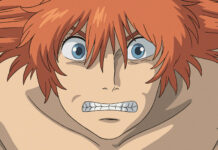
Boh’s size is part of the joke, but it is also visual storytelling. He is a baby with the physical presence of a monster. That makes him both vulnerable and intimidating. When he threatens Chihiro, he is not evil in the same way as a calculating villain. He is a frightened child who has never been taught that other people have needs too.
Studio Ghibli often uses body language and scale to make emotional states visible. Boh is overgrown because his needs have been overfed. He has too much room, too many cushions and too much power, but not enough independence. The film turns that imbalance into a memorable image: a baby so protected that he has become impossible to manage.
Boh and Yubaba’s overprotective love
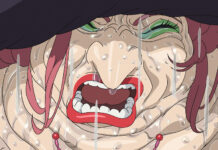
Yubaba clearly cares about Boh, but her care is possessive and fearful. She runs the bathhouse with contracts, names and control, and she treats her child in a similar spirit. Boh is precious to her, so she keeps him hidden away from anything that might make him uncomfortable.
The result is not real security. Boh believes the outside is full of germs and danger because that is what he has been taught. His fear gives Yubaba more reason to contain him, and her containment gives him more reason to be afraid. It is a closed loop. Chihiro interrupts that loop simply by refusing to treat Boh as the centre of everything.
Why Boh threatens Chihiro
When Chihiro enters Yubaba’s rooms, Boh grabs her because he does not understand boundaries. He wants attention and assumes he can demand it. His threat to cry is funny because it is childish, but it also carries real danger. In Yubaba’s world, Boh’s comfort has more power than Chihiro’s safety.
This scene shows how far Chihiro has grown. Earlier in the film, she is terrified and passive. By the time Boh tries to stop her, she is still scared, but she has a purpose. She needs to help Haku and return the seal. Boh’s tantrum cannot become her whole world. That makes her maturity stand out against his sheltered childishness.
The mouse transformation
Zeniba’s spell turns Boh into a tiny mouse, and the change is brilliant because it reverses everything about him. The giant baby becomes small, portable and exposed. He can no longer rely on size, noise or his mother’s status. He has to see the bathhouse, the train journey and Zeniba’s cottage from a completely different position.
The transformation is not only punishment. It is education. Boh learns by being unable to dominate the room. He travels with Chihiro, watches her choices and experiences a world beyond Yubaba’s cushions. In a film where names and forms can hide the truth, becoming smaller helps Boh become more real.
Boh, Chihiro and growing up
Chihiro and Boh are useful opposites. Chihiro begins weak and becomes capable because she has to work, remember and care for others. Boh begins protected and powerful, but he has almost no resilience. Their time together lets him borrow some of Chihiro’s courage.
What makes this satisfying is that Chihiro does not lecture him. She simply keeps going. She rides the train, visits Zeniba and makes choices that are bigger than her fear. Boh sees a child acting with responsibility, and that example changes him more effectively than another command from Yubaba ever could.
How Boh changes by the end
By the end of Spirited Away, Boh has become noticeably calmer and more independent. He stands up to Yubaba in his own small way, telling her not to make Chihiro cry and recognising that Chihiro has helped him. That is a major shift from the child who tried to control Chihiro by threatening a tantrum.
His growth is compact, but it matters. Boh does not need a long speech or a separate subplot. The movie shows enough: he leaves the room, survives discomfort, makes a friend and returns with a little more courage. For a character introduced as a grotesque comic surprise, that is a quietly generous arc.
What Boh says about parenting in Spirited Away
Boh’s story is one of the film’s clearest parenting warnings. Chihiro’s parents fail her through greed and carelessness. Yubaba fails Boh through control and fear. Neither failure looks the same, but both leave a child exposed. Chihiro grows because she receives help, but also because no one can do the work for her.
That is why Boh’s room feels so unsettling. It looks comfortable, yet it has cut him off from the experiences children need: risk, friendship, embarrassment, discovery and responsibility. The film is not saying children should be abandoned to danger. It is saying love cannot become a sealed room.
Why fans remember Boh
Fans remember Boh because he is one of Spirited Away’s strangest character designs, but he lasts because the joke has meaning. He is funny, alarming and sad at the same time. The mouse version also becomes unexpectedly charming, especially when he joins the tiny bird and Chihiro on the journey to Zeniba.
His arc adds another layer to the film’s central idea: identity changes when people move through the world instead of hiding from it. Chihiro becomes braver by acting. No-Face becomes calmer by leaving the bathhouse. Boh becomes kinder by becoming small enough to learn.
Where Boh fits in Spirited Away
Boh is not the main emotional centre of the film, but he strengthens several of its biggest themes: names, control, greed, work, care and courage. He also gives Yubaba more texture. She is not only a greedy bathhouse boss; she is a mother whose love has become another form of control.
For more context, read our Spirited Away movie guide, Spirited Away characters guide, Yubaba character guide and No-Face explained.
FAQ
Who is Boh?
Boh is Yubaba’s giant baby in Spirited Away. He lives in her private rooms and is introduced as sheltered, spoiled and afraid of the outside world.
Why does Boh turn into a mouse?
Zeniba transforms Boh into a mouse, which forces him out of his protected life and lets him experience the world without size, status or his mother’s control.
Is Boh a villain?
No. Boh behaves selfishly at first, but he is more sheltered child than villain. His journey with Chihiro helps him become braver and kinder.
What does Boh symbolise?
Boh symbolises overprotection, fear of the outside world and the need for children to grow through experience rather than comfort alone.
Image source: Official Spirited Away still via ghibli.jp, where Studio Ghibli provides stills with a common-sense usage notice.