Quick answer: The Red Turtle is suitable for many children from about age 8, but it is not a light preschool adventure. The film is rated PG in the United States for thematic elements and peril. It has almost no spoken dialogue and no graphic violence, yet it includes shipwreck danger, repeated near-drowning, a man angrily injuring a turtle, a destructive tsunami, separation and a quiet death from old age. Patient children who can handle symbolic storytelling may find it beautiful. Younger or death-sensitive viewers may need an adult beside them.
This spoiler-aware parent guide explains the scenes most likely to worry children. For the full story and meaning, use our The Red Turtle movie guide. Ratings vary by country and platform, so check the classification attached to the version available where you live.
The Red Turtle parent guide at a glance
- Suggested viewing age: around 8+ for children comfortable with slow, symbolic films; around 10+ for viewers who are especially sensitive to death or animal harm.
- Official US rating: PG for thematic elements and peril.
- Violence: brief but emotionally important. The castaway strikes and overturns a large turtle, then regrets what he has done.
- Scary moments: shipwrecks, underwater danger, a severe storm and tsunami, and characters temporarily missing after the wave.
- Sad content: loneliness, separation, ageing and a peaceful death.
- Language: essentially none. The story is told through images, music and natural sounds.
- Sex and nudity: no sexual content. Human figures wear simple clothing, and the film treats bodies naturally rather than suggestively.
- Positive themes: patience, family, remorse, resilience, respect for nature and accepting change.
Why the film can feel more mature than its PG rating
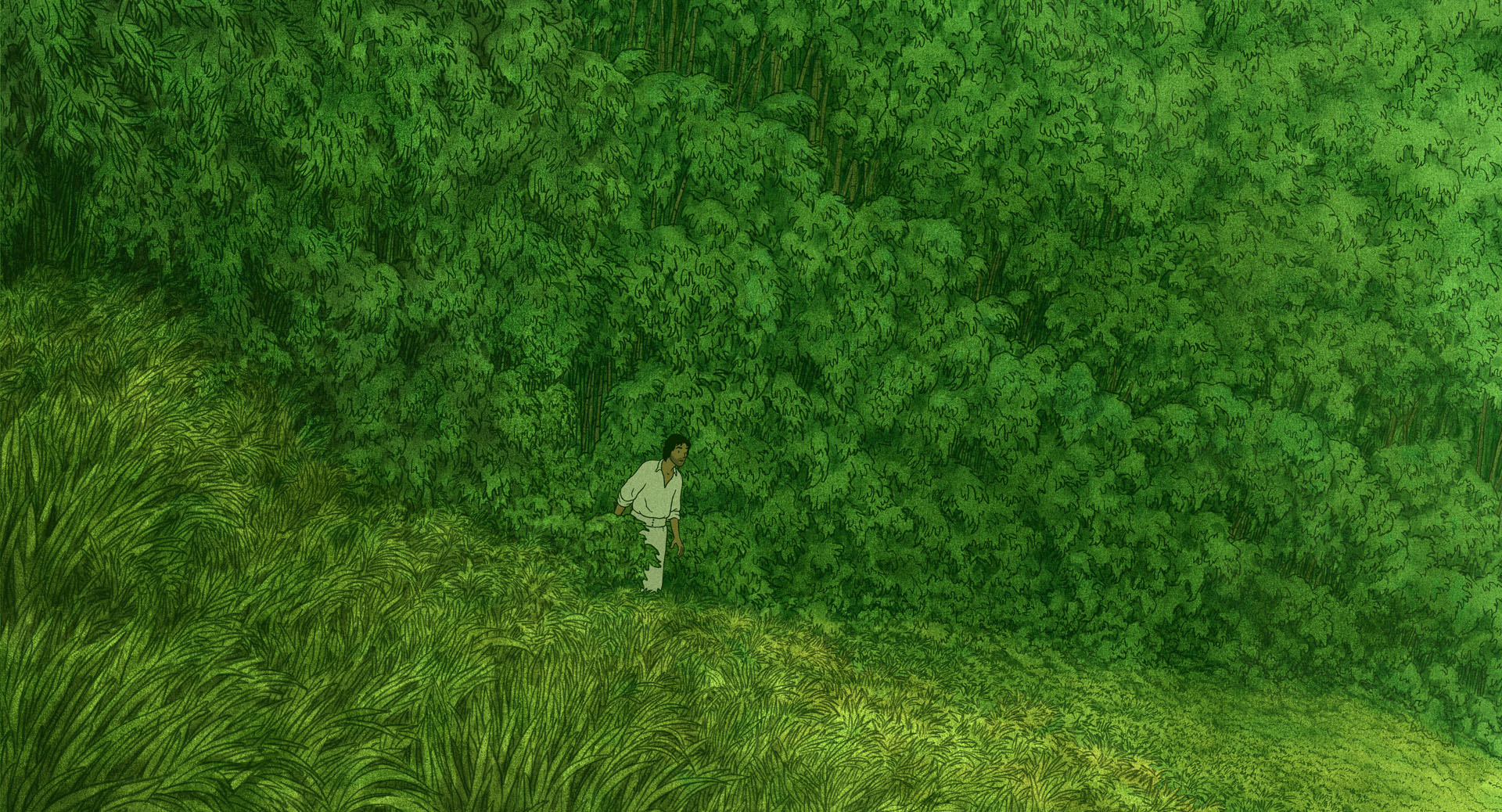
The Red Turtle looks gentle. Its island is drawn with clean lines, the small crabs provide playful movement, and long stretches contain no obvious threat. The absence of dialogue can also make it seem ideal for very young viewers. The challenge is not harsh content so much as emotional and narrative maturity.
The film does not explain its central transformation or tell viewers exactly what its ending means. It asks the audience to accept dream logic and watch an entire life unfold. Children who expect jokes, songs or constant action may become restless. Others may be deeply absorbed by the island, the animals and the visual storytelling. Suitability therefore depends as much on patience and temperament as on fear.
Shipwrecks, swimming and near-drowning scenes
The opening places a lone man in a violent sea. Waves overwhelm him before he reaches a deserted island. He later builds rafts and repeatedly tries to escape, but something below the water destroys them. These sequences show exhaustion, panic and the risk of drowning, although there is no blood or graphic injury.
Underwater scenes are visually beautiful but can be tense for children who fear deep water. The man dives, struggles for air and is sometimes shown far from safety. A child with recent worries about swimming, boats or storms may find these moments stronger than the calm artwork suggests.
What happens to the red turtle?
This is the scene parents are most likely to want advance warning about. After discovering that a giant red turtle has been stopping his rafts, the frustrated castaway attacks it on the beach. He hits its shell with a piece of bamboo and flips it onto its back. The turtle becomes still, and the man initially leaves it exposed.
The attack is not graphic. There is no visible wound or blood, but the helpless animal and the man’s anger can be upsetting. He soon feels remorse, tries to revive it with water and builds shelter over it. The turtle’s shell then opens and a woman appears. The transformation is unexplained and should not be read as realistic animal treatment. Sensitive animal lovers may still need reassurance because the film lets the apparent death sit quietly on screen.
The tsunami sequence
Later, a tsunami strikes the island. The sea pulls back, the family notices the strange change and an enormous wave crashes through the trees. The force tears apart their home and scatters the family. The father is trapped beneath bamboo, while the mother and son search through the flooded landscape.
The sequence is intense but not prolonged. Characters are in genuine danger, and viewers briefly do not know whether everyone survived. Nobody is shown with a graphic injury. The family reunites, then begins rebuilding. For most school-age children this will play as a serious survival scene rather than horror, but children frightened by natural disasters may need preparation.
Death, ageing and the ending
The film follows the couple’s son from childhood into adulthood. He eventually swims away with other turtles, leaving his parents on the island. The separation is loving, but it may feel sad to children who dislike goodbyes or worry about leaving home.
Time passes and the man becomes elderly. One night he dies peacefully beside his wife. There is no pain, violence or frightening image, but his body remains still and she understands that he is gone. The woman then changes back into the red turtle and returns to the sea. This quiet ending can prompt questions about death, ageing, where the son went and whether the family will meet again.
Parents do not need to provide one definitive interpretation. A simple explanation is that the film shows a whole life, including love, growing up and death, while the turtle represents nature and mystery. The sadness is intentional, but the ending is serene rather than bleak.
Is there any dialogue?
There is no conventional spoken conversation. Characters breathe, cry out, laugh and make other sounds, but the story communicates through action, expression, music and the environment. This makes the film accessible across languages, yet it also removes the verbal reassurance children often receive after a frightening scene.
Watching together helps. An adult can quietly explain that the man regrets hurting the turtle, that the family survived the wave, or that the final death happens after a long life. Avoid narrating every image, though. Part of the film’s value is allowing children to notice details and form their own questions.
Will younger children be bored?
Possibly. The running time is about 81 minutes, but the pace is deliberately slow. There are long passages of raft building, swimming, weather, family life and observation. The small red crabs are charming, and the survival problem gives the first part a clear goal, but the film does not behave like a fast animated comedy.
A child who enjoys nature documentaries, wordless picture books or quieter films may engage earlier than a child who normally prefers rapid action. If you are uncertain, watch it as a family afternoon film rather than putting it on as background entertainment. The visual details reward attention.
Who should watch The Red Turtle?
It is a strong choice for thoughtful children aged 8 and over, especially those interested in oceans, islands, animals, survival stories or animation as visual art. It can also work well for family discussion because children and adults may interpret the transformation differently.
Consider waiting if your child is under 7, strongly distressed by animal harm, currently anxious about parental death, or likely to find an unexplained story frustrating. Age 10 and over is a safer recommendation for highly sensitive viewers. The film is emotionally serious, but its overall worldview is compassionate and calm.
How to prepare a sensitive child
- Explain that the film begins with a shipwreck but the man reaches an island.
- Warn that he hurts a turtle in anger and then immediately regrets it.
- Mention that a large wave damages the island, but the family finds one another.
- Say that the story follows the man until he becomes old and dies peacefully.
- Let the child know that the magical transformation is never fully explained.
These spoilers remove little of the film’s power because the experience comes from images, rhythm and emotion rather than plot twists. Preparation can make the viewing safer without flattening the mystery.
Frequently asked questions
What age is The Red Turtle best for?
About age 8 and over is a practical starting point for most families. Children who are sensitive to animal harm, natural disasters or death may be more comfortable from age 10.
Is The Red Turtle scary?
It is not a horror film, but the opening shipwreck, deep-water danger, turtle attack and tsunami can be tense. Its saddest material is quiet rather than frightening.
Does the turtle die?
The man attacks the red turtle and it appears lifeless. The shell later opens to reveal a woman. The film treats this as a magical transformation and never provides a literal explanation.
Does anyone die in The Red Turtle?
Yes. The man dies peacefully of old age near the end. The moment is gentle and non-graphic, but emotionally clear.
Is The Red Turtle a Studio Ghibli film?
It is an international co-production directed by Michaël Dudok de Wit and co-produced by Studio Ghibli. Its minimal dialogue and European visual style make it distinct from Ghibli films directed in Japan.
For broader family options, compare our Studio Ghibli movies for kids guide. If your family enjoys calm, reflective viewing, see our quiet Studio Ghibli movie recommendations or browse the complete movie directory.
Image credit: Official stills from The Red Turtle page on ghibli.jp, used under Studio Ghibli’s common-sense image-use notice. This article is an independent fan guide and is not affiliated with Studio Ghibli.