The best Studio Ghibli movies about nature are not just pretty forest films. They use rivers, trees, storms, insects, seas, fields, and spirits to ask how people should live inside a world that is already alive. If you want the environmental side of Ghibli, start with Princess Mononoke, Nausicaä of the Valley of the Wind, My Neighbor Totoro, Ponyo, and Castle in the Sky.
Quick ranking: the best nature-focused Studio Ghibli movies
| Rank | Movie | Why it belongs here |
|---|---|---|
| 1 | Princess Mononoke | The clearest Ghibli film about forests, industry, wounds, and coexistence. |
| 2 | Nausicaä of the Valley of the Wind | A post-apocalyptic ecological fable about fear, pollution, and healing. |
| 3 | My Neighbor Totoro | A gentle portrait of childhood, rural life, and everyday wonder in nature. |
| 4 | Ponyo | A sea story where magic, climate, family, and imbalance spill into one another. |
| 5 | Castle in the Sky | A fantasy adventure about technology, power, and the danger of severing roots. |
| 6 | Only Yesterday | A grounded adult story about farming, memory, and choosing a slower life. |
| 7 | When Marnie Was There | A marshland ghost story where landscape becomes emotional memory. |
1. Princess Mononoke
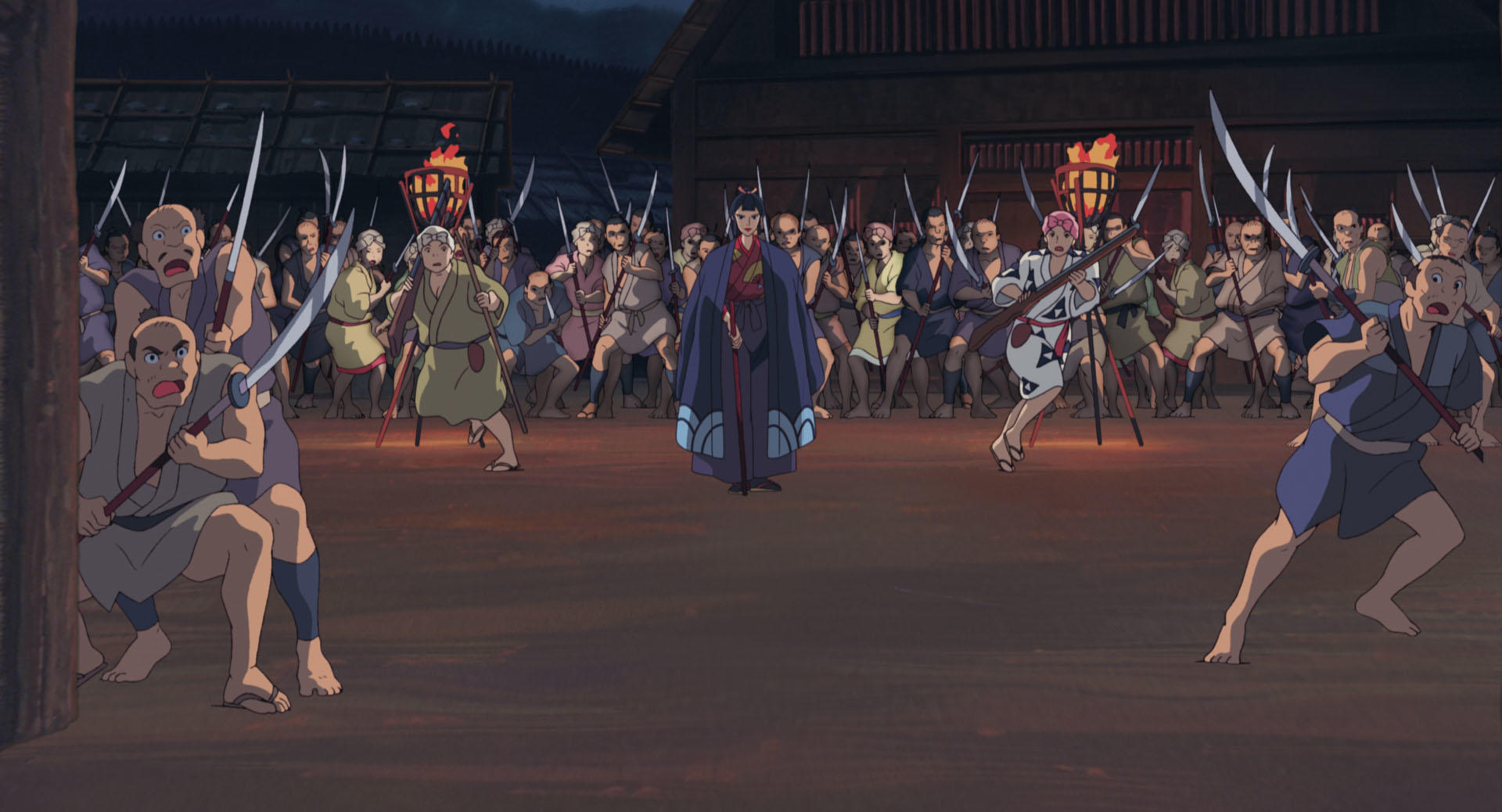
Princess Mononoke is the strongest answer if someone asks for “the environmental Studio Ghibli movie.” It is not a simple message film where nature is good and humans are bad. The forest is sacred, frightening, beautiful, and violent. Irontown is destructive, but it is also a refuge for people who have been pushed aside. Ashitaka stands between those worlds because the film refuses an easy victory for either side.
That is what makes it so useful as a nature film. The conflict is not solved by pretending people can leave no mark on the world. It asks whether humans can take responsibility for the marks they do leave. The boars, wolves, kodama, Forest Spirit, workers, hunters, and lepers all have claims on the same landscape. The movie is intense, but it is also one of Ghibli’s richest stories about coexistence.
2. Nausicaä of the Valley of the Wind
Nausicaä is technically pre-Studio Ghibli, but it is essential to the studio’s identity and to Hayao Miyazaki’s environmental imagination. The Toxic Jungle looks like an enemy at first. Its spores poison the air, its giant insects terrify nearby kingdoms, and its spread seems like proof that the world is dying. Nausicaä sees more carefully. She studies the jungle instead of only fearing it, and the film slowly reveals an ecosystem doing work humans do not understand.
This is the most science-fiction version of Ghibli’s nature theme. It is about pollution, war, fear-driven politics, and the arrogance of treating an ecosystem as a monster before understanding what caused it. If Princess Mononoke is about coexistence in a wounded forest, Nausicaä is about learning to listen to a world that has already been damaged.
The complete Nausicaä of the Valley of the Wind movie guide explores the Toxic Jungle, the Ohmu, Nausicaä’s choices, age suitability and the ending in more detail.
3. My Neighbor Totoro
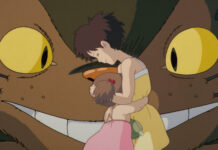
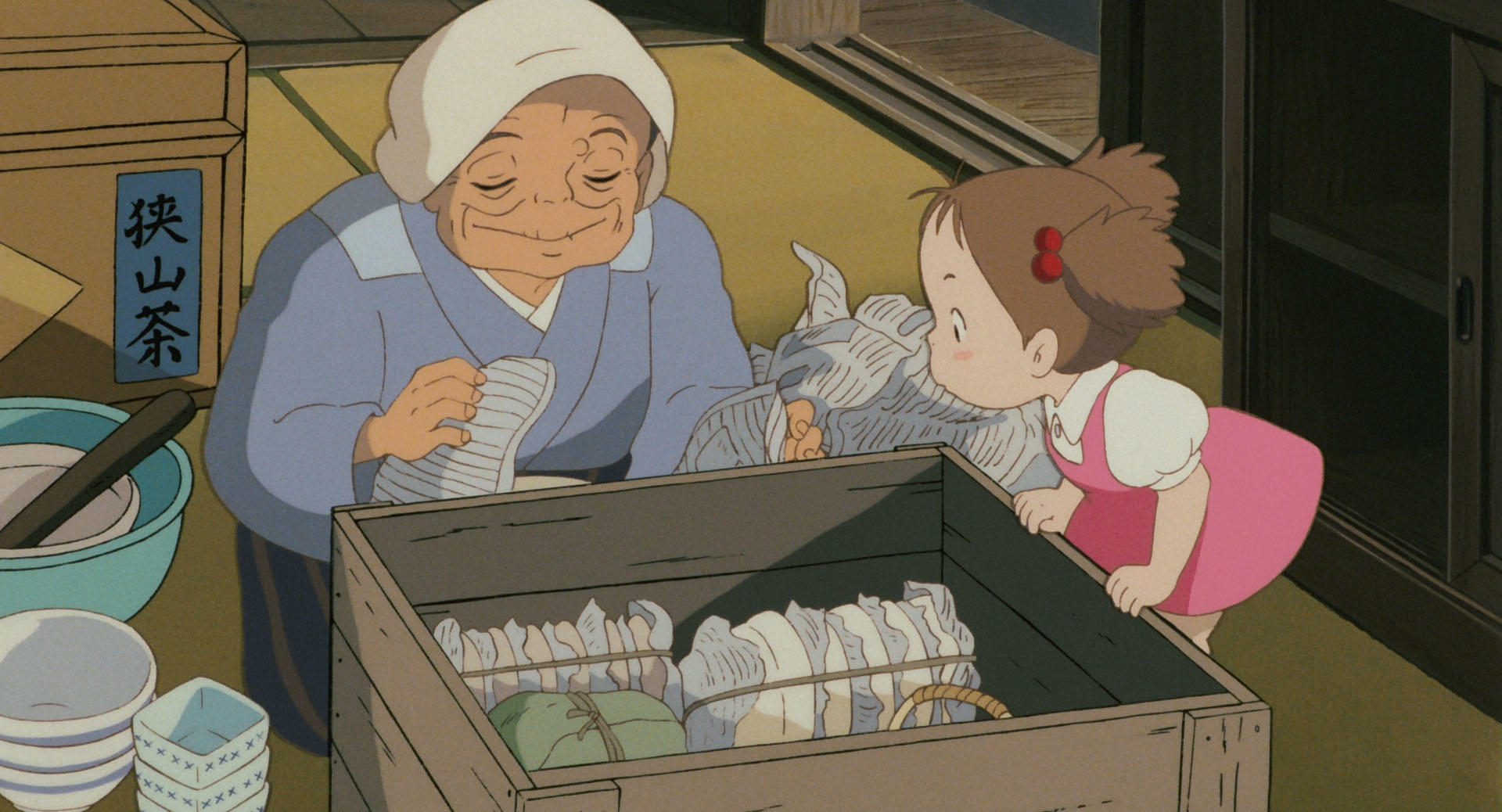
My Neighbor Totoro is the softest film on this list, but that does not make it less important. Its environmental feeling comes from attention rather than speeches. Satsuki and Mei move through paths, fields, trees, rain, dust, seeds, camphor branches, and country roads. The natural world is not a backdrop. It is where the children process fear, curiosity, boredom, illness, and hope.
Totoro himself works because he feels like a spirit of place. He is not there to explain ecology. He is there because the children are open enough to notice the old life around them. For readers looking for cozy Ghibli nature rather than conflict, Totoro is the best starting point and one of the easiest films to pair with a beginner watch guide.
4. Ponyo
Ponyo turns the sea into a living, emotional force. The film is playful and childlike, but underneath the goldfish magic is a story about imbalance. The ocean rises, human spaces flood, and the boundary between sea life and land life starts to dissolve. Fujimoto’s anger at humans can feel theatrical, yet it fits a film where the sea has been mistreated and is pushing back in fairy-tale form.
What keeps Ponyo from becoming a lecture is its focus on care. Sosuke’s promise matters because the movie treats love, responsibility, and trust as practical forces. The environmental thread is not separate from the family story. It is part of the same question: can a small human being keep faith with a much bigger world?
5. Castle in the Sky
Castle in the Sky is often remembered as an adventure film, but its nature theme is stronger than it first appears. Laputa is a technological miracle covered in roots, birds, moss, and silence. The most powerful place in the sky is not alive because of weapons or machines. It is alive because nature has reclaimed it.
The film contrasts two ways of seeing power. Muska sees Laputa as a weapon and inheritance. Sheeta and Pazu see it as a place that should not be torn from the living world beneath it. That famous idea, that people need roots in the earth, gives the film its ecological spine. Technology without humility becomes dangerous. Wonder without domination becomes a way home.
6. Only Yesterday
Only Yesterday has no forest spirits or giant insects, but it belongs here because it treats farming, seasons, and rural work as serious emotional choices. Taeko’s trip to the countryside is not a tourist fantasy. It asks what kind of life she wants, what kind of work feels meaningful, and how memory changes when she steps away from the city.
For adults, this may be one of the most quietly persuasive Ghibli nature films. It is not about saving the planet in a dramatic sense. It is about whether a person can build a life that feels connected to place, labor, food, and time. That makes it a useful companion to the more mythic environmental films.
7. When Marnie Was There
When Marnie Was There uses nature differently. The marsh, tides, grass, boats, and old house create a dreamlike emotional landscape. Anna’s healing is tied to the place itself. She arrives closed off and defensive, then slowly becomes able to move through the world with more trust.
This is not an environmental argument film. It is a mood piece where landscape holds memory. That still makes it valuable for Ghibli viewers who love the way the studio turns ordinary natural spaces into emotional architecture.
Best watch order for Ghibli nature movies
If you are new to this side of Studio Ghibli, use this order: My Neighbor Totoro for gentle wonder, Princess Mononoke for the major forest epic, Nausicaä for ecological science fiction, Ponyo for sea magic, then Castle in the Sky for adventure and technology. After that, try Only Yesterday and When Marnie Was There when you want quieter, more reflective films.
For broader route-planning, pair this list with the site’s Studio Ghibli movies in order guide, the Studio Ghibli movies by mood guide, and the best Studio Ghibli movies for beginners.
FAQ
What is the most environmental Studio Ghibli movie?
Princess Mononoke is the clearest environmental Studio Ghibli film because its whole story is built around forests, industry, violence, and coexistence. Nausicaä of the Valley of the Wind is just as important if you include pre-Ghibli Miyazaki work.
Which Ghibli nature movie is best for kids?
My Neighbor Totoro is the safest starting point for most younger viewers. Ponyo is also child-friendly for many families, though some children may find the storm and flooding scenes intense.
Which Ghibli nature movie is darkest?
Princess Mononoke is the darkest and most violent film on this list. It is better for older children, teens, and adults than for very young viewers.
Image source note: the image used in this article comes from Studio Ghibli’s official ghibli.jp work pages, which include the usage notice 「※画像は常識の範囲でご自由にお使いください。」