Quick answer: From Up on Poppy Hill is suitable for many children from about age 9, especially patient viewers who enjoy school stories, gentle romance and real-world history. It is rated PG in the United States for mild thematic elements and incidental smoking images. There is no fantasy violence, monster peril or graphic content. The main concerns are a brief dangerous rooftop jump, grief over dead parents, smoking by adults and teenagers, and a storyline in which Umi and Shun temporarily fear they may be brother and sister after developing romantic feelings.
The film is calm rather than frightening, but its family-record mystery and 1963 setting can be confusing for younger children. This spoiler-aware parent guide explains the difficult material so you can decide whether it fits your child. For the complete story and themes, see our From Up on Poppy Hill movie guide. Ratings can differ by country and service, so check the classification on the version available where you live.
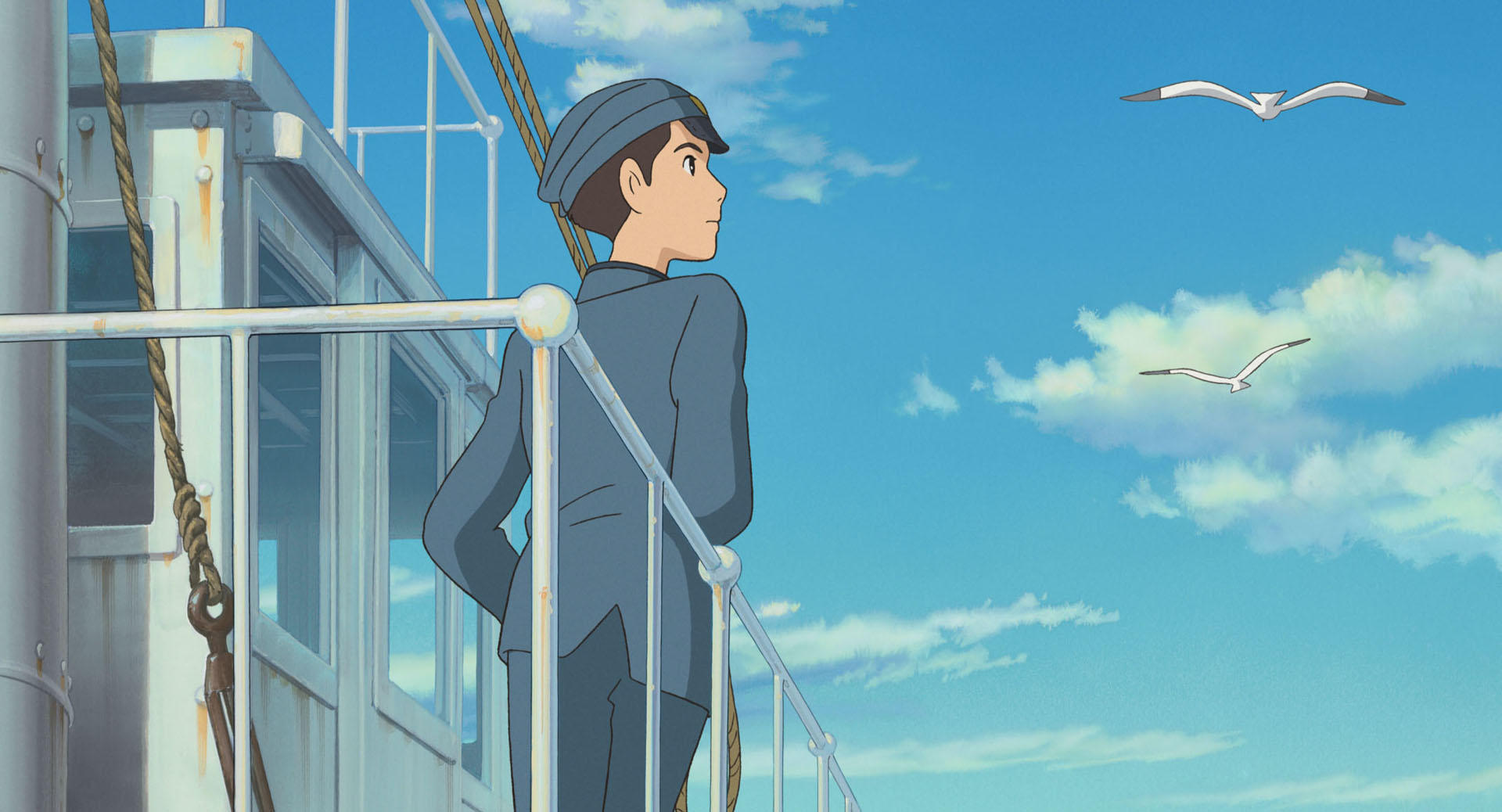
From Up on Poppy Hill parent guide at a glance
- Suggested age: around 9+ for most children; around 11+ if the sibling misunderstanding or parental loss is likely to cause distress.
- US rating: PG for mild thematic elements and incidental smoking images.
- Violence and peril: very mild. A student performs a risky rooftop jump, lands in water and later has a bandaged injury.
- Scary scenes: none in the usual fantasy or horror sense. Emotional uncertainty matters more than danger.
- Sad content: Umi mourns her father, who died at sea, and Shun learns painful facts about his biological parents.
- Romance: teenage attraction, hand-holding and affectionate feelings, complicated by a temporary fear that Umi and Shun share a father.
- Language: mild at most, depending on the dub or subtitles.
- Smoking: adults and some students smoke in period-accurate scenes.
- Positive themes: teamwork, historical memory, civic action, family care, honesty and preserving community spaces.
Why the film may suit older children better
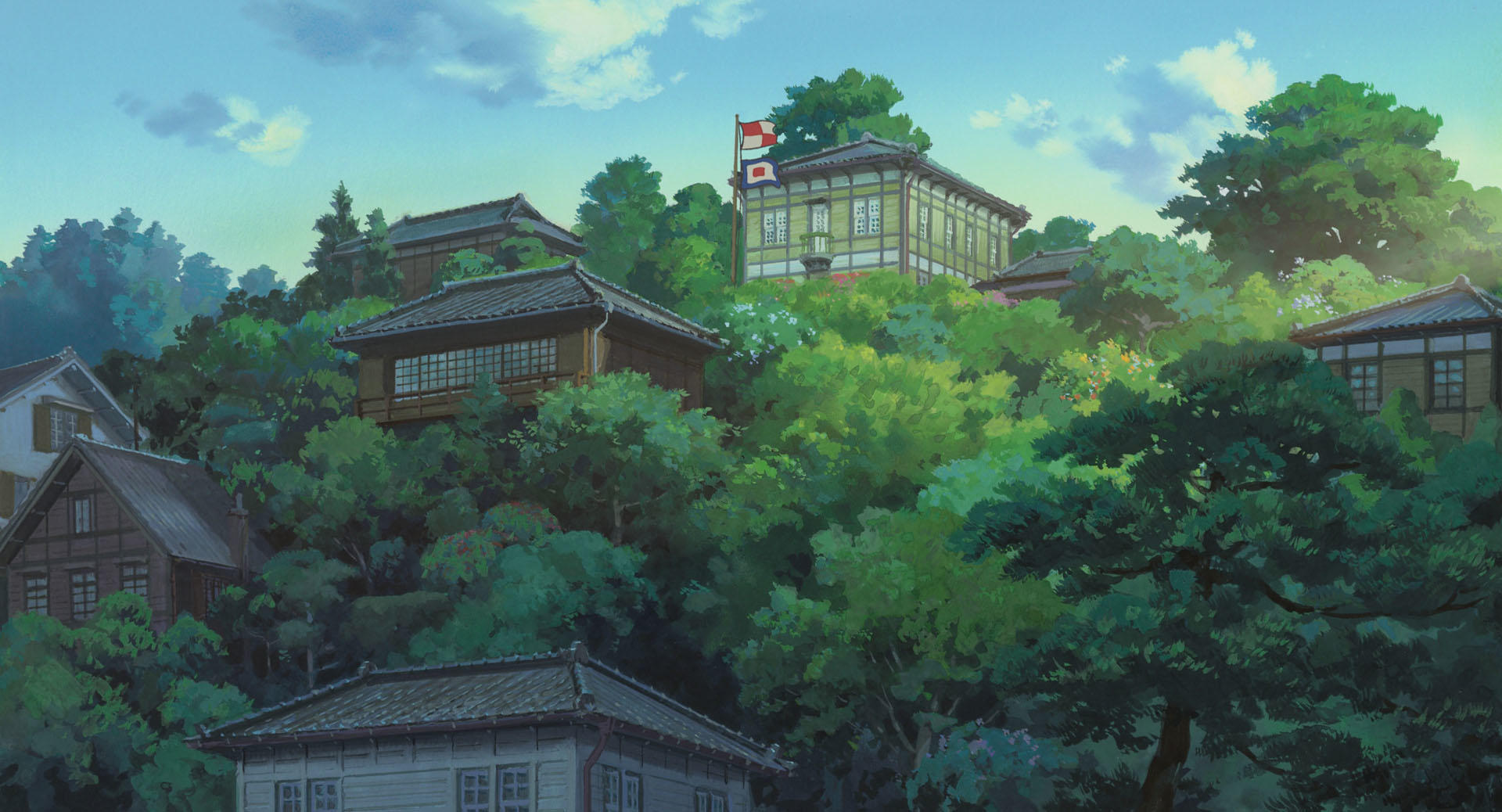
From Up on Poppy Hill contains less threatening material than most adventure films, but it asks for more attention than its gentle surface suggests. Much of the story follows students cleaning the Latin Quarter clubhouse, printing a school newspaper, organising a campaign and discussing whether an old building should be demolished. The tension comes from relationships, records and history rather than villains.
Children who enjoy realistic school stories may find the busy clubhouse, student teamwork and harbour setting charming. Younger viewers expecting creatures, magic or fast action may become restless. The film runs about 91 minutes and has songs, humour and bustling group scenes, but it also pauses for household routines, conversations and memories.
Violence, injuries and dangerous behaviour
There is almost no conventional violence. Early in the film, Shun stages a dramatic jump from a school roof into a pool of water as part of a publicity stunt. The act is reckless and should not be copied. Umi helps him afterward, and he is later shown with a bandage. The injury is not bloody or treated as severe.
The campaign to save the clubhouse becomes noisy, but it does not turn into a fight. Students argue, march and crowd around adults. Cleaning scenes involve ladders, dust and chaotic rooms, yet no one suffers a frightening accident. There are cars, boats and a rushed trip to meet a ship, but no prolonged chase or crash.
Are there any scary scenes?
There are no monsters, supernatural threats or sustained scenes of physical danger. For most children, the film will not be scary. The most intense moments are emotional: Umi waits with hope connected to her dead father, Shun withdraws after reading a family record, and both teenagers worry that their feelings may be inappropriate.
A child who is sensitive to abandonment or parental death may react more strongly than one who is normally frightened by action. The film handles loss quietly, without flashbacks of a fatal accident or graphic images. Adults can reassure children that the family mystery is investigated and clearly resolved.
The Umi and Shun relationship explained for parents
Umi and Shun develop a gentle teenage romance while working together to protect the Latin Quarter. They spend time together, hold hands and acknowledge that they care for one another. There is no sexual content, nudity or suggestive behaviour.
The difficult twist begins when a family register appears to name Umi’s father, Yuichiro, as Shun’s father too. The teenagers briefly believe they could be half-siblings. Shun pulls away, and both are distressed because their romantic feelings began before they knew about the record. The film does not sensationalise the situation or show them pursuing a knowingly incestuous relationship.
The ending confirms that they are not biologically related. Shun’s real father was Hiroshi Tachibana, Yuichiro’s friend. After Shun’s parents died, Yuichiro registered the baby under his own name to keep him from being sent to an orphanage, and the Kazama family raised him. Our ending explainer covers the records and family connections in more detail.
Death, grief and absent parents
Umi’s father died at sea during the Korean War. She raises signal flags each morning in his memory, and the ritual gives the film a quiet undercurrent of grief. His death is discussed but not shown. Umi continues to manage school, household responsibilities and relationships, so the story presents grief as something carried within ordinary life.
Shun learns that his biological father and mother died when he was a baby. He was protected by several adults and raised by the Kazama family. The revelation can prompt questions about adoption, legal records, biological parents and whether the people who raise a child are their “real” family. The film’s answer is compassionate: ancestry matters, but daily care and chosen responsibility also make a family.
Smoking, drinking and language
Smoking appears as part of the 1963 setting. Adults smoke, and students may also be seen with cigarettes in the crowded clubhouse. The film does not frame smoking as healthy or make it a central plot point, but it is visible enough to be included in the US rating description. Parents may want to explain that the scenes reflect a period when smoking was more common and less restricted.
Alcohol is not a significant concern. Meals and social scenes are mild. Language is also limited, although exact wording varies between the English dub and subtitles. There is no stream of strong profanity or insulting content likely to dominate a family viewing.
Historical context children may need
The story takes place in Yokohama in 1963, as Japan prepares for the 1964 Tokyo Olympics. The country is modernising quickly, and the proposed demolition of the Latin Quarter represents a belief that old, untidy places should make way for a cleaner future. The students argue that progress does not require erasing everything inherited from earlier generations.
The family mystery also grows from postwar loss. Adults made improvised decisions to care for orphaned children, and official paperwork did not always tell the full human story. A short explanation before watching can help: Japan was rebuilding after war, many families had lost people, and the Olympics symbolised a new international future.
Will younger children be bored?
Some will. The film has lively sequences in the cluttered clubhouse, visual jokes, music and a satisfying group campaign. It also spends considerable time on cooking, walking, newspaper work, school meetings and conversation. There is no magical quest to provide an obvious action goal.
Children who like Whisper of the Heart may respond well to another grounded story about students, creativity and first love. A viewer who mainly wants the fantasy energy of Spirited Away or Howl’s Moving Castle may need more patience. The issue is taste, not harmful content.
Who is From Up on Poppy Hill best for?
It is a strong family choice for older primary-age children, preteens and teenagers who enjoy realistic coming-of-age stories. It can be especially rewarding for viewers interested in school clubs, old buildings, ships, Japanese history, newspapers or community campaigns. The romance is tender, and the students solve problems through work, evidence and respectful persistence.
Consider waiting if your child is likely to be deeply upset by dead-parent themes, confused by the temporary sibling concern, or frustrated by a story without fantasy action. Age 9 is a reasonable starting point, while age 11 or 12 may be better for children who want to understand the history and family records without much adult explanation.
How to prepare a sensitive child
- Explain that Umi’s father has died before the story begins, but his death is not shown.
- Mention that Shun makes one unsafe jump and receives a minor injury.
- Say that the teenagers temporarily think they might share a father, but the adults later confirm they are not related.
- Point out that smoking appears because the film is set in 1963, not because the story recommends it.
- Describe the main plot as students working together to save and restore an old clubhouse.
These details do not spoil the film’s atmosphere. They remove the uncertainty most likely to trouble a sensitive viewer and leave the character choices, music and historical setting to discover.
Frequently asked questions
What age is From Up on Poppy Hill for?
About age 9 and over is a practical recommendation for most families. Older children and teenagers are more likely to follow the family records, historical setting and quiet romance.
Is From Up on Poppy Hill scary?
No. It has no monsters, horror or sustained peril. The strongest material is emotional, including parental death and the temporary fear that the romantic leads could be related.
Are Umi and Shun brother and sister?
No. The ending confirms that Shun’s biological father was Hiroshi Tachibana. Umi’s father registered the orphaned baby under his own name as an act of protection, which caused the later confusion.
Does From Up on Poppy Hill contain sexual content?
No. The romance involves attraction, hand-holding and conversations about feelings. There is no nudity or sexual activity.
Why is the film rated PG?
The US classification cites mild thematic elements and incidental smoking images. The themes include grief, orphanhood and the family-record misunderstanding.
For more family viewing options, compare our Studio Ghibli movies for kids guide, or browse every film in the Studio Ghibli movie directory.
Image credit: Official stills from the From Up on Poppy Hill page on ghibli.jp, used under Studio Ghibli’s common-sense image-use notice. This article is an independent fan guide and is not affiliated with Studio Ghibli.