The best older Studio Ghibli characters are not background decoration. They are pilots, witches, grandmothers, neighbours, carers, troublemakers and quiet guides. Ghibli often uses older characters to show experience without making age feel flat: some are wise, some are vain, some are funny, some are frightening, and many are more practical than the young heroes they help.
This guide looks at memorable older Ghibli characters and what they add to their stories. It is written for readers searching for Ghibli grandmothers, mentors, elderly characters, or the studio’s gentler approach to ageing. It stays spoiler-light, but it does discuss broad character roles and emotional meaning.
Quick answer: who are Ghibli’s most memorable older characters?
Some of the strongest older characters in Studio Ghibli include Dola from Castle in the Sky, Granny from My Neighbor Totoro, Zeniba and Yubaba from Spirited Away, Sophie’s older self in Howl’s Moving Castle, Madame Gina from Porco Rosso, and Ursula as an older creative friend in Kiki’s Delivery Service.
Dola: age as command, appetite and comic force
Dola is one of Ghibli’s great reminders that older characters do not have to be soft-spoken mentors. In Castle in the Sky, she is loud, strategic, greedy, protective and sharp. She leads an air-pirate family with more energy than many younger characters, and her age reads as accumulated nerve rather than frailty.
What makes Dola work is the mix of comedy and competence. She can be ridiculous, but she is rarely foolish. She understands risk, machinery, pursuit and loyalty. She also gives the film a useful adult counterweight to Sheeta and Pazu’s innocence. Ghibli lets her be morally messy without making her cruel. That makes her one of the studio’s most enjoyable older characters.
Granny in My Neighbor Totoro: practical community care
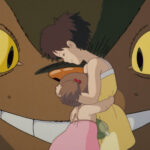
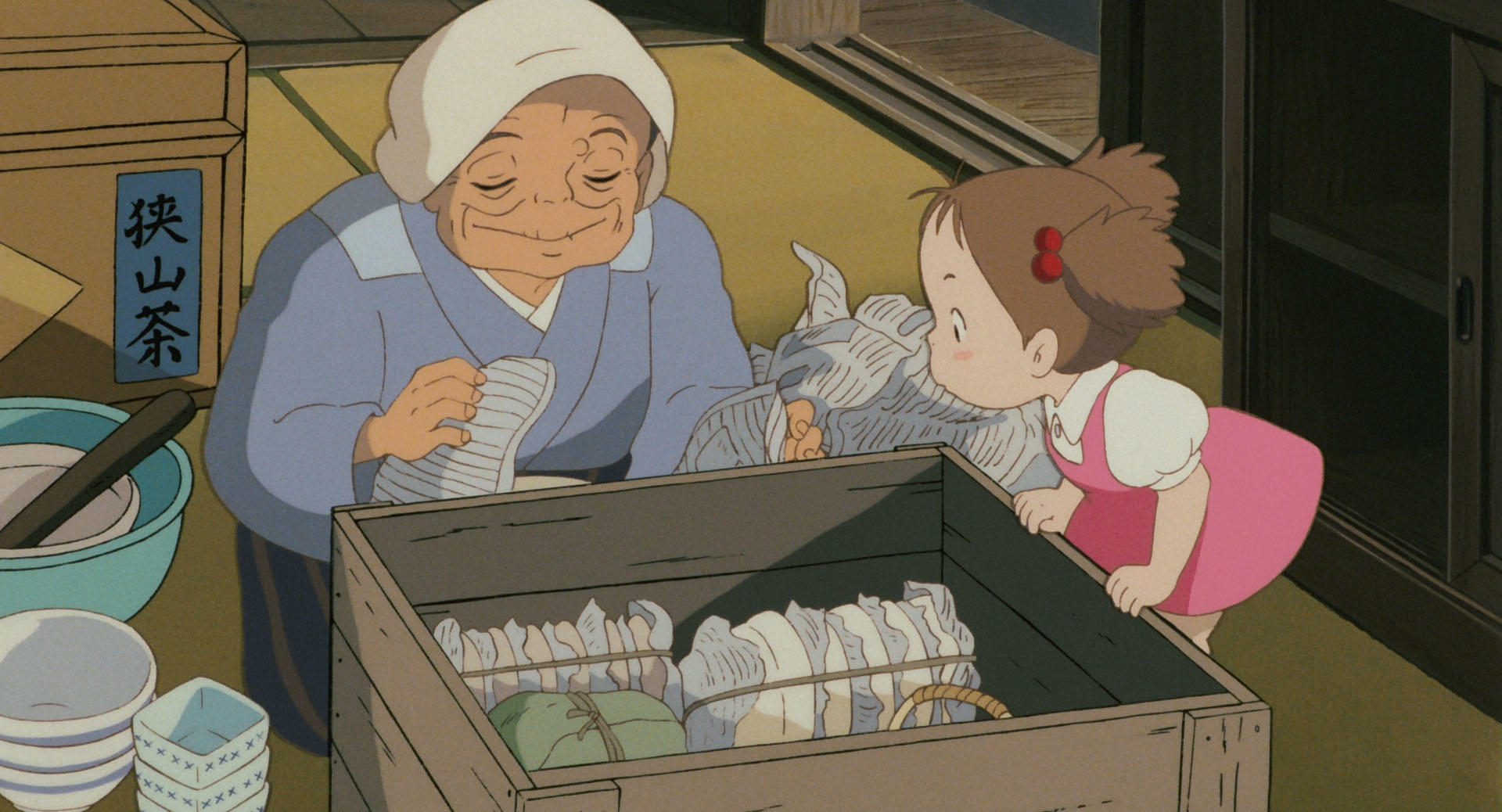
Granny in My Neighbor Totoro is a quieter figure, but she matters because she represents the kind of everyday adult support that makes childhood feel safe. She is not magical. She cooks, watches over children, worries, reassures and knows the rhythms of the rural community around Satsuki and Mei.
That kind of character can be easy to overlook because she does not drive the plot with spectacle. But in a family story about illness, moving house and children learning a new environment, Granny’s presence is emotional infrastructure. She shows that care can be ordinary and still essential. For more on the film’s family dynamic, see the Totoro characters guide.
Zeniba: a witch who becomes gentler when the story slows down
Zeniba from Spirited Away is one of the best examples of Ghibli changing a character’s meaning through pacing. At first, she seems threatening because the story introduces her through fear, theft and consequence. When Chihiro reaches her home, the mood shifts. Zeniba is still powerful, but she is domestic, direct and unexpectedly kind.
Her age matters because she feels settled in herself. Unlike the bathhouse world, her cottage is not frantic. It is quiet enough for apology, repair and rest. That makes Zeniba a mentor figure without turning her into a perfect saint. She still has boundaries. She simply shows Chihiro a different kind of adult power.
Yubaba: age, authority and possessive power
Yubaba is older too, but her age carries a very different meaning. She is command, business, glamour, surveillance and appetite. She is not a nurturing grandmother archetype, even when motherhood is part of her character. Her bathhouse power depends on contracts, names and control.
This is why Yubaba is such a useful contrast to Zeniba. Both are old, magical and formidable, but they use power differently. Yubaba turns experience into ownership. Zeniba turns it into boundaries and hospitality. If you want a fuller breakdown, read our Yubaba explained guide.
Sophie’s older self: ageing as disguise and freedom
Sophie in Howl’s Moving Castle is unusual because she is a young woman forced into an older body. That makes the film’s treatment of ageing more complicated than a simple “elderly character” list. Older Sophie is cursed, but the curse also changes how she moves through the world. She becomes blunter, braver and less worried about how she is seen.
The film does not claim old age is magically easy. Instead, it uses Sophie’s transformation to expose something already inside her: stubbornness, care, courage and a refusal to be impressed by Howl’s theatrical vanity. Her older appearance becomes both burden and permission. That is why Sophie remains one of Ghibli’s richest characters.
Madame Gina: memory, elegance and emotional restraint
Madame Gina in Porco Rosso brings a more adult kind of melancholy to Ghibli. She is not elderly in the same way as Granny or Dola, but she carries age through memory, loss and composure. Her scenes feel shaped by history: old friends, old loves, war, music and things left unsaid.
Gina’s strength is restraint. She does not need to explain every feeling. Her maturity gives Porco Rosso a bittersweet emotional layer that separates it from a straightforward aviation adventure. She shows how Ghibli can write older or more experienced adults as romantic, wounded and self-possessed without flattening them into plot functions.
Ursula: the older creative friend Kiki needs
Ursula from Kiki’s Delivery Service is not elderly, but she is older than Kiki and works as a mentor because she has already lived through part of the creative struggle Kiki is entering. She understands blocks, confidence, solitude and the need to stop forcing a gift back into working order.
That makes Ursula important in a guide about mentors as well as grandparents. She does not fix Kiki. She gives her language, perspective and a model of independent creative life. For readers who connect with burnout, the Kiki character guide is the natural next read.
Why Ghibli writes older characters so well
Ghibli’s older characters work because they are allowed to want things. Dola wants treasure and family survival. Granny wants children safe. Yubaba wants control. Zeniba wants accountability and peace. Sophie wants to act without shrinking. Gina wants dignity around grief and love. They are not all wise, and they are not all kind.
That variety matters. Many family films use older characters as exposition machines or gentle mascots. Ghibli usually gives them habits, history, contradictions and authority. The result is a world where age does not mean disappearing from the story. It means carrying a different kind of weight.
Best older Ghibli character to start with
If you want the most entertaining older character, start with Dola. If you want the warmest, choose Granny from My Neighbor Totoro. If you want the richest magical contrast, compare Zeniba and Yubaba. If you want the most unusual treatment of ageing, watch Sophie’s arc in Howl’s Moving Castle. Together, they show why Studio Ghibli is unusually good at making age feel active, funny, frightening and emotionally meaningful.
FAQ
Who is the best older Studio Ghibli character?
Dola is one of the strongest choices because she is funny, commanding and emotionally surprising. Granny, Zeniba, Yubaba and older Sophie are also essential depending on what kind of older character you mean.
Does Studio Ghibli have good grandmother characters?
Yes. Ghibli includes caring grandmother figures, stern magical elders and older women who do not fit a simple nurturing role. The range is part of what makes the studio’s worlds feel lived-in.
Why does Sophie become old in Howl’s Moving Castle?
Sophie is cursed by the Witch of the Waste, but the story also uses her older body to reveal confidence, stubbornness and freedom that were already part of her character.
Are Ghibli older characters always wise?
No. Some are wise, some are selfish, some are chaotic and some are complicated. Ghibli’s strength is that age usually adds history and texture rather than automatic moral perfection.
Image credit: Official stills from the Castle in the Sky page on ghibli.jp, used under Studio Ghibli’s common-sense image-use notice. This article is an independent fan guide and is not affiliated with Studio Ghibli.