

Home Blog Page 6

Studio Ghibli Movies About Nature: Forests, Oceans, and Environmental Themes

0
Princess Mononoke official Studio Ghibli still showing nature and forest themes
Official Studio Ghibli still from Princess Mononoke. Source: https://www.ghibli.jp/works/mononoke/

Quick answer: the Studio Ghibli movies that most directly explore nature and environmental themes are Nausicaä of the Valley of the Wind, Princess Mononoke, My Neighbor Totoro, Ponyo, and Pom Poko. They do not all make the same argument. Some are gentle and observational. Some are angry, mythic, and politically complicated. Together, they show why Ghibli’s view of nature feels richer than a simple “humans bad, forest good” message.

Ghibli nature stories tend to start from attention. Wind moves through grass. Rain changes the mood of a street. A forest is not just a backdrop, it has its own timing. The ocean is not just pretty, it can be playful, dangerous, hungry, and alive. That is why these films still work for viewers who are not looking for a lecture. The environmental ideas are built into the characters, the setting, the food, the machines, and the quiet moments between the big scenes.
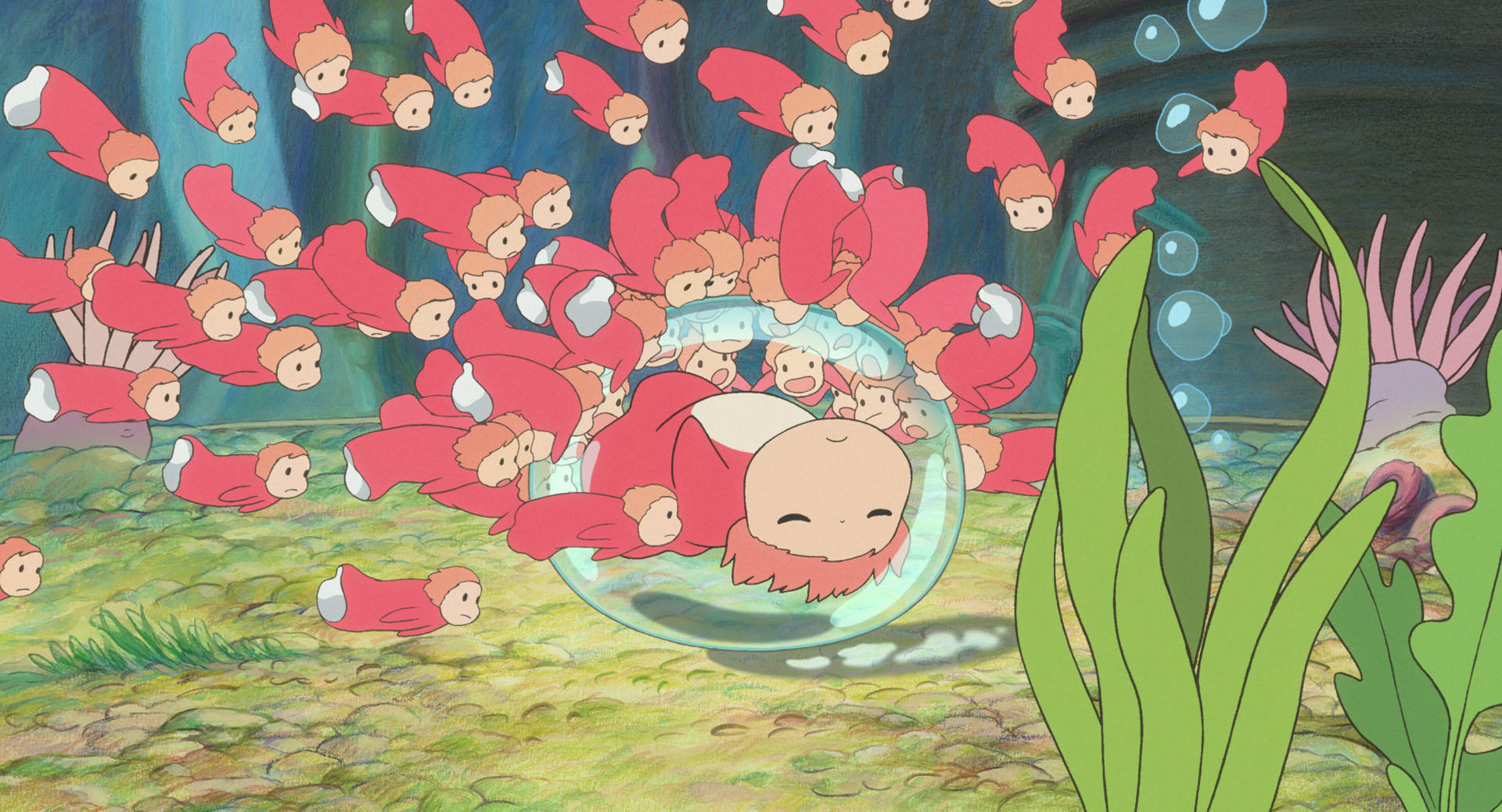
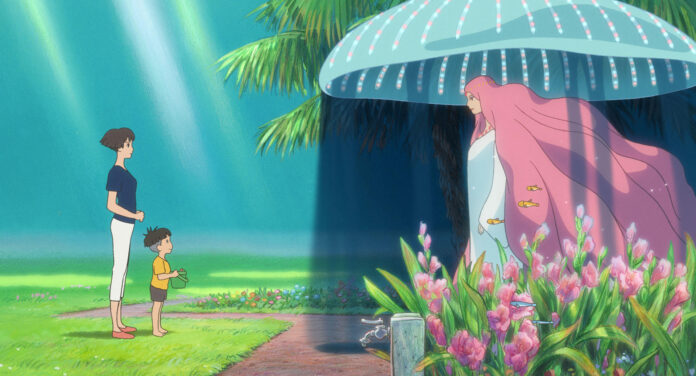
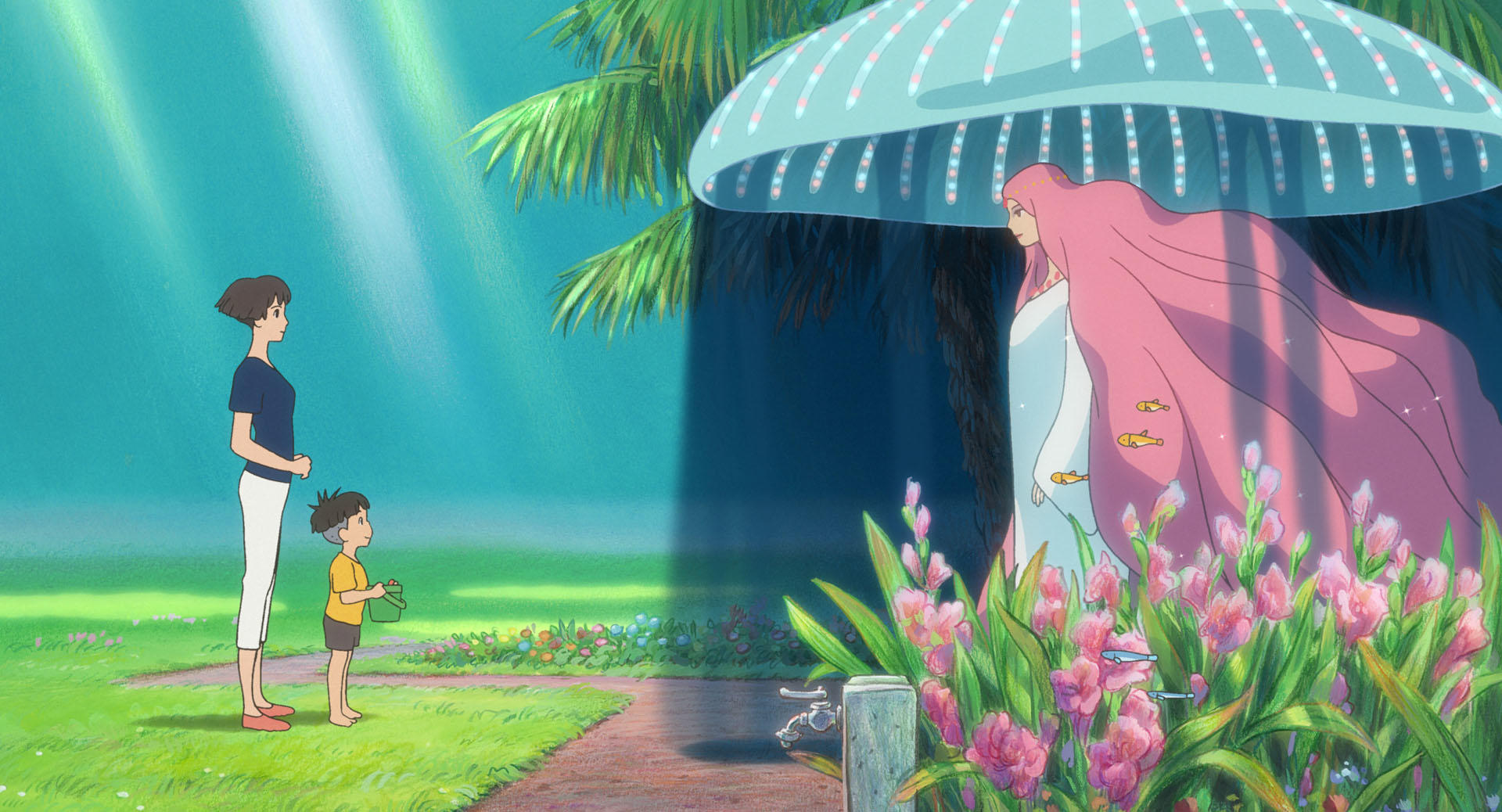
Ponyo official Studio Ghibli still for ocean and nature themes

Princess Mononoke: nature as conflict, not decoration

Princess Mononoke is Ghibli’s most forceful environmental epic. The forest is sacred, but the human settlement is not treated as a cartoon villain. Lady Eboshi destroys parts of the forest, yet she also protects people who have nowhere else to go. The wolves, boars, apes, gods, and humans all have reasons, wounds, pride, and fear. That complexity is why the film stays powerful. It asks what happens when survival, industry, revenge, and reverence for nature all collide.

The Forest Spirit is especially important because it resists easy interpretation. It gives life and takes life. It is beautiful and terrifying. It is not a pet mascot for the audience. If you want the deeper ending-focused version, read our Princess Mononoke ending explained guide after watching the film.

Nausicaä: pollution, war, and ecological humility

Nausicaä of the Valley of the Wind is often discussed alongside Ghibli even though it predates the official founding of the studio. It belongs in any nature-themed viewing route because it sets out so many ideas that later Ghibli films keep returning to: poisoned landscapes, misunderstood creatures, human panic, military escalation, and the need to observe before destroying what frightens us.

The Toxic Jungle looks hostile at first, but the film gradually changes the question. Instead of asking how humans can conquer the jungle, it asks whether humans understand it at all. Nausicaä’s gift is not that she is stronger than everyone else. It is that she pays attention. She studies spores, insects, wind, fear, and grief. In Ghibli terms, environmental wisdom often starts there: slow down enough to see what is actually happening.

My Neighbor Totoro: everyday nature as childhood memory

My Neighbor Totoro is the gentlest film on this list, but it may be the most effective at making nature feel emotionally valuable. The trees, fields, dust, rain, frogs, vegetables, and camphor tree do not exist to deliver a speech. They create a childhood world where mystery is close to ordinary life. Totoro is memorable because he feels like a forest presence a child might almost believe in after moving to the countryside.

This is environmental storytelling at the level of affection. If a film can make a child love a tree, a garden, a rainy bus stop, or the sound of wind in leaves, it has done something useful before it ever becomes an argument. That is why Totoro remains one of the best first Ghibli movies for families following our beginner-friendly Studio Ghibli watch order.

Ponyo: the ocean as magic, appetite, and imbalance

Ponyo treats the sea like a living fairy tale. It is playful, colourful, and full of motion, but it is not fully safe. When Ponyo’s magic spills into the human world, the ocean rises and everyday life turns strange. The film is less political than Mononoke or Nausicaä, but it still understands imbalance. Love, curiosity, and freedom are wonderful, yet they can unsettle everything around them.

That makes Ponyo a useful environmental film for younger viewers. It does not need to explain climate anxiety or marine ecology directly. It lets children feel that the sea is alive and that the boundary between human comfort and natural force is thinner than it looks. For more on the story and characters, use our Ponyo movie guide.
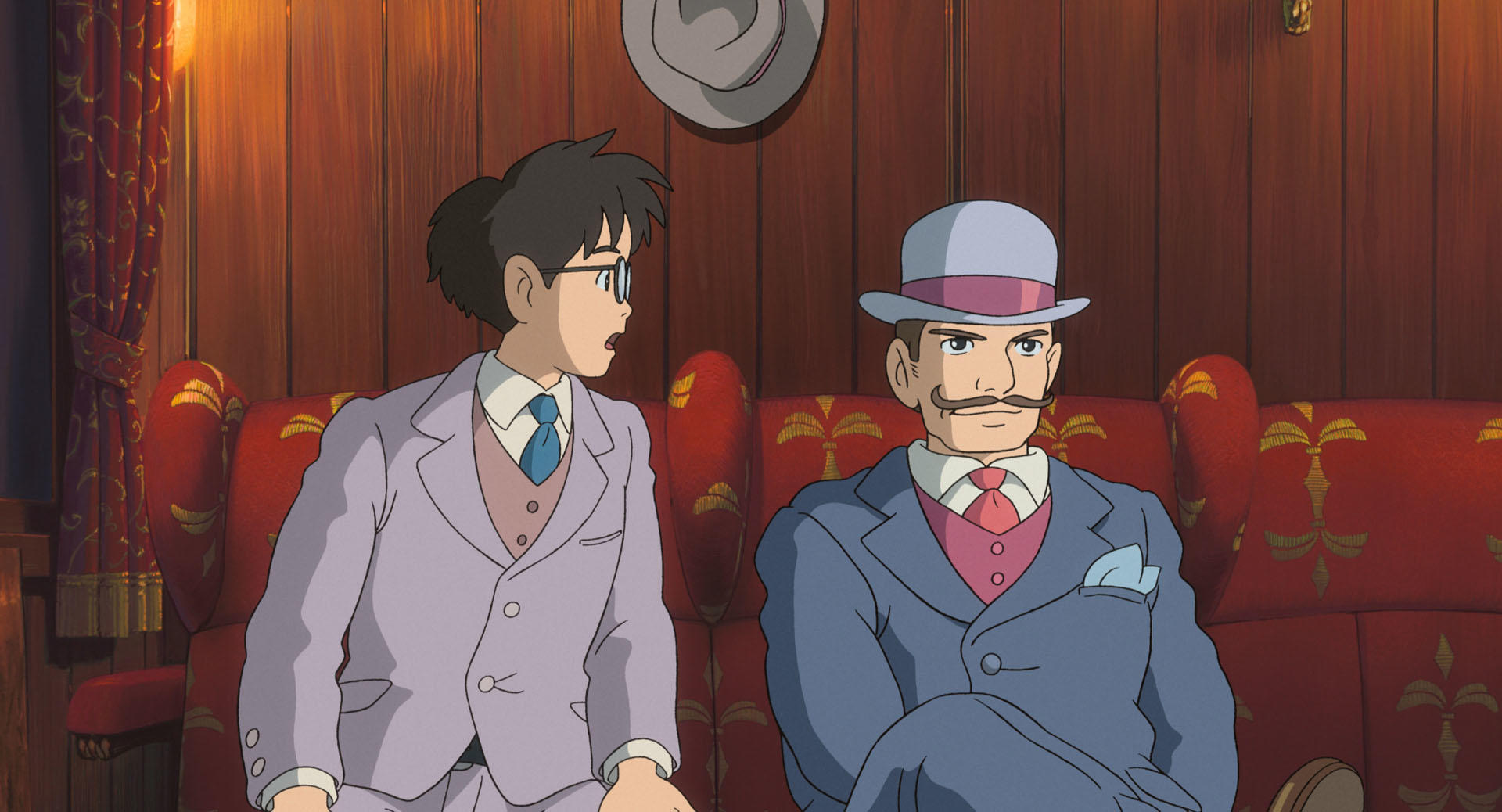
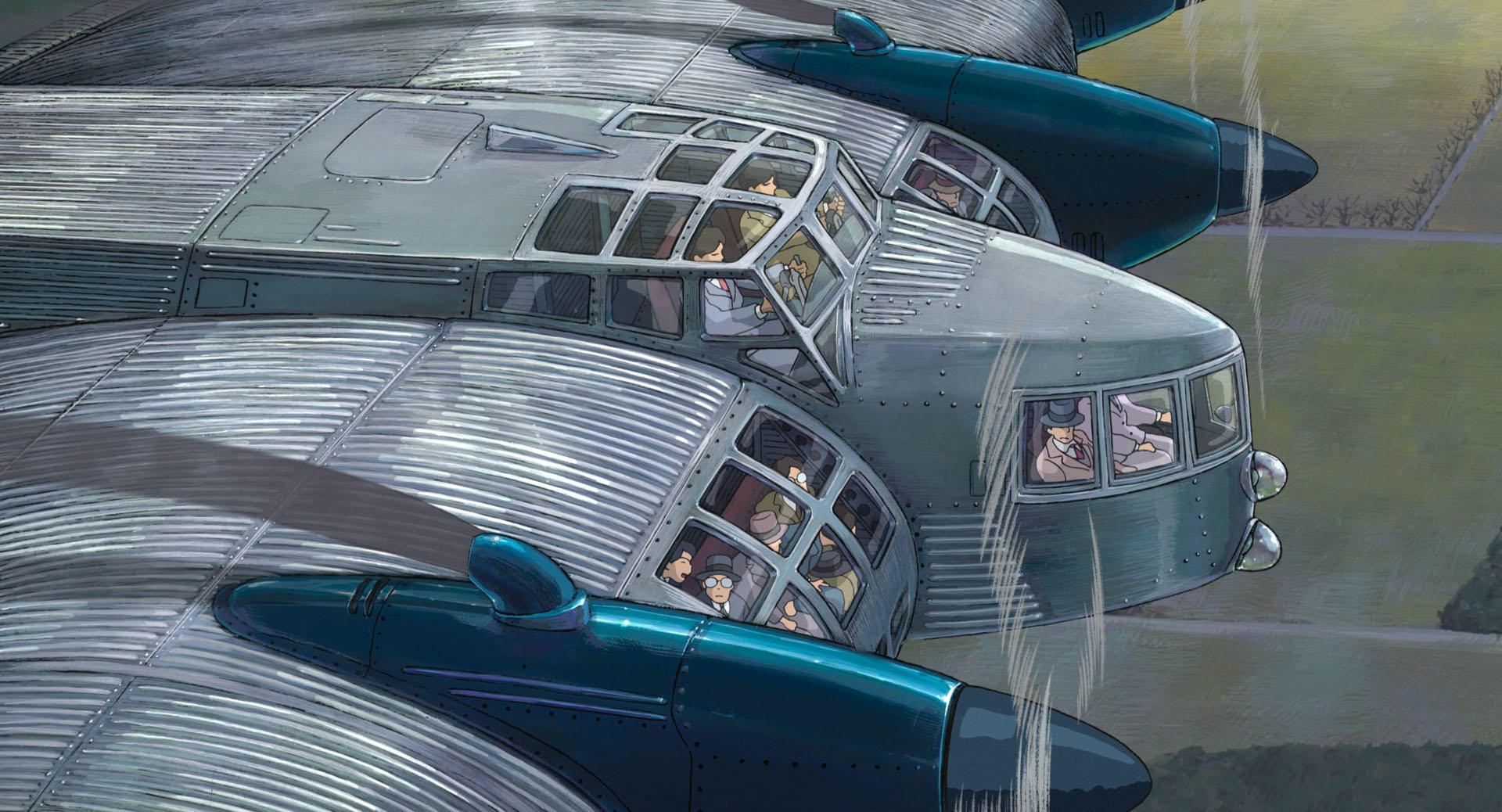
The Wind Rises official Studio Ghibli still with sky and landscape imagery

Pom Poko: habitat loss with teeth

Pom Poko can look comic from a distance because it is about shape-shifting tanuki, but it is one of Ghibli’s bluntest films about habitat loss. The tanuki are funny, chaotic, theatrical, and sometimes ridiculous, yet their problem is painfully simple: development is eating their home. The film turns urban expansion into something visible and emotional. Forest loss is not an abstract map change. It is the end of a way of life.

What makes Pom Poko interesting is that it does not offer an easy fantasy victory. The tanuki resist, perform, adapt, fail, and survive unevenly. The comedy makes the sadness sharper because the characters are so alive. For older children and adults, it is one of the clearest Ghibli films about the cost of treating land as empty just because humans want to build on it.

The Wind Rises: beauty, machines, and moral cost

The Wind Rises is not an environmental film in the same obvious way, but it belongs near this conversation because it is obsessed with wind, sky, engineering, beauty, and consequence. Jiro dreams of flight. The film understands the elegance of aircraft and the romance of looking upward. It also understands that beautiful machines can be pulled into destructive systems.

That tension is very Ghibli. Nature is not only forests and animals. It is also air, weather, illness, earthquakes, landscapes, and the fragile human desire to make something beautiful inside a damaged world. The Wind Rises is better for older viewers, but it adds a mature layer to Ghibli’s long-running question: what does it mean to create when creation is tied to harm?

Best viewing route for Ghibli nature themes

If you want…Start withThen watch
A gentle family nature filmMy Neighbor TotoroPonyo
A big environmental epicNausicaäPrincess Mononoke
A habitat-loss storyPom PokoOnly Yesterday
A mature reflection on beauty and consequenceThe Wind RisesPorco Rosso

Why Ghibli nature stories still feel different

The best Ghibli nature films avoid turning the natural world into a slogan. They leave room for awe, fear, boredom, work, hunger, grief, and ordinary daily life. A forest can be sacred and dangerous. A town can be destructive and humane. A machine can be beautiful and morally compromised. A child can understand something an adult has forgotten, but that does not mean the solution is simple.

That is why these movies reward rewatches. When you are young, you may remember Totoro grinning in the rain or Ponyo running over waves. Later, you may notice Lady Eboshi’s refugees, Nausicaä’s patience, Pom Poko’s loss, or the way wind in a Ghibli film often feels like a character. The environmental message lasts because it is carried by images and choices, not just speeches.

FAQ

What is the most environmental Studio Ghibli movie?

Princess Mononoke is the strongest single pick for older viewers, while Nausicaä of the Valley of the Wind is essential for understanding Ghibli’s ecological imagination.

Which Ghibli nature film is best for kids?

My Neighbor Totoro is the safest choice for younger children. Ponyo is also excellent, especially for kids who love the ocean and fairy-tale energy.

Is Princess Mononoke suitable for children?

It is usually better for older children or teens. The film includes violence, blood, curses, and intense conflict, even though its environmental themes are important.

For broader browsing, continue with the Studio Ghibli movies in order guide or explore related film guides across the site.

Image source note: featured and inline stills are official Studio Ghibli images from ghibli.jp work pages, which include the notice: “※画像は常識の範囲でご自由にお使いください。”
Best Studio Ghibli Movies About Family: Parent, Child, and Found-Family Stories

0
Mei, Satsuki, and Totoro in My Neighbor Totoro official Studio Ghibli still

If you want Studio Ghibli movies about family, start with My Neighbor Totoro, Ponyo, Kiki’s Delivery Service, Spirited Away, Only Yesterday, and The Tale of the Princess Kaguya. They approach family from different angles: small children being brave, parents doing their best, children learning independence, and lonely people building a chosen home around them.

This guide is spoiler-light. It is designed for readers who want the right Ghibli film for a family night, a comfort rewatch, or a more reflective story about childhood and belonging. For a broader starter route, use our Studio Ghibli movies in order guide after this list.

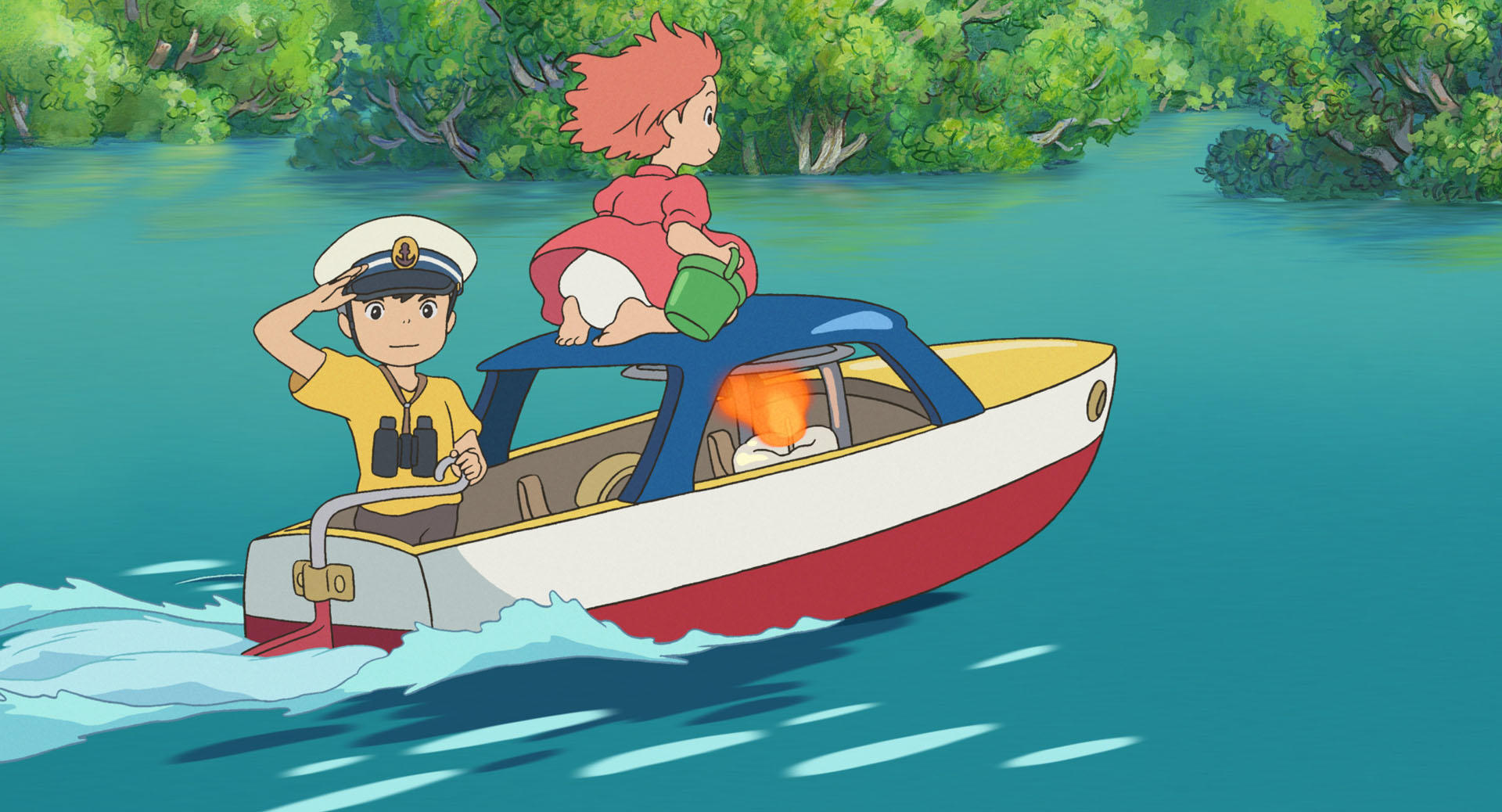
Ponyo and Sosuke in Ponyo, official Studio Ghibli still
Official Studio Ghibli still from Ponyo. Source: ghibli.jp.

Quick picks: the best Ghibli family movies by mood

  • Warmest family comfort: My Neighbor Totoro
  • Best for younger children: Ponyo
  • Best coming-of-age family story: Kiki’s Delivery Service
  • Best found-family fantasy: Spirited Away
  • Best reflective adult family story: Only Yesterday
  • Most bittersweet parent-child story: The Tale of the Princess Kaguya

1. My Neighbor Totoro

My Neighbor Totoro is the clearest first choice because its family story is simple, gentle, and deeply felt. Satsuki and Mei move to the countryside with their father while their mother is ill in hospital. The film does not turn that into melodrama. Instead, it notices the small ways a family copes: unpacking together, sharing meals, waiting for letters, getting frightened, and trying to stay cheerful for each other.

That is why Totoro works so well as a family film. The magical creatures feel like part of the emotional landscape rather than a separate adventure pasted on top. Totoro, the soot sprites, and the Catbus give children a way to process uncertainty without needing every fear explained. Parents may notice the tenderness of the father’s patience, while children usually connect with Mei’s blunt curiosity and Satsuki’s anxious responsibility.

Use this one when you want comfort, nature, sisterhood, and a family story that feels safe without pretending life is always easy. It also pairs naturally with our My Neighbor Totoro movie guide and Totoro character coverage.

2. Ponyo

Ponyo is family viewed through the eyes of very young children. Sosuke’s world is small and enormous at the same time: his mother, his home by the sea, the elderly residents nearby, and the mysterious fish-girl who becomes his friend. The plot has ocean magic and wild weather, but the emotional question is direct: can a child love and protect someone with real care?

The film is especially good for families because it treats children’s feelings as serious. Sosuke is not mocked for his loyalty. Ponyo is not treated as a cute accessory. Lisa, Sosuke’s mother, is one of Ghibli’s most memorable parents because she feels recognisably human: loving, fast-moving, occasionally frustrated, and brave when things become strange.

For younger viewers, Ponyo is one of the easiest Ghibli films to understand. For adults, it becomes a story about trust, parenting under pressure, and the strange faith required to let children grow. If you are choosing for a sensitive child, our parent-friendly Ponyo scariness guide is a useful next read.

3. Kiki’s Delivery Service

Kiki’s Delivery Service begins with a family letting go. Kiki’s parents love her, but the story starts when she leaves home to train as a witch in a new city. That makes it a family movie in a slightly different way. It is not about staying close every minute. It is about the love and confidence a family gives a child before they step into the world alone.

Kiki builds a new support network through Osono, Tombo, Ursula, and the people she helps. This is one of Ghibli’s best found-family patterns: independence does not mean having nobody. It means learning who can be trusted, when to ask for help, and how to recover when your confidence disappears.

The family angle is especially strong for teens, students, creatives, and anyone starting again in a new place. If that is the mood you want, continue with our Kiki’s Delivery Service watch guide or the piece on Kiki and creative burnout.

4. Spirited Away

Spirited Away is not a cosy family film in the Totoro sense. Chihiro’s parents make a mistake early, and Chihiro has to become braver than she thought possible. But that is exactly why it belongs on this list. It captures the frightening moment when a child realises adults are not always in control.

The found-family thread is what makes the movie emotionally satisfying. Chihiro survives because she forms careful bonds with Haku, Lin, Kamaji, Zeniba, and even complicated figures such as No-Face. These relationships are not sentimental. They are built through work, names, promises, food, and memory.

For older children, teens, and adults, Spirited Away is one of Ghibli’s strongest stories about growing up without losing your kindness. Read our Spirited Away characters guide if you want more context after watching.

5. Only Yesterday

Only Yesterday is the most adult family film on this list. Taeko looks back on childhood memories while travelling away from city life, and the film slowly connects family expectations, school experiences, embarrassment, work, food, and identity. It is quiet, but it lingers.

This is not the best first Ghibli film for young children. It is better for adults who want a reflective story about how family shapes us long after childhood is over. The film understands that ordinary memories can carry huge emotional weight. A classroom moment, a conversation at dinner, or a small parental misunderstanding can stay with someone for decades.

Choose Only Yesterday when you want something grounded, nostalgic, and mature rather than magical adventure.

6. The Tale of the Princess Kaguya

The Tale of the Princess Kaguya is one of the most beautiful and painful Ghibli family stories. It begins with wonder: a tiny princess discovered inside bamboo and raised by loving adoptive parents. But as Kaguya grows, love becomes tangled with ambition, class, control, and the desire to give a child what adults think she should want.

That tension makes the film powerful. Kaguya is loved, but she is also shaped by expectations that do not fit her soul. The result is a parent-child story that can feel devastating because nobody is a simple villain. The heartbreak comes from people confusing status with happiness and protection with possession.

This is a better choice for older viewers than for a light family night. If you have already seen it, our Princess Kaguya ending explained guide helps unpack the final act.

Honourable mentions

The Secret World of Arrietty is excellent for families who like small-scale adventure and gentle tension. Its strongest family thread is the Borrowers’ careful survival and Arrietty’s wish for more freedom. From Up on Poppy Hill is also worth considering for older viewers because it connects home, memory, school community, and family history in a grounded way.

Grave of the Fireflies is a major sibling story, but it is not a casual family recommendation. It is emotionally devastating and should be approached with care, especially around children. If the goal is a warm or mixed-age watch, choose Totoro, Ponyo, or Kiki first.

Best family viewing order

  1. My Neighbor Totoro, for the gentlest family comfort.
  2. Ponyo, for younger children and bright ocean magic.
  3. Kiki’s Delivery Service, for independence and chosen support.
  4. Spirited Away, for older children ready for stranger fantasy.
  5. Only Yesterday, for adult reflection.
  6. The Tale of the Princess Kaguya, for a more bittersweet parent-child story.

FAQ

What is the best Studio Ghibli family movie for young kids?

My Neighbor Totoro is usually the safest first pick. Ponyo is also excellent for younger children, though it has storm and separation moments that may feel intense for very sensitive viewers.

Which Ghibli movie is best about found family?

Spirited Away and Kiki’s Delivery Service are the strongest found-family choices. Both show young characters surviving by building trust outside their original homes.

Which Ghibli family movie is best for adults?

Only Yesterday and The Tale of the Princess Kaguya are the most adult family stories here. They are quieter and more reflective than the child-friendly adventures.

Image note: Featured and inline images are official Studio Ghibli stills sourced from ghibli.jp’s My Neighbor Totoro page and ghibli.jp’s Ponyo page, where Studio Ghibli states: “※画像は常識の範囲でご自由にお使いください。”

Best Studio Ghibli Movies for Adults: Mature Themes and Rewatch Guide

0
Princess Mononoke official Studio Ghibli still, used for an adult Studio Ghibli movie guide
Official Studio Ghibli still from Princess Mononoke, via ghibli.jp.

The best Studio Ghibli movies for adults are usually the ones that leave you thinking after the credits: Princess Mononoke, The Wind Rises, The Tale of the Princess Kaguya, Only Yesterday, Spirited Away, Porco Rosso, and Grave of the Fireflies. These are not necessarily the darkest Ghibli films, but they are the ones most likely to reward an older viewer with moral tension, regret, grief, work, memory, politics, or complicated love.

If you are choosing a first Ghibli film for a grown-up who thinks animation is only for children, start with this list rather than the gentlest comfort films. For younger viewers, use the separate parent-friendly kids guide or the teen coming-of-age guide.

The Wind Rises official Studio Ghibli still, used in a guide to adult Studio Ghibli films

Quick picks: the best adult Studio Ghibli movies

MovieWhy it works for adultsBest mood
Princess MononokeConflict, environment, violence, and moral compromiseEpic and serious
The Wind RisesAmbition, art, illness, and the cost of beautiful workReflective drama
The Tale of the Princess KaguyaFreedom, family expectation, beauty, and impermanencePoetic heartbreak
Only YesterdayMemory, adulthood, identity, and quiet life choicesSlow and thoughtful
Spirited AwayWork, greed, courage, and growing up without losing yourselfAccessible masterpiece
Porco RossoCynicism, lost ideals, aging, war, and romanceWry and wistful
Grave of the FirefliesWar, pride, hunger, childhood, and griefDevastating drama

1. Princess Mononoke

Princess Mononoke is the strongest answer if someone asks for the most adult Studio Ghibli movie that still feels huge, cinematic, and accessible. It has action and spectacle, but the real power is in how little it simplifies the conflict. The forest is not just good. Iron Town is not just bad. Lady Eboshi harms nature, but she also protects people who have been pushed aside. San fights for the wolves and forest gods, but her rage is not presented as a tidy solution.

That complexity is why the film holds up so well for adults. It is about living inside systems where every choice has a cost. Ashitaka is not trying to win an argument. He is trying to see clearly without becoming numb or cruel. For viewers who want Ghibli at its most mythic and morally serious, this should be near the top of the list.

2. The Wind Rises

The Wind Rises is one of the clearest Ghibli films for adults because its central question is uncomfortable: what happens when a beautiful dream is tied to real-world harm? Jiro wants to design aircraft. His gift is genuine, disciplined, and full of wonder, but history does not let that gift remain innocent.

The film is not a simple biopic or a simple romance. It is a story about work, obsession, compromise, and looking back at what a life has meant. Adults who have chased a career, sacrificed time, or wondered whether talent is enough may find it more affecting than younger viewers do. It is slower than Princess Mononoke, but that slowness is part of the point.

3. The Tale of the Princess Kaguya

The Tale of the Princess Kaguya can feel gentle at first, but it becomes one of Ghibli’s most painful adult stories. Its brush-like animation is beautiful, yet the film is not just pretty. It is about a person being turned into an idea that other people can admire, manage, marry, or possess.

For adults, the film lands because its sadness is not only romantic. It is about family expectations, class, performance, regret, and the shortness of ordinary happiness. If you want a deeper companion piece, the site also has a full Princess Kaguya ending explained guide.

4. Only Yesterday

Only Yesterday is not always the first Ghibli movie people recommend, but it may be one of the studio’s purest adult films. It is built around memory rather than fantasy adventure. Taeko’s trip to the countryside becomes a way to revisit childhood, embarrassment, family pressure, first crushes, school anxieties, and the strange way small memories keep shaping grown-up choices.

The movie is especially good for viewers who like quiet character stories. Nothing needs to explode for the stakes to matter. The question is whether Taeko can be honest about what kind of life she wants, instead of simply continuing the life she inherited by default.

5. Spirited Away

Spirited Away is often treated as the universal Ghibli starter film, and that is fair. It works beautifully for younger viewers, but adults often notice different things: the bathhouse as a workplace, the greed around No-Face, the exhaustion of service work, the fear of forgetting your name, and Chihiro’s need to adapt without becoming someone else.

If you are building a broader watch plan, pair this article with the Studio Ghibli movies in order guide. Spirited Away is still one of the safest first choices, but it is not only a beginner film. It rewards rewatches because the world feels richer every time.

6. Porco Rosso

Porco Rosso looks breezy from a distance: a pig pilot, seaplanes, pirates, Mediterranean skies, jokes, and swagger. Underneath, it is a film about disappointment, survival, old ideals, and the emotional wreckage left by war. Porco’s curse is funny, but it also works as a mask. He would rather become a myth than fully return to ordinary human life.

This is a great adult pick for someone who does not want the heaviest Ghibli film but still wants something with bite. It is romantic without being sugary, political without becoming a lecture, and melancholy without losing its charm.

7. Grave of the Fireflies

Grave of the Fireflies is essential, but it is not a casual recommendation. It is one of the saddest animated films ever made, and many viewers will only want to watch it once. The film follows children during wartime with a focus that is intimate rather than grand. Its tragedy comes from hunger, pride, systems failing, and small decisions that become impossible to undo.

If you are deciding whether you are ready for it, read the site’s saddest Studio Ghibli movies ranked guide first. This is a powerful adult film, but it is also emotionally demanding.

Other strong adult-friendly Ghibli picks

Whisper of the Heart is excellent for creative anxiety, first love, and the fear that your ambition might not match your skill yet. Kiki’s Delivery Service becomes more adult on rewatch because its burnout arc feels painfully familiar once you have lived through work pressure yourself. That is why the site’s Kiki creative burnout explainer exists.

My Neighbors the Yamadas is also more adult than its sketchbook style suggests. It is about marriage, family irritation, routine, and affection that survives ordinary chaos. Meanwhile, When Marnie Was There can work for adults who want a quieter story about memory, loneliness, and healing.

Best first Ghibli movie for an adult who is skeptical of animation

If the viewer likes serious drama, choose Princess Mononoke or The Wind Rises. If they like prestige coming-of-age or literary stories, choose The Tale of the Princess Kaguya or Only Yesterday. If they want the most balanced first experience, choose Spirited Away. It gives them the fantasy, craft, emotion, and imagination people mean when they talk about Ghibli, while still giving adult viewers plenty to read beneath the surface.

FAQ

Are Studio Ghibli movies only for kids?

No. Some are very child-friendly, but many Ghibli films are built around adult concerns: work, grief, regret, war, aging, memory, family pressure, and moral compromise.

What is the darkest Studio Ghibli movie?

Grave of the Fireflies is usually the darkest and most emotionally devastating. Princess Mononoke is more violent and morally intense, but it also has a broader adventure structure.

What is the best Studio Ghibli movie for adults to watch first?

For most adults, start with Spirited Away or Princess Mononoke. Choose Spirited Away for wonder and accessibility. Choose Princess Mononoke for epic scale and complexity.

Image note: images used on this page are official Studio Ghibli stills from ghibli.jp, where the work pages include the common-sense usage notice: ※画像は常識の範囲でご自由にお使いください。

Best Studio Ghibli Movies for Teens: Coming-of-Age Watch Guide

0
Official Studio Ghibli still for a teen coming-of-age watch guide.
Official Studio Ghibli still from ghibli.jp, used within the studio’s common-sense image guidance.

Quick answer: the best Studio Ghibli movies for teens are Kiki’s Delivery Service, Whisper of the Heart, Princess Mononoke, When Marnie Was There, The Tale of the Princess Kaguya, and Spirited Away. They work because they deal with independence, identity, confidence, first love, anger, grief, and the complicated moment when childhood starts turning into responsibility.

Official Studio Ghibli still for a teen coming-of-age watch guide
Official Studio Ghibli still. Source: Studio Ghibli official works pages.

Why Studio Ghibli works so well for teenagers

Teen viewers often outgrow simple comfort stories before they are ready for purely adult drama. Ghibli sits in that middle space beautifully. The films can be gentle, funny, strange, romantic, angry, or sad without talking down to the audience. They let young people feel uncertainty without instantly solving it.

This guide is not a strict ranking. It is a practical watch guide for parents, older kids, students, and new fans choosing the right Ghibli film for a teenage mood. Some picks are cosy and motivating. Some are emotionally heavier. A few are better for older teens because their themes are darker or more complex.

1. Kiki’s Delivery Service

Kiki’s Delivery Service is one of the best Ghibli films for early teens because it understands independence without making it glamorous all the time. Kiki leaves home excited, then finds that work, loneliness, comparison, and self-doubt are harder than she expected. Her magic fading is a perfect metaphor for burnout and confidence loss.

The film is still warm and approachable, so it is a good bridge between child-friendly Ghibli and more mature stories. Teens who feel pressure to be talented, useful, or impressive may recognise more in Kiki than they expect.

2. Whisper of the Heart

Whisper of the Heart is the strongest Ghibli choice for creative teenagers. Shizuku wants to write, but wanting to make something and actually making it are different experiences. The film captures the fear of being ordinary, the pull of a dream, and the awkward seriousness of first ambition.

It is quiet compared with fantasy adventures, but that is the point. The stakes are internal: will Shizuku take her own work seriously, and can she handle discovering that she is not instantly brilliant? For students, writers, artists, musicians, and overthinkers, this may be the most useful teen Ghibli film.

3. When Marnie Was There

When Marnie Was There is a better pick for teens than young children because it is built around loneliness, memory, family pain, and the feeling of not quite belonging. Anna is prickly, withdrawn, and difficult in a way that feels emotionally honest rather than cute.

The mystery gives the film shape, but the real value is emotional. It shows how hurt can make someone push away the people trying to help them. It is not the lightest watch, but for the right teenager it can feel deeply seen.

4. Princess Mononoke

Princess Mononoke is one of the best Ghibli films for older teens because it refuses easy answers. The conflict between the forest, the ironworks, gods, humans, survival, and violence is morally complicated. San is not simply right because she is close to nature, and Lady Eboshi is not simply evil because she harms it.

This makes the film powerful for teenagers ready for bigger themes: environmental damage, industrial need, anger, loyalty, disability, community, and revenge. It is violent by Ghibli standards, so it is not a casual family starter, but it is an excellent discussion film for mature viewers.

5. Spirited Away

Spirited Away works for teens because Chihiro’s growth is not about becoming a chosen hero. She becomes braver by paying attention, working hard, remembering names, and caring about people who are strange or difficult. The bathhouse world can be frightening at first, but it also rewards patience and empathy.

For younger children, the film may be too unsettling. For teens, that strangeness is part of the appeal. It captures the feeling of being thrown into a world where the rules are unclear and having to mature one decision at a time.

6. The Tale of the Princess Kaguya

The Tale of the Princess Kaguya is slower and more poetic, but it has a sharp teen-relevant theme: what happens when other people decide what your life should become. Kaguya is loved, decorated, praised, and controlled. The tragedy is that her happiness gets buried under status and expectation.

This is not the easiest first Ghibli film, but it can be very meaningful for older teens who are thinking about family pressure, identity, beauty, freedom, and the cost of performing a role.

Best order for teen viewers

A sensible order is Kiki’s Delivery Service, then Whisper of the Heart, then Spirited Away, then When Marnie Was There, then Princess Mononoke, then The Tale of the Princess Kaguya. That path moves from accessible independence stories into stranger, sadder, and more morally complex films.

If the teen already loves fantasy, move Spirited Away and Princess Mononoke earlier. If they prefer realistic emotion, start with Whisper of the Heart and When Marnie Was There. For a broader route, use our Studio Ghibli movies in order guide alongside this teen-focused list.

FAQ

What is the best first Studio Ghibli movie for a teenager?

Kiki’s Delivery Service is the safest first pick. It is accessible, warm, and emotionally relevant without being too intense.

Which Ghibli movie is best for creative teens?

Whisper of the Heart is the best choice for creative teens because it focuses on writing, ambition, insecurity, and doing the work before confidence arrives.

Is Princess Mononoke suitable for teens?

Yes for many older teens, but it is violent and thematically heavier than most family-friendly Ghibli films. It is better after gentler starters.

Which Ghibli film is most emotional for teens?

When Marnie Was There and The Tale of the Princess Kaguya are two of the strongest emotional choices, especially for teens ready for sadness, identity, and family themes.

Image source note: Images used in this guide are official Studio Ghibli stills from ghibli.jp, where the official pages provide stills with common-sense usage guidance.

Best Studio Ghibli Movies for Kids: Parent-Friendly Starter Guide

0
Ponyo official Studio Ghibli still for a parent-friendly guide to Ghibli movies for kids
Official Studio Ghibli still from Ponyo. Images used under Studio Ghibli’s common-sense use notice.

If you are choosing a first Studio Ghibli film for children, the safest answer is not simply “pick the cutest one.” Ghibli movies can be gentle, funny, strange, sad, thrilling, and emotionally huge, sometimes in the same film. This parent-friendly guide gives you a practical starting route, with the best kid-friendly Ghibli movies first and the heavier films saved for later.

Quick answer: for most families, start with My Neighbor Totoro, Ponyo, or Kiki’s Delivery Service. They are warm, accessible, and easy to enjoy without needing much background. After that, move into The Secret World of Arrietty, Castle in the Sky, and Spirited Away depending on the child’s age and tolerance for peril.

Ponyo official Studio Ghibli still for a family-friendly Ghibli watch guide
Official Studio Ghibli still from Ponyo. Source: ghibli.jp.

The best Studio Ghibli movies for kids, ranked by starter-friendliness

This list is arranged for parents who want a low-stress first watch, not for critics arguing about the “best” Ghibli film overall. The goal is to match mood, age, and attention span.

1. My Neighbor Totoro

My Neighbor Totoro is the easiest first recommendation because it is gentle, short, and built around childhood wonder rather than a complicated plot. Two sisters move to the countryside, explore their new home, and encounter forest spirits including Totoro and the Catbus. The film does include worry around their mother’s illness, but it is handled softly and the overall feeling is comforting.

Best for: younger children, family movie nights, nervous first-time viewers, and anyone who wants a magical film without villains. If you want more detail before choosing it, use the dedicated My Neighbor Totoro parents guide.

2. Ponyo

Ponyo is bright, splashy, and full of movement. It works especially well for children who respond to colour, music, animals, and big fairy-tale emotions. The story follows a goldfish-like girl who wants to become human and a young boy who promises to care for her. There is storm imagery and some loud ocean chaos, but the tone is generous and playful.

Best for: younger kids who like mermaids, sea creatures, magic, and energetic stories. Parents should expect a few intense weather scenes, but not the kind of sustained menace found in the darker Ghibli films. For a more focused check, read the Ponyo parents guide.

3. Kiki’s Delivery Service

Kiki’s Delivery Service is a lovely step up for children who can follow a quieter emotional story. Kiki leaves home as a young witch, starts a delivery business, makes friends, and struggles with confidence when her magic falters. There is very little that is scary here. The challenge is emotional rather than threatening, which makes it a strong choice for slightly older kids and tweens.

Best for: children who enjoy independence stories, cats, cosy towns, flying scenes, and gentle coming-of-age themes. It is also one of the best Ghibli films for adults who want something calm rather than epic. See the Kiki’s Delivery Service watch guide if you want to place it in a beginner route.

4. The Secret World of Arrietty

The Secret World of Arrietty is quiet, delicate, and easy to understand. Tiny “Borrowers” live beneath a house and try not to be seen by humans. The stakes feel real, but the film is not overwhelming. It has suspense, illness in the background, and a bittersweet tone, so it may land better with children who are comfortable with slower films.

Best for: patient viewers, children who like miniature worlds, nature details, dollhouses, hidden spaces, and gentle adventure.

5. Castle in the Sky

Castle in the Sky is a bigger adventure with pirates, airships, chases, robots, and a lost floating city. It is exciting and often funny, but it has more peril than Totoro, Ponyo, or Kiki. For many older children, that is exactly the appeal. For very young or sensitive viewers, it may be better as a later watch.

Best for: kids who already enjoy adventure films and can handle villains, chase scenes, and occasional danger.

6. Spirited Away

Spirited Away is one of Studio Ghibli’s masterpieces, but it is not always the easiest first movie for small children. Chihiro’s parents transform into pigs, the bathhouse world is strange, and some scenes can feel intense or unsettling. Many kids love it, especially once they are ready for weird fantasy, but parents should not assume it is automatically gentle because it is animated.

Best for: older children, confident fantasy fans, and family watches where an adult can answer questions. If you are building a broader route through the films, pair this page with the main Studio Ghibli movies in order guide.

Ghibli movies to save for older kids and teens

Some Studio Ghibli films are brilliant but heavier. Princess Mononoke has violence, injury, war, and moral complexity. Grave of the Fireflies is devastating and should not be treated as a normal family animation choice. The Wind Rises is mature, reflective, and more interesting to adults and teens than young children. The Tale of the Princess Kaguya is beautiful, but its emotional ending can be a lot for younger viewers.

A simple family watch order

  1. First cosy watch: My Neighbor Totoro
  2. Bright fairy-tale watch: Ponyo
  3. Confidence and growing-up watch: Kiki’s Delivery Service
  4. Quiet miniature adventure: The Secret World of Arrietty
  5. Bigger action adventure: Castle in the Sky
  6. Strange fantasy classic: Spirited Away

That route gives children a gentle entry point, then gradually adds more complexity, suspense, and visual strangeness. If your family mainly wants comfort watches, the cosy Ghibli movie guide is a better next stop.

FAQs

What is the least scary Studio Ghibli movie for kids?

My Neighbor Totoro is usually the least scary starting point. It has emotional concern around family illness, but no major villain and very little sustained danger.

Is Ponyo good for very young children?

Often, yes. Ponyo is colourful and simple enough for young viewers, though the storm and ocean scenes may be too loud or intense for some children.

Should kids watch Spirited Away first?

Some kids can, but it is not the safest universal first choice. Spirited Away is strange, intense, and emotionally demanding compared with Totoro, Ponyo, or Kiki.

Which Ghibli film should parents avoid for a casual family night?

Grave of the Fireflies should be approached very carefully. It is an important film, but it is a tragic war drama, not a cosy family animation.

Image note: this article uses an official Studio Ghibli still from ghibli.jp, where Studio Ghibli provides images under its common-sense use notice: “※画像は常識の範囲でご自由にお使いください。”
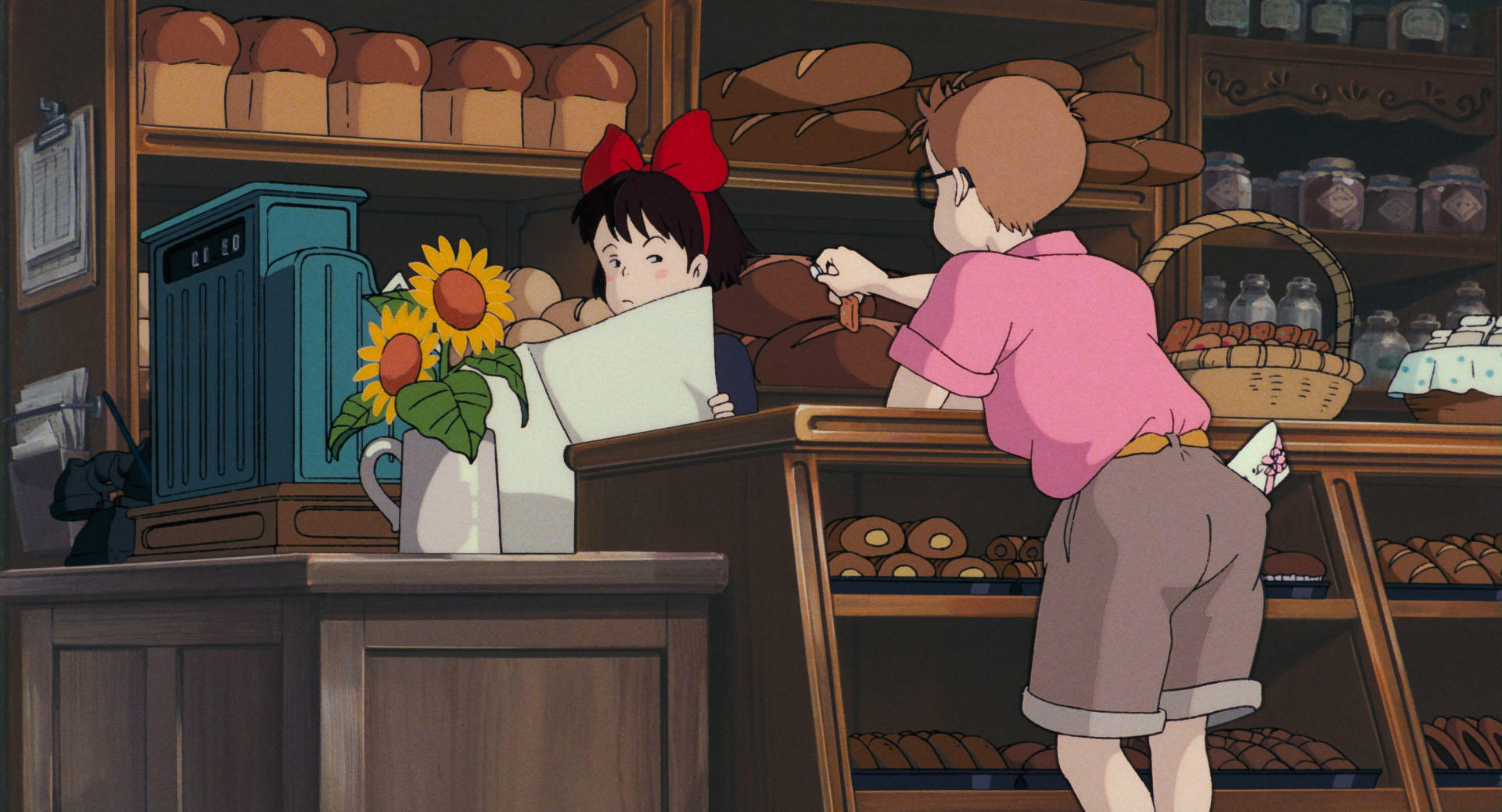
Kiki’s Delivery Service Beginner Guide: Characters, Themes, and Best Watch Order

0
Official Studio Ghibli still, used under the common-sense usage notice on ghibli.jp.

Quick answer: Kiki’s Delivery Service is one of the best Studio Ghibli movies for viewers who want a gentle coming-of-age story with a clear emotional arc. It is about leaving home, losing confidence, learning how work changes you, and finding a quieter kind of courage.

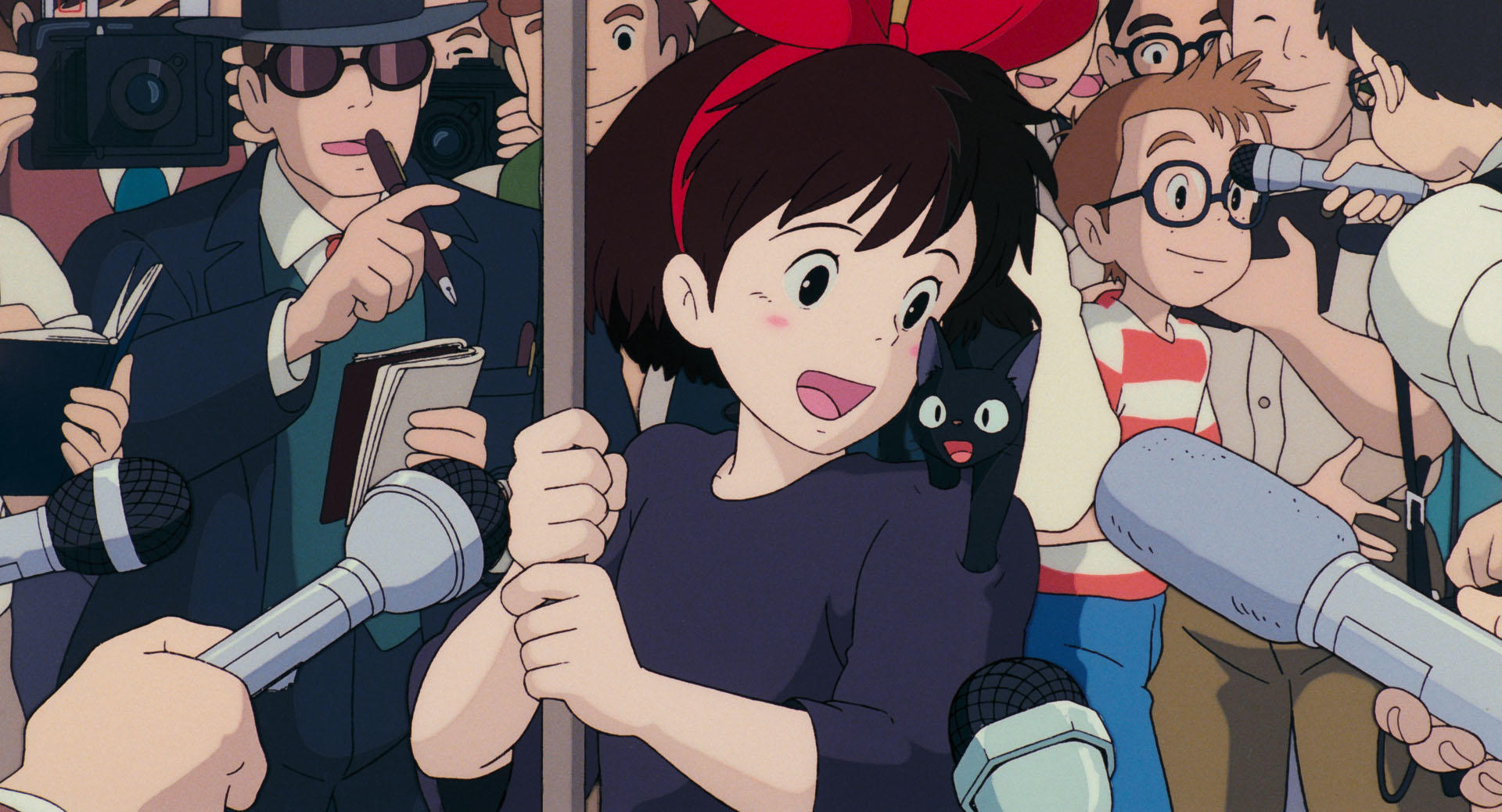
Kiki’s Delivery Service official Studio Ghibli still
Kiki’s Delivery Service official Studio Ghibli still. Official Studio Ghibli still from ghibli.jp.

What Kiki’s Delivery Service is about

Kiki’s Delivery Service follows a young witch who leaves home at thirteen, as tradition requires, and settles in a seaside city where she starts a flying delivery business. The premise sounds simple, but the movie’s strength is how honestly it treats independence. Kiki is not fighting a villain. She is trying to become useful, make friends, earn money, and understand who she is when the first excitement of freedom wears off.

That makes it a very easy Studio Ghibli entry point. You do not need any wider lore, complicated mythology, or background knowledge. The film gives you a clear situation, a memorable city, a small cast of warm characters, and a conflict that feels recognisable even if you have never ridden a broom in your life.

Why it works as a beginner Studio Ghibli movie

For new viewers, Kiki’s Delivery Service shows several of Ghibli’s best qualities without feeling heavy. It has everyday magic, detailed food and rooms, expressive flying scenes, kind adults, and a heroine whose problems are emotional rather than explosive. The movie is gentle enough for family viewing, but it is not shallow. Adults often connect with it because Kiki’s creative block and self-doubt feel close to burnout, imposter syndrome, or the awkward first stage of doing serious work.

If you are choosing a Studio Ghibli watch order, this is a strong early pick after My Neighbor Totoro or before moving into darker films like Princess Mononoke. It gives the studio’s softer side room to breathe.

The main characters

Kiki

Kiki is eager, proud, helpful, and sometimes stubborn. Her charm is that she is not a perfect young heroine. She misreads people, feels embarrassed, wants to be independent before she fully knows how, and slowly learns that confidence is not something you possess forever. It needs care.

Jiji

Jiji, Kiki’s black cat companion, gives the film much of its humour and tenderness. He also quietly reflects Kiki’s changing relationship with childhood. Without turning the story into a lecture, the film lets Jiji’s role shift as Kiki grows.

Osono, Ursula, and Tombo

The supporting characters are important because they show different kinds of help. Osono gives practical shelter and work. Ursula gives creative perspective. Tombo offers curiosity and friendship, even when Kiki does not know how to accept it. None of them solve Kiki’s life for her, which is part of why the ending feels earned.

Themes to watch for

The central theme is independence, but the movie is careful about what independence means. Kiki does not succeed by refusing all support. She succeeds by learning which support is healthy, which expectations are too heavy, and how to rebuild trust in her own abilities after they stop feeling automatic.

The film is also one of Ghibli’s best stories about work. Kiki’s delivery service starts as a charming adventure, then becomes a real responsibility. Customers are not always easy. Jobs do not always go smoothly. Being useful can be satisfying and exhausting at the same time. That mix makes the film unusually mature for such a cosy-looking story.

Is it suitable for children?

Yes, this is one of the more family-friendly Studio Ghibli films. There is brief peril, especially around flying and the airship sequence, but the tone stays warm and reassuring. Younger children may simply enjoy the broom, the cat, and the city. Older children and adults are more likely to notice the emotional story about loneliness, pride, and confidence.

Best way to watch it

Watch it when you want something comforting but not empty. It is a particularly good choice for a Sunday rewatch, a first Ghibli night with someone new to the studio, or a reset after heavier films. If you enjoy character-led stories, follow it with Whisper of the Heart. If you want more fantasy and spectacle after Kiki, move to Castle in the Sky or Howl’s Moving Castle.

What to notice on a rewatch

On a first viewing, the story can feel like a sweet adventure about a witch finding her place. On a rewatch, the small details become the real pleasure. Notice how often Kiki is framed looking at the city from above or from the edge of a room. She is close to belonging, but not fully settled yet. Notice the difference between flying as freedom and flying as work. Early flights feel open and thrilling. Later deliveries can feel awkward, rainy, rushed, or emotionally loaded.

The city is also worth watching closely. It is not a fantasy kingdom. It feels like a lived-in European port city with bakeries, trams, clocks, sea air, traffic, customers, and rent. That grounded setting makes the magic feel more natural. Kiki is special, but she still has to navigate ordinary adult systems: earning trust, doing a job properly, apologising, making friends, and resting when she is depleted.

Who should watch it next

This is an easy recommendation for viewers who like cosy films, coming-of-age stories, gentle fantasy, and character growth. It is also a good pick for anyone who thinks Studio Ghibli is only surreal or myth-heavy. Kiki’s Delivery Service proves the studio can make a quiet personal story feel just as memorable as a giant adventure.

FAQ

Is Kiki’s Delivery Service connected to other Studio Ghibli movies?

No. It stands alone, so you can watch it at any point.

Is Kiki’s Delivery Service sad?

It has melancholy moments, especially when Kiki loses confidence, but the overall feeling is hopeful and comforting.

Why do adults like it so much?

Because its story about starting over, working hard, and losing then rebuilding confidence feels very adult, even though the film is gentle enough for children.

Image source: Official Studio Ghibli still via ghibli.jp, where Studio Ghibli provides stills with a common-sense usage notice.

Ponyo Movie Guide: Story, Characters, Themes, and Who Should Watch It

0
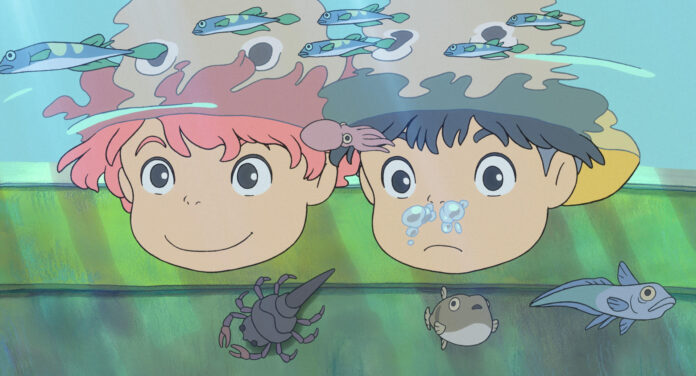
Ponyo and Sosuke in an official Studio Ghibli still from Ponyo
Official Studio Ghibli still from ghibli.jp, used under Studio Ghibli’s common-sense image usage notice.

Quick answer: Ponyo is one of the easiest Studio Ghibli movies to recommend to families, younger viewers, and anyone who wants a bright, ocean-soaked fantasy with very little cynicism. It follows a goldfish-like sea child who meets a boy named Sosuke, decides she wants to become human, and accidentally tips the balance between the human world and the sea.

This guide is spoiler-light. It explains the story setup, main characters, themes, age suitability, and where Ponyo fits if you are building a Studio Ghibli watch order. If you are deciding what to watch tonight, the short version is simple: choose Ponyo when you want warmth, movement, colour, and a film that feels like a child’s drawing has been given a heartbeat.

What is Ponyo about?

Ponyo begins by the sea. Ponyo lives underwater with her strange, protective father Fujimoto, but she is fascinated by the surface world. After escaping in a jellyfish-like bubble, she is rescued by Sosuke, a kind five-year-old boy who lives with his mother Lisa on a cliff above the harbour. Sosuke names her Ponyo, promises to protect her, and treats her less like a magical creature than a new friend who needs help.

That simple friendship becomes the emotional centre of the movie. Ponyo’s wish to become human is not presented as a strategic quest or a tidy fairy-tale bargain. It feels impulsive, physical, and overwhelming, like a toddler deciding what she wants with her whole body. When her magic surges, the sea rises, storms roll in, boats drift over roads, and the boundary between everyday life and myth becomes soft.

Ponyo official still showing the film’s sea-side fantasy mood
Official Studio Ghibli still from ghibli.jp, used under Studio Ghibli’s common-sense image usage notice.

Why Ponyo feels different from other Ghibli films

Many Studio Ghibli films ask the viewer to sit with ambiguity, grief, work, war, or growing up. Ponyo has serious ideas underneath, but its surface is unusually direct. It is driven by appetite, weather, water, noodles, flashlights, boats, sleepy children, worried parents, and big emotional promises. The movie does not pause to explain every rule of its magic system because that is not the point. It wants you to experience the world at the scale of a child.

That is why the film can feel almost chaotic on a first watch. Ponyo’s transformation is messy. Fujimoto’s warnings sound important, but the story is not structured like a puzzle box. Instead, Hayao Miyazaki builds momentum through feeling. The sea is alive. Adults are tired but loving. Children take promises seriously. A bowl of ramen can feel as important as a supernatural test because, to a small child, comfort and wonder are not separate categories.

Main characters in Ponyo

Ponyo

Ponyo is curious, intense, stubborn, and affectionate. She is not written as a tiny adult who calmly understands consequences. Her charm comes from the fact that she wants everything immediately: ham, Sosuke, legs, running, hugging, and freedom. That makes her funny, but it also makes her dangerous in the way fairy-tale beings often are. She is innocent, not harmless.

Sosuke

Sosuke gives the film its steadiness. He is young, but he is not treated as foolish. He notices when people need reassurance, speaks to his father through signal lamps, looks after Ponyo, and tries to be brave when the world around him becomes strange. His promise to accept Ponyo as she is gives the film its emotional test.

Lisa

Lisa, Sosuke’s mother, is one of the most vivid parents in Ghibli. She is loving, impatient, competent, and sometimes visibly exhausted. The film lets her be warm without making her impossibly serene. Her driving scenes, her work at the senior centre, and her tenderness with Sosuke make the human side of the story feel grounded.

Fujimoto and Granmamare

Fujimoto is Ponyo’s anxious father, a former human who distrusts the pollution and carelessness of the surface world. Granmamare, Ponyo’s mother, has a calmer mythic presence. Together they make the sea feel like a family system as much as a magical realm. Fujimoto panics because he sees danger. Granmamare trusts the emotional truth of the children more than the rules.

Themes: childhood, nature, and trust

The biggest theme in Ponyo is not romance in an adult sense. It is trust. Sosuke’s promise matters because he is asked to accept Ponyo fully, whether she is fish, girl, or something in between. For a young viewer, that lands as a story about friendship. For an older viewer, it can feel like a story about love without possession: letting someone become themselves without turning them into a problem to solve.

The environmental theme is also present, but it is handled more like a fairy tale than a lecture. The sea contains beauty, waste, old power, and wounded anger. Fujimoto’s distrust of humans is not random. At the same time, the film does not simply punish the human world. Lisa, Sosuke, the senior-centre residents, and the sailors are all part of a community trying to care for one another during a crisis. The movie’s hope comes from repair, not denial.

Is Ponyo good for children?

Yes, Ponyo is one of the safest starting points for younger Studio Ghibli viewers, especially compared with heavier films like Princess Mononoke or more emotionally complex picks like Spirited Away. There are storms, separation worries, a briefly frightening sense that the world is out of balance, and a few intense images of waves and prehistoric fish. But the tone is gentle, the danger is softened by wonder, and the ending is reassuring.

If you want a more parent-focused breakdown, see our guide to whether Ponyo is scary for kids. For many families, this is a better first Ghibli film than the more famous titles because it asks less patience from very young viewers and gives them plenty of immediate visual delight.

Where Ponyo fits in a Studio Ghibli watch order

If you are watching Studio Ghibli for the first time, Ponyo works best near the beginning of a family-friendly path. Pair it with My Neighbor Totoro for gentle childhood wonder, then move toward Kiki’s Delivery Service for a slightly older coming-of-age story. After that, Spirited Away and Howl’s Moving Castle can introduce more complex fantasy worlds.

For a broader route through the catalogue, start with our Studio Ghibli movies in order watch guide. Ponyo does not require any previous Ghibli knowledge. It is self-contained, emotionally clear, and easy to watch as a standalone film.

Who should watch Ponyo?

Watch Ponyo if you want a Studio Ghibli film that is joyful, strange, bright, and comforting. It is especially good for families, viewers who love ocean imagery, anyone interested in Miyazaki’s gentler side, and people who want a film with less darkness than Princess Mononoke or The Wind Rises. It is also a strong rewatch because the small domestic details become more charming each time: Lisa’s cooking, Sosuke’s routines, the senior-centre conversations, and the way Ponyo reacts to ordinary human things as if they are miracles.

Skip it only if you need a tightly explained fantasy plot. Ponyo is more emotional than logical. That is not a flaw, but it is the reason some viewers connect with it instantly while others find it unusually loose. The best way to approach it is to let the images, rhythms, and childlike certainty carry you.

FAQ

Is Ponyo connected to The Little Mermaid?

It has a similar fairy-tale shape because Ponyo is a sea child who wants to live in the human world, but it is not a standard retelling. Miyazaki’s version is more focused on childhood, nature, family, and trust than on romance or villainy.

Is Ponyo a good first Studio Ghibli movie?

Yes. For young children, it may be one of the best first choices. For adults new to Ghibli, it is a useful introduction to the studio’s warmth and hand-crafted visual imagination, though Spirited Away, Totoro, or Kiki may give a broader sense of the studio’s range.

What is the main message of Ponyo?

The main message is that love and trust require acceptance. Sosuke is not asked to fix Ponyo or explain her. He is asked whether he can accept her fully. Around that, the film adds a gentler environmental message about respecting the sea and living with forces larger than ourselves.

Image source: official Studio Ghibli stills from ghibli.jp, used under Studio Ghibli’s common-sense image usage notice.

Castle in the Sky Characters Guide: Sheeta, Pazu, Muska, Dola, and the Robots

0
Official Studio Ghibli still from ghibli.jp.

Quick answer: the main Castle in the Sky characters are Sheeta, Pazu, Colonel Muska, Captain Dola and her air-pirate family, the military, and the ancient Laputian robots. The story works because each character wants something different from Laputa: safety, wonder, power, profit, protection, or a second chance.

Castle in the Sky, also known as Laputa: Castle in the Sky, is one of Studio Ghibli’s clearest adventure stories, but the character web is sharper than it first looks. Sheeta and Pazu are not just two children running from villains. They are the emotional test of the film’s biggest question: what should people do with a beautiful power that can also become a weapon?

A Castle in the Sky character scene from an official Studio Ghibli still
Official Studio Ghibli still from ghibli.jp.

Sheeta: the hidden heir who wants an ordinary life

Sheeta is the heart of the movie. At first, she looks like a classic lost princess figure: quiet, pursued, and connected to a mysterious crystal. What makes her memorable is that she does not dream of ruling Laputa. She wants safety, dignity, and a life where she is not treated as a key to someone else’s ambition.

Her full importance comes from contrast. Muska sees her bloodline as a route to control. The army sees her as evidence that a legendary weapon might be real. Dola initially sees her as a prize. Pazu sees a frightened person who needs help. The film quietly asks the audience to judge every adult by how they treat Sheeta when she is vulnerable.

Sheeta’s strength is not loud. She is brave because she keeps choosing compassion while surrounded by people who want to use her. Her decisions near the end are also the reason the film avoids turning Laputa into a simple treasure. She understands that the floating city’s beauty cannot justify its destructive power.

Pazu: the dreamer who gives the adventure its warmth

Pazu is the character who makes the story feel open and hopeful. He lives in a mining town, works hard, and carries his father’s unfinished dream of proving that Laputa exists. In a lesser adventure, that dream could have made him selfish. Instead, Pazu’s curiosity is tied to loyalty. He wants to see the sky city, but he never treats Sheeta as a shortcut to glory.

That is why Pazu is such a good entry point for new viewers. He gives the film its excitement: rooftop escapes, airship chases, secret caves, and the thrill of discovery. But he also grounds the story in kindness. His best moments are not only action beats. They are the moments where he listens, promises help, or refuses to abandon someone when the easier choice would be to run.

If you are building a first-watch route through Studio Ghibli, Pazu also explains why this movie pairs so well with the site’s Castle in the Sky movie guide for new fans. He makes the film approachable before its mythology gets bigger.

Colonel Muska: charm, control, and the danger of inherited power

Muska is one of Ghibli’s most direct villains because his politeness hides a very simple hunger: control. He understands the history of Laputa better than almost anyone around him, but knowledge does not make him wise. It makes him more dangerous. He treats the city’s technology as proof that he deserves to rule.

What separates Muska from a generic military villain is that he believes he has a rightful claim. His connection to Laputa mirrors Sheeta’s, but their responses could not be more different. Sheeta sees inheritance as a burden that should be handled carefully. Muska sees inheritance as permission. That split gives the ending its moral force.

Muska also helps explain why Castle in the Sky still feels relevant. The film is not anti-technology in a simple way. It is wary of powerful systems in the hands of people who lack humility. Muska can read the old language and activate the old machines, but he cannot understand the restraint that should come with them.

Captain Dola: pirate, mother, and scene-stealing chaos engine

Captain Dola begins as a threat and slowly becomes one of the film’s funniest and most generous characters. She is greedy, practical, and extremely willing to break rules, but she is not empty-hearted. Her crew, mostly her sons, turn the air-pirate scenes into a strange family comedy inside the larger adventure.

Dola works because she changes without becoming tidy. She does not stop being a pirate. She simply starts seeing Sheeta and Pazu as people rather than loot. That shift gives the middle of the film a lot of its energy. The same airship that once felt dangerous becomes a messy refuge, and the same pirates who chased the children become part of the rescue.

She also reflects one of Hayao Miyazaki’s recurring strengths: older women in his films are allowed to be powerful, funny, vain, capable, and emotionally complicated. Dola is not a soft mentor. She is a storm with instincts, and the film is better for it.

The robot soldiers: gentle guardians and terrifying weapons

The Laputian robots are among the movie’s most important characters even though they do not speak like the humans. They show both sides of Laputa. One robot can destroy a fortress with frightening ease. Another tends the abandoned gardens, protects animals, and seems to carry the last gentle memory of the city.

This dual role matters. The robots are not evil by nature. They are tools and guardians shaped by purpose. When humans approach Laputa with fear or greed, the machines become part of a nightmare. When the film slows down in the gardens, they become mournful reminders that the lost civilization was not only a weapon platform. It was also a home.

For many viewers, the garden robot is the image that lingers longest. It turns the film from a chase story into an elegy. Laputa is wondrous, but it is also lonely. Its machines outlived the people who made them.

The army and the miners: two worlds around Sheeta and Pazu

The supporting groups make the main characters clearer. The military represents official power without imagination. Soldiers want the crystal, the city, and the weapon, but they do not understand the story they have entered. Their confidence makes them brittle. They are prepared for a strategic discovery, not a myth with moral consequences.

The miners, by contrast, give Pazu his community. They are rough, physical, and comic, but they also protect their own. Their town shows what grounded human life looks like beside the dream of Laputa. This matters because the ending is not a rejection of wonder. It is a choice to value living communities over dead empires.

Best character to watch on a rewatch

On a first viewing, most people follow Sheeta and Pazu. On a rewatch, Dola and Muska become especially interesting. Dola’s reactions reveal how quickly her attitude toward the children changes, while Muska’s calm delivery makes his arrogance more obvious long before he fully exposes himself.

For a character-focused rewatch, pay attention to how often the film frames people looking upward. Pazu looks up with wonder. Muska looks up with entitlement. The army looks up with calculation. Sheeta often looks up with dread because the sky city is tied to danger she never asked for. That repeated visual idea keeps the character motivations easy to read even during fast action scenes.

How the characters fit into Studio Ghibli themes

The cast of Castle in the Sky connects to several themes that run through Studio Ghibli: environmental loss, anti-war feeling, children forced to navigate adult greed, flight as freedom, and technology as both marvel and threat. It is more plot-driven than some later Ghibli films, but its character choices point toward the studio’s bigger worldview.

Sheeta and Pazu prove that innocence in Ghibli does not mean passivity. Dola proves that flawed adults can still choose decency. Muska proves that intelligence without compassion becomes dangerous. The robots prove that beauty and destruction can come from the same invention. Together, they make Castle in the Sky feel like more than a treasure hunt.

FAQs about Castle in the Sky characters

Who is the main character in Castle in the Sky?

Sheeta and Pazu share the central role. Sheeta carries the mystery of Laputa through her crystal and ancestry, while Pazu drives much of the adventure through his courage, work ethic, and belief in the sky city.

Is Muska related to Sheeta?

The film presents Muska as having his own connection to Laputa’s royal line, which makes him a dark mirror of Sheeta. The important difference is moral rather than genealogical: Sheeta rejects domination, while Muska embraces it.

Are the Laputian robots good or bad?

They are not simply good or bad. The robots can be devastating weapons, but the garden robot is gentle and protective. Their role depends on the purpose they are serving and on the humans trying to control them.

Which Studio Ghibli film should I watch after Castle in the Sky?

If you like the adventure and flight elements, try Studio Ghibli movies about flying. If you want another mythic conflict with a stronger environmental edge, move to Princess Mononoke.

Image credit: official Studio Ghibli stills from ghibli.jp, used under Studio Ghibli’s common-sense image usage notice.

Kiki’s Delivery Service and Creative Burnout: Why Losing Magic Feels So Real

0

Quick answer: the most relatable part of Kiki’s Delivery Service is not the flying broom or the talking cat. It is the moment Kiki cannot do the thing that used to feel natural. Her lost magic works as a gentle but sharp metaphor for creative burnout, work fatigue, and the fear that your talent has disappeared.

This theme explainer looks at why Kiki loses her magic, what the film says about confidence, and why the story still lands with artists, freelancers, students, and anyone trying to rebuild momentum after a wobble. For a broader viewing overview, see the site’s Kiki’s Delivery Service watch guide.

Kiki from Kiki’s Delivery Service in an official Studio Ghibli still

Kiki’s lost magic is not a random plot twist

In a simpler fantasy story, a young witch might lose her powers because of a curse, a villain, or a broken magical object. Kiki’s Delivery Service chooses something more human. Kiki loses access to her magic after she becomes tired, lonely, self-conscious, and disconnected from the joy that made flying feel effortless. The film never gives a technical explanation because the emotional explanation is the point.

Kiki has not stopped being a witch. She has stopped feeling like herself. That difference matters. The story is not saying talent vanishes forever when confidence drops. It is saying that talent is not separate from rest, identity, friendship, and the way a person talks to themselves. Kiki’s broom is magical, but the problem is deeply ordinary.

Why this feels like creative burnout

Creative burnout often arrives in a confusing way. You can still remember being good at something. You can still understand the skill. You may even still want the result. But the easy connection is gone. The task feels heavier, the joy feels further away, and every attempt becomes evidence that something is wrong with you.

Kiki’s crisis follows that pattern. At first, flying is part of her identity. It is how she travels, works, and proves she belongs in the city. Once she starts comparing herself to others, failing socially, and treating every delivery as a test of worth, flying stops being play and becomes pressure. The more she needs it to work, the harder it becomes.

That is why the film hits adults so strongly. Many viewers have had a Kiki moment: the work dries up, the idea will not come, the confidence disappears, or the thing that made them feel useful suddenly feels unreachable. Ghibli makes that feeling visible without turning it into melodrama.

The delivery business matters

Kiki does not lose her magic while training in a grand academy. She loses it while running a small delivery service. That is important because the film links burnout to practical life. Kiki is not only learning who she is. She is learning how to make money, keep promises, handle customers, and live away from home.

The business begins as a symbol of freedom. She can fly, so she can work. She can work, so she can stay. But the same business also turns her gift into an obligation. A talent that once felt like identity becomes a service other people rely on. That shift is familiar to anyone who has turned a creative skill, hobby, or personal strength into paid work.

Ursula gives the film its clearest advice

Ursula, the artist in the forest, understands Kiki’s problem better than almost anyone else in the film. She does not tell Kiki to try harder in a generic motivational way. She talks about losing the ability to paint and needing to stop, sleep, walk, look at things, and let the feeling return.

That advice is quietly practical. Sometimes the answer is not another push. Sometimes it is a break from proving yourself. Ursula reframes the block as part of the process rather than a final verdict. For creative people, that may be the most comforting idea in the movie: losing the feeling does not mean the feeling was fake.

Jiji’s silence makes the change more painful

Kiki’s changing relationship with Jiji is one of the film’s most discussed details. However viewers interpret it, the emotional effect is clear. Jiji represents a familiar inner voice, a childhood companion, and a form of safety. When that connection changes, Kiki feels more alone.

That loneliness is part of growing up. The film does not frame maturity as becoming colder or less imaginative. It shows that some supports change shape. Kiki has to build new confidence that does not depend entirely on the voice that used to reassure her. That is a subtle, bittersweet version of independence.

Why the movie does not rush the recovery

The recovery works because it is not treated like a switch. Kiki does not solve burnout by hearing one inspiring sentence. She rests, spends time with Ursula, stops forcing herself to perform, and reconnects with a reason to act. When she flies again, it is urgent, imperfect, and emotionally earned.

That matters because the film respects the viewer’s own difficult seasons. It does not promise that confidence returns neatly. It suggests that confidence can return through care, distance, friendship, necessity, and small acts of courage. Kiki’s comeback is powerful precisely because it is shaky.

How it connects to other Studio Ghibli heroines

Kiki belongs beside Ghibli heroines who grow through action rather than speeches. Chihiro in Spirited Away learns by working in a strange bathhouse. Shizuku in Whisper of the Heart faces the gap between ambition and craft. San in Princess Mononoke carries a much harsher conflict around identity and belonging. If this is the part of Ghibli you like most, the site’s guide to Studio Ghibli movies with strong female leads is a useful next read.

Why this theme keeps the film alive

Kiki’s Delivery Service is often described as cozy, and it is. The seaside city, bakery, radio music, and flying scenes make it one of the easiest Ghibli films to revisit. But the reason it lasts is not only comfort. It is comfort with an honest centre.

The film understands that growing up can make a person feel less magical before it makes them stronger. It understands that useful work can drain the same gifts it depends on. Most importantly, it understands that losing your spark is not the same as losing yourself. Kiki’s magic returns because she is still Kiki, even when she cannot feel it for a while.

FAQ

Why does Kiki lose her powers?

The film leaves room for interpretation, but emotionally she loses them because of stress, self-doubt, exhaustion, and disconnection from her sense of self.

Is Kiki’s lost magic a metaphor for depression?

Some viewers read it that way, but the film is broader. It can reflect burnout, creative block, loneliness, or the loss of confidence that comes with growing up.

Does Kiki get her magic back?

Yes, but not because everything becomes easy again. She regains it through rest, support, urgency, and renewed trust in herself.

For another gentle Ghibli rewatch route, see the best Studio Ghibli movies for a calm reset.

Image source: official Studio Ghibli stills from the Kiki’s Delivery Service work page, which includes Studio Ghibli’s common-sense usage notice.

Kiki’s Delivery Service Watch Guide: Why It Is the Perfect Cozy Ghibli Starting Point

0
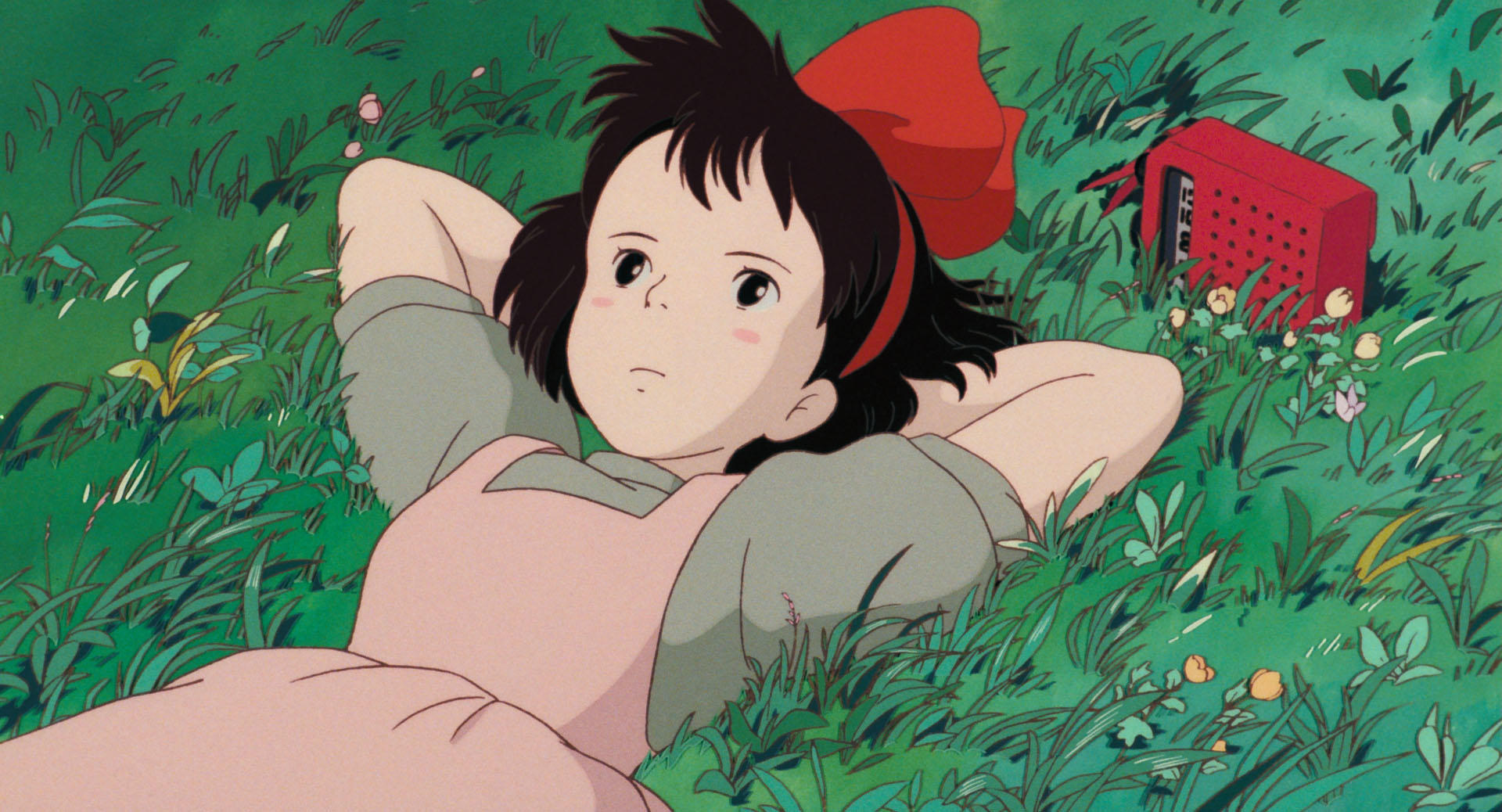
Official Studio Ghibli still from Kiki's Delivery Service. Source: ghibli.jp.

Quick answer: Kiki’s Delivery Service is one of the best Studio Ghibli movies to start with if you want something warm, funny, low-stress, and emotionally honest. It is not the biggest fantasy film in the catalog, but that is the point. It is a gentle coming-of-age story about confidence, work, independence, burnout, and finding your rhythm again.

Kiki flying over the seaside city in an official Studio Ghibli still from Kiki's Delivery Service
Official Studio Ghibli still from Kiki’s Delivery Service. Source: ghibli.jp.

What Kiki’s Delivery Service is about

The story follows Kiki, a young witch who leaves home at thirteen to spend a year living independently in a new town. She has a broom, a black cat named Jiji, a useful flying talent, and not much of a plan beyond proving she can make it on her own. After arriving in a seaside city, she starts a small delivery service and slowly learns that independence is not only about being brave enough to leave home. It is also about asking for help, making mistakes, earning trust, and recovering when your confidence suddenly disappears.

That simple premise is why the film works for so many different viewers. Children can enjoy the flying, the cat, the bakery, and the bright coastal setting. Adults often notice the quieter parts: the pressure to be useful, the awkwardness of starting over, the loneliness of being new somewhere, and the way creative energy can vanish when you start measuring yourself too harshly.

Why it is such a good first Ghibli movie

If someone has never watched a Studio Ghibli film before, Kiki’s Delivery Service is an easy recommendation because it shows the studio’s strengths without asking the viewer to decode a dense fantasy world. The stakes are personal rather than apocalyptic. There are no complicated kingdoms to track, no heavy war allegory to prepare for, and no frightening monster sequences that dominate the film. Instead, it gives you the everyday magic that Ghibli does better than almost anyone: bread in a warm kitchen, laundry blowing outside a window, a city that feels lived in, and a character trying to become herself one small decision at a time.

It is also a good entry point because it feels complete without being exhausting. Some Ghibli films are best when you are ready for myth, environmental conflict, or emotional intensity. Kiki is ideal when you want comfort, charm, and a story that still has real emotional weight underneath the softness.

Who should watch it first

Start here if you are watching with younger viewers, introducing someone cautious to anime, or looking for a film that feels cozy without becoming empty. It is especially strong for fans of small-business stories, creative burnout stories, witchy but gentle fantasy, and city-slice-of-life settings. If your mental picture of Ghibli is only dragons, spirits, and giant forest gods, Kiki shows the quieter side of the studio.

It also suits rewatch nights. The film has enough visual detail to reward attention, but it does not demand the same level of emotional preparation as Grave of the Fireflies, Princess Mononoke, or The Wind Rises. You can put it on for comfort and still come away with something useful.

What makes Kiki memorable

Kiki is memorable because she is not written as a chosen-one hero. Her magic is useful, but the film is more interested in her ordinary growing pains than in making her powerful. She gets embarrassed. She misreads people. She tries too hard. She wants to be mature before she fully understands what maturity costs. That makes her unusually relatable for a fantasy lead.

Jiji adds a lot of the comedy, but he is not only a cute sidekick. He gives Kiki someone to talk to when she is unsure of herself, which makes her loneliness visible without turning every scene into exposition. Osono, Ursula, Tombo, and the older women Kiki meets all become different versions of support. None of them solve her life for her. They simply make the new city feel less impossible.

The burnout theme is why adults keep returning to it

The middle of the film is one of Ghibli’s clearest depictions of burnout. Kiki loses confidence in the thing that used to feel natural. The movie does not treat that as laziness or failure. It treats it as something that can happen when pressure, comparison, loneliness, and self-doubt pile up. That is a surprisingly adult idea inside such an accessible family film.

Ursula’s advice matters because it does not offer a fake shortcut. Sometimes you stop forcing the work. Sometimes you rest, look around, reconnect with why you cared, and let the skill return in its own time. For creative people, freelancers, students, and anyone who has ever turned a talent into a responsibility, that section hits harder than expected.

Is Kiki’s Delivery Service suitable for children?

Yes, it is one of the safer Studio Ghibli choices for family viewing. There is some peril near the end, and very young children may feel tense during the rescue sequence, but the overall tone is gentle. There is no graphic violence, no heavy horror, and no bleak ending. The emotional tension mostly comes from Kiki feeling isolated or uncertain, which can actually make the film a useful conversation starter for children dealing with new schools, new places, or confidence wobbles.

Best moments to watch for

  • Kiki’s first arrival in the seaside city, which quickly establishes the film’s mixture of wonder and awkwardness.
  • The bakery scenes, because they show how community forms around small acts of trust.
  • The rainy delivery sequence, where responsibility starts to feel heavier than adventure.
  • Ursula’s cabin conversation, one of Ghibli’s best quiet scenes about art and confidence.
  • The final rescue, which turns Kiki’s personal recovery into a public moment without losing the film’s intimate feel.

Where it fits in a Studio Ghibli watch order

For a beginner-friendly path, Kiki’s Delivery Service works beautifully near the start. Pair it with My Neighbor Totoro if you want the gentlest possible opening, then move to Spirited Away or Howl’s Moving Castle when you want more fantasy. If you are building a cozy weekend watchlist, Kiki can sit between Totoro and Whisper of the Heart for a warm run of films about childhood, growing up, creativity, and everyday wonder.

Related Studio Ghibli guides

FAQ

Is Kiki’s Delivery Service sad?

It has melancholy moments, especially when Kiki feels alone or loses confidence, but it is not a sad film overall. The ending is warm, hopeful, and reassuring.

Do I need to watch any other Ghibli movie first?

No. It is completely standalone, which is one of the reasons it works so well as a first Ghibli film.

Is it more fantasy or slice of life?

It is both, but the fantasy is gentle. The witchcraft gives the story charm, while the real heart of the film is Kiki learning how to live, work, and belong in a new place.

Why do adults like it so much?

Adults often connect with the film’s treatment of work, self-doubt, creative burnout, and the pressure to be capable before you feel ready.

Image note: Images used in this guide are official Studio Ghibli stills from ghibli.jp’s Kiki’s Delivery Service work page, where Studio Ghibli notes that images may be used within common-sense bounds.

Stay connected

0FansLike
0FollowersFollow
0SubscribersSubscribe
- Advertisement -
Google search engine

Latest article

Official Studio Ghibli still from Princess Mononoke, used as the featured image for an adult watch guide.

Best Studio Ghibli Movies for Adults: Mature, Emotional and Thoughtful Picks

0
A grown-up guide to the best Studio Ghibli movies for adults, including Princess Mononoke, The Wind Rises, Grave of the Fireflies, Only Yesterday and more.
Totoro and the girls in an official Studio Ghibli still from My Neighbor Totoro

How Many Studio Ghibli Movies Are There? The Simple Count and What Usually Gets...

0
There are 23 core Studio Ghibli feature films, or 24 if you include Nausicaä, which most fan watch lists do. Here is the simple count and what usually gets included.
Ponyo and Sosuke in a bright official Studio Ghibli still, suitable for a preschooler watch guide

Best Studio Ghibli Movies for Preschoolers: Age 3 to 5 Watch Guide

0
A parent-friendly guide to the gentlest Studio Ghibli movies for preschoolers, with age notes, mild scare warnings, and what to save for later.